
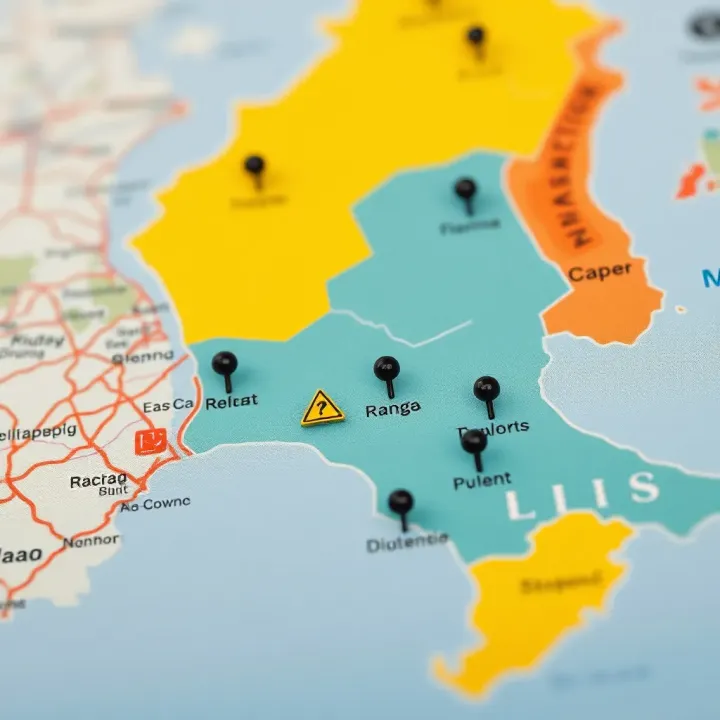
Managing Environmental Risks in Cape Town
🌍 Explore how Cape Town manages environmental risks from climate effects to community action, ensuring sustainability and resilience in our changing local setting.
Edited By
Emily Stratford
Black swan events are rare, unexpected incidents that cause serious disruption in markets, businesses, and economies. They’re not your everyday risks but rather outlier shocks that few foresee. Think of the 2008 global financial crisis or the Covid-19 pandemic — both caught many off guard and led to profound changes worldwide.
These events matter to South African traders, investors, brokers, analysts, and entrepreneurs because they expose gaps in traditional risk models. Financial markets in Mzansi have felt waves from global shocks, yet local businesses often lack tailored strategies to navigate this uncertainty. Understanding black swan events is about accepting that extreme disruptions can and do happen, even if they seem unlikely.

Black swan events aren’t just unpredictable; their impacts are severe enough to ripple across sectors and geographies.
By nature, black swan events dodge the usual forecasting tools. They lie outside historical patterns or data sets, making statistical models largely ineffective. For example, South African firms relying solely on past market data might miss sudden shifts caused by international geopolitical tensions or sudden currency swings.
This unpredictability arises because black swans usually result from complex, interconnected factors—like the collapse of global supply chains or abrupt policy changes—that traditional risk assessments fail to capture.
South African businesses shouldn’t aim to predict black swans precisely but should focus on building resilience. This means:
Diversifying investments and supply chains to avoid overexposure.
Maintaining liquidity buffers to absorb shocks without collapsing.
Scenario planning for extreme but plausible events beyond normal expectations.
Embedding agility in decision-making, allowing quick pivoting when crisis hits.
South African entrepreneurs and investors can learn from past events by reviewing how companies withstood or failed during crises, adapting their risk management accordingly.
In a local context, accounting for factors like Eskom’s loadshedding, global commodity price swings, and exchange rate volatility helps tailor strategies against black swan events.
Understanding the limits of prediction and preparing for the unexpected equips you to weather shocks better, safeguarding your interests and the broader economy from sudden, severe disruptions.
Understanding what constitutes a black swan event is vital for traders, investors, brokers, analysts, and entrepreneurs. These rare occurrences carry the potential to disrupt markets and entire economies, often blindsiding even the savviest professionals. Defining their characteristics helps in recognising these events early enough to mitigate their risks and avoid costly surprises.
Black swan events are inherently rare and unpredictable. They fall outside the scope of normal expectations because their occurrence is so infrequent that historical data offers little guidance. For instance, the systemic collapse seen during the 2008 financial crisis was not widely anticipated, partly because previous recessions didn’t foreshadow such depth or rapid contagion. The practical challenge here is that relying solely on past patterns can lull decision-makers into a false sense of security, ignoring the possibility of uncommon but devastating shocks.
Beyond rarity, black swan events inflict severe consequences across markets, industries, or societies. Their impact tends to ripple through interconnected systems, causing cascading failures. Take the COVID-19 pandemic: it started as a health crisis but quickly translated into global supply chain snags, market volatility, and widespread job losses. Knowing that such events can trigger disproportionate damage encourages firms to build buffers and contingency plans rather than assuming smooth sailing.
After a black swan event occurs, people often explain it away as if it were foreseeable. This hindsight bias makes the event seem less surprising than it truly was. For example, analysts looked back at the 2008 crisis blaming lax banking regulations or risky mortgage portfolios, as if these red flags were glaring before the collapse. But this rationalisation can be dangerous—it breeds overconfidence and the belief that future black swans can always be predicted, which might not be the case.
The 2008 crisis exposed how complex financial instruments and overly optimistic risk models underestimated tail risks in global markets. Banks like Lehman Brothers failed spectacularly, shaking investor confidence worldwide. For South African investors, the crisis triggered exchange rate swings and capital outflows, revealing how local markets are intricately linked to global shocks. It showed how relying on historical volatility and ignoring systemic vulnerabilities can be costly.
Few anticipated a health crisis would shut down economies across continents simultaneously. The pandemic challenged assumptions about workforce stability, supply chains, and consumer behaviour. South African firms had to adapt rapidly to loadshedding and remote work, while some sectors like tourism faced near-total collapse. This event highlighted that even well-run businesses need flexible risk assessments that factor in extreme and novel disruptions.
Sudden political changes, such as the Arab Spring or Brexit referendum, drastically shifted economic and investment landscapes overnight. These events proved that political risks could explode without warning, swinging currency values and investor sentiment. Within South Africa, shifts in policy directions or governance issues might similarly jolt markets. For businesses, it’s a reminder that monitoring political climates is as crucial as financial metrics.
Recognising the defining features of black swan events helps you move beyond reactive crisis management to proactive risk readiness. They may be rare and unpredictable, but understanding their traits is the first step to navigating their fallout more effectively.
Black swan events pose serious difficulties for standard risk management approaches. Their rarity and unpredictability mean that usual tools often fall short. Traders and entrepreneurs can find themselves blindsided if they rely too heavily on traditional models. Understanding these challenges helps firms prepare better and avoid costly surprises.
Most risk models depend on past data to predict future outcomes. This works fine when markets or environments behave in relatively stable ways. But black swan events, by definition, haven't happened before or are so rare that there's little historical record. For instance, the 2008 global financial crisis revealed just how limited models were that relied purely on previous market cycles. These models failed to signal the buildup of risks tied to complex derivatives.
Relying on past events means unusual shocks can be missed, leading to a false sense of security. Businesses using these models might underestimate the chance of extreme disruptions, exposing themselves to hefty losses.

When risk assessments focus on probable events, they often dismiss rare outliers. However, black swan events are those outliers with severe impact. South African investors, for example, saw this during the COVID-19 pandemic – a health crisis few had contemplated affecting markets the way it did.
Ignoring low-probability, high-impact risks is tempting but dangerous. Companies that fail to consider these events may vanish overnight or suffer prolonged setbacks. Being aware and accounting for such possibilities, even if remote, is critical.
Standard financial models struggle to represent extreme events accurately. The mathematical assumptions often underestimate how far outside 'normal' bounds real-world shocks can go. This leads to risk profiles that fail to capture the true exposure.
For example, value-at-risk (VaR) models frequently miss tail risks – the small probability but massive impact scenarios. This gap can mislead decision-makers about the safety of their portfolios or operations.
Humans tend to be overconfident in their predictions and resistant to acknowledging daunting possibilities. An entrepreneur might believe their business is too robust for unexpected shocks, or an investor might dismiss warnings as overly cautious.
This mindset prevents proper preparation. Denial can stall contingency plans or discourage investment in resilience, leaving organisations vulnerable when rare events strike.
After a black swan event occurs, people often convince themselves it was predictable "all along." This hindsight bias can skew future risk assessments, making organisations either complacent or overly cautious.
For example, South African firms reflecting on the 2020 lockdown might wrongly conclude they failed to prepare, despite limited forewarning. This can lead to costly overcorrections or paralysis in decision making.
Decision-makers often anchor their focus on risks they know well and overlook less familiar or novel threats. This narrow perspective blinds them to emerging dangers and complex scenarios outside their usual experience.
For instance, companies used to dealing with operational risks like equipment failure might undervalue threats from cyberattacks or global supply chain disruptions – both potential black swans.
Recognising these limitations and biases is the first step towards smarter risk management that factors in both expected and unexpected threats. South African traders, investors, and entrepreneurs who adapt their strategies accordingly stand a better chance of weathering unpredictable storms.
Building resilience to unpredictable shocks is a must for any South African business aiming to survive black swan events. These unexpected disruptions can come from anywhere — a sudden economic crash, a pandemic, or even loadshedding hitting hard. Resilience means more than bouncing back; it’s about staying nimble and ready to handle surprises without grinding to a halt.
Scenario planning and stress testing help organisations imagine different future situations — even the ones that seem far-fetched. Instead of relying only on past trends, firms develop multiple “what if” scenarios, like a sudden interest rate hike or supply chain breakdown due to political unrest. By stress testing operations against these scenarios, businesses can identify vulnerabilities early and plan how to adjust quickly when the unexpected hits.
Decentralised decision-making spreads authority throughout the organisation rather than relying on a tight command chain. In volatile times, waiting for approval from head office can slow response times. For example, a retail chain facing sudden transport challenges during loadshedding benefits when store managers make quick calls locally. This agility prevents minor issues from snowballing and helps tailor responses to local conditions.
Maintaining operational agility means designing processes and resource allocations to pivot fast. Organisations focus on lean inventories, cross-training staff, and flexible contracts to shift gears as the environment changes. A South African manufacturing company might work with multiple suppliers and have contingency plans to switch if one faces disruptions, keeping production running despite shocks.
Tracking emerging risks involves continuously scanning the horizon for signals of trouble — be it new legislation, rising commodity prices, or global health alerts. Early identification of risks, even if unclear or incomplete, provides precious time to prepare or seek alternatives. This suits South Africa’s often rapid shifts in regulatory or economic landscapes.
Utilising data and technology for insights helps turn raw information into usable intelligence. Tools analysing social media trends, market data, or geopolitical shifts can flag risks that traditional reports might miss. For instance, companies monitoring forex markets with AI can anticipate rand volatility and adjust trading strategies proactively.
Collaborating with industry networks enhances shared awareness and collective readiness. By working with peers, regulators, and industry bodies, businesses gain a broader picture of emerging threats and pool resources for response. During the COVID-19 pandemic, many South African companies shared learnings on remote work setups and supply chain adaptations, softening the blow.
Maintaining liquidity and reserves is critical to cushion sudden shocks. Businesses that keep flexible cash reserves or access to emergency credit can navigate downturns without desperate cutbacks. Given South Africa’s history of economic uncertainty and periodic liquidity crunches, having these buffers can safeguard operations and jobs.
Diversifying supply chains and markets reduces reliance on single sources or customers. For example, a South African exporter selling mainly to one country risks collapse if that market closes. Spreading operations and clients across regions and industries lessens the impact if one link breaks.
Training staff for crisis response prepares teams to act calmly and effectively when things go wrong. Regular drills, clear communication protocols, and defined roles empower employees to respond without chaos. This kind of preparation proved vital for businesses managing sudden lockdowns amid COVID-19, ensuring safety and continuity.
Being prepared isn’t about predicting the unpredictable — it’s about building structures and mindsets that make your organisation tough enough to weather whatever storms come its way.
Resilience is less a one-off project and more a continuous process that weaves flexibility, vigilance, and strength into the fabric of the business. For South African traders, investors, and entrepreneurs, prioritising these strategies isn’t just prudent; it’s essential in today’s often volatile environment.
South African businesses can learn a lot from black swan events, especially since these rare disruptions often expose weaknesses and gaps in traditional risk strategies. Studying how local and global players responded to such shocks helps firms develop pragmatic ways to cope with unforeseen challenges. The lessons are not just about bouncing back but also preparing in a way that reduces downside impacts and improves overall resilience.
The sudden announcement of lockdowns across South Africa in 2020 forced many companies to rethink their operations overnight. Those with flexible working arrangements and digital infrastructure adapted far quicker, minimising downtime. Retailers like Takealot and Woolworths boosted their online capabilities and logistics. In contrast, some sectors struggled with the abrupt shift, highlighting the need for contingency strategies that include remote work, supply alternatives, and rapid communication systems.
Loadshedding isn’t a one-off event; it’s a structural risk deeply woven into the South African energy landscape. Many businesses experienced losses due to unpredictable power cuts, forcing them to invest in backup generators, UPS systems, or even solar solutions. This ongoing threat teaches that resilience to black swans means accepting certain local realities and building operational buffers to maintain continuity despite disruptions.
South Africa’s financial sector frequently navigates volatile terrain, from rand fluctuations to sudden regulatory changes. Banks and asset managers increasingly stress-test portfolios against severe shocks, integrating scenario planning that includes black swan-like events. This approach, combining rigorous analysis with quick response capabilities, has helped maintain market confidence and safeguard investments during turbulent spells.
An open risk culture encourages employees at all levels to flag emerging issues without fear. In South African firms, this means breaking down hierarchical barriers and fostering honest conversations about vulnerabilities. When staff feel heard and valued, companies spot developing risks earlier and respond faster, often preventing small issues from escalating.
Risk awareness shouldn’t be confined to the risk or compliance department alone. Instead, every team should understand how their decisions impact broader risk exposure. This is particularly relevant in fast-moving sectors like trading or investment, where market conditions can change quickly. Regular training and clear policies help embed this mindset, turning risk mitigation into an everyday habit.
Practising responses through scenario exercises prepares organisations for unlikely but severe events. South African businesses benefit from running simulations tailored to local threats — like extended loadshedding or currency shocks. These drills uncover gaps in plans and improve coordination, so when real black swan events occur, the organisation reacts with confidence and agility.
Embedding lessons from past black swan events and cultivating a robust risk culture can transform South African businesses, equipping them not just to survive but thrive when uncertainty strikes.
Taking practical steps to manage black swan risks is about more than preparing for the unlikely—it’s about strengthening your business against shocks that could throw everything off balance. These steps focus on recognising vulnerabilities, planning clear responses, and building partnerships that turn uncertainty into manageable challenges. Given how sudden and severe black swan events can be, businesses that get ahead with concrete actions reduce downtime, protect assets, and maintain trust.
A solid starting point involves identifying the assets, resources, and critical business processes that keep your operation running. This means knowing which suppliers provide essential materials, which systems hold your data, and which staff roles are irreplaceable. For example, a retailer might map out its supply chain—from local suppliers to end customer delivery routes—highlighting spots vulnerable to interruption due to single-source dependency or transport issues.
Single points of failure are those critical junctures where one breakdown can halt an entire operation. Identifying these is vital because a minor hiccup there could lead to major losses. Consider a Johannesburg-based logistics company relying solely on one software provider for its tracking system; if that software fails, it risks the whole delivery network grinding to a halt. Spotting these weak points allows businesses to introduce redundancies or alternatives.
Not all risks carry equal weight; some might cause slight delays, others could threaten company survival. Risk prioritisation requires assessing which scenarios could result in the most severe consequences financially, operationally, or reputationally. For instance, financial institutions in South Africa give particular attention to cyberattack risks given the increasing number of breaches and their potential to paralyse services.
How you communicate during a crisis can either preserve or damage trust. A clear, transparent plan for sharing timely updates with employees, customers, regulators, and the media helps manage uncertainty. For example, during the COVID-19 lockdown, companies that promptly informed their staff about safety protocols and operational changes avoided confusion and rumours, boosting morale.
Planning for continuity means you have ready-made procedures to keep essential functions operating despite disruptions. This might include remote working setups, backup power supplies during Eskom loadshedding, or alternative suppliers ready to step in. Every South African business experiencing regular loadshedding has wrestled with the necessity of a strong business continuity plan.
A plan on paper isn’t enough—it needs to be tested regularly under realistic conditions, then adjusted based on what works and what doesn’t. Stress tests, fire drills, and scenario exercises expose gaps. A mining firm in Mpumalanga, for instance, regularly tests its emergency evacuation and communication plans based on past incidents and changing risks.
Linking up with government bodies and regulators helps ensure you stay informed on regulations, relief programmes, and shifting risk landscapes. During floods or strikes, government channels provide crucial insights. Businesses that maintain open lines with, say, the Department of Trade, Industry and Competition (the dtic) can better align responses and secure support.
By joining industry groups or forums, you gain access to pooled knowledge, shared warning systems, and collective action possibilities. South African financial institutions often collaborate via the Banking Association to tackle fraud and cybercrime threats together rather than through isolated efforts.
Your local community—including suppliers, neighbours, and customers—forms an informal safety net. Investing in community engagement builds goodwill and practical support, such as shared resources or information during tough times. A small business in a township might collaborate closely with local suppliers and transport operators, creating a support system that softens shocks from wider disruptions.
Practical risk management means taking precise, actionable steps—mapping your weak spots, preparing clear responses, and weaving a network of support. This approach shifts black swan events from blinding chaos to challenges your business can confront with confidence.
🌍 Explore how Cape Town manages environmental risks from climate effects to community action, ensuring sustainability and resilience in our changing local setting.

🖥️ Learn how the binary number system drives everyday tech in South Africa, from computers to mobile devices, with clear terms and practical examples. 💡

Discover the risks of binary options trading in South Africa ⚠️ from scams and poor regulation to high losses. Stay informed before you invest your R.

🤖 Discover how binary bots automate trading in South Africa's binary options market, their tech, risks, strategies, and regulatory tips for smarter trading decisions.
Based on 7 reviews