

Understanding Binary Bots in Trading
🤖 Discover how binary bots automate trading in South Africa's binary options market, their tech, risks, strategies, and regulatory tips for smarter trading decisions.
Edited By
Thomas Harrington
The binary number system is the backbone of modern computing and digital technology. Unlike the decimal system that we use daily, which runs from 0 to 9, binary sticks to just two digits: 0 and 1. This simplicity allows computers and electronic devices to process and store data efficiently.
At its core, binary is a base-2 numeral system. Each digit in a binary number is called a bit—short for binary digit. Every bit represents a power of two, starting from the rightmost digit, which is 2^0.
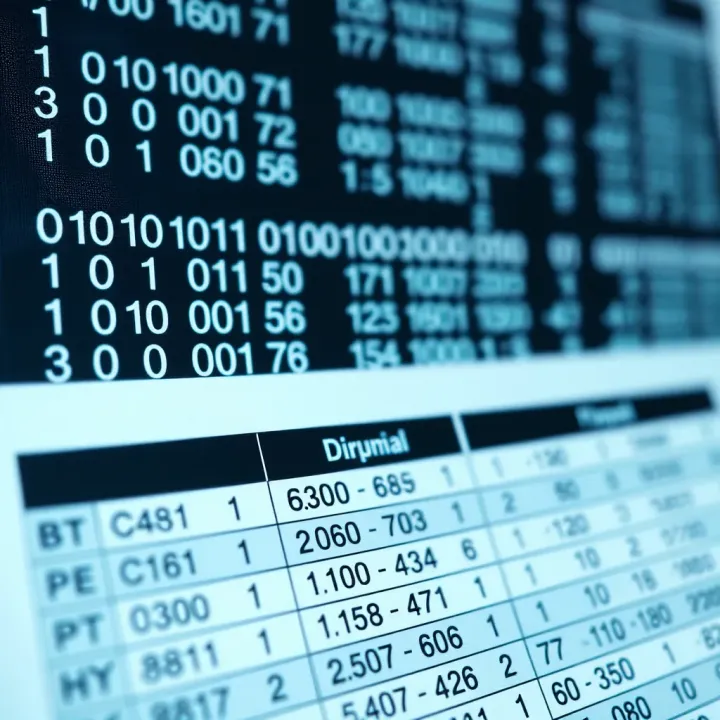
The genius of binary lies in its direct compatibility with electronic circuits, where components can be either on or off, much like the 1s and 0s.
From the smartphone in your pocket to the servers running banking systems in Johannesburg, binary coding powers it all. South African companies like Takealot rely on servers using binary operations to manage millions of transactions smoothly. Even the prepaid meters many households use to monitor electricity during loadshedding encode consumption data in binary.
Consider the binary number 1011. To find its decimal value, you multiply each bit by the corresponding power of two and add the results:
1 × 2^3 = 8
0 × 2^2 = 0
1 × 2^1 = 2
1 × 2^0 = 1
Adding these up gives 8 + 0 + 2 + 1 = 11 in decimal.
While computers primarily use binary, other systems like octal (base-8) and hexadecimal (base-16) offer shorter ways to represent binary numbers, helpful for programmers and IT specialists. However, for most day-to-day applications—like mobile communications, data storage, and software algorithms—binary remains fundamental.
Understanding binary basics helps entrepreneurs and analysts make sense of technology that affects investments and business strategies—especially in sectors like fintech, e-commerce, and telecommunications. Grasping how data is encoded and processed can clarify complex decisions about digital security, system upgrades, or software development.
Embracing binary isn’t just about numbers; it’s about recognising the language behind the screens and devices shaping South Africa’s economic landscape.
The binary number system is fundamental to digital technology, and understanding it gives insight into how electronic devices process information. At its core, it uses just two symbols, 0 and 1, to represent all numbers, contrasting with the familiar decimal system that uses ten digits. This simplicity makes it reliable and efficient for circuits and computers, which operate on two distinct states like on/off or high/low voltage.
For traders and investors, recognising the binary system's role can clarify how computing technology underpins everyday tools such as trading platforms, data analysts’ software, and automated decision-making systems. Technology firms rely heavily on binary processing to crunch large data sets swiftly, impacting decisions and market moves.
Binary digits, or bits, are the smallest unit of data in computing. Each bit represents either a 0 or 1, which can signify off/on, false/true, or no/yes states. For example, in the context of a trading algorithm, bits carry the instructions that the software follows when executing trades automatically. Even complex operations boil down to strings of bits arranged in specific orders.
Bits combine to form bytes (eight bits), which in turn represent larger units like characters or numbers. This layered construction means digital devices can handle huge amounts of information by processing many bits simultaneously, whether you're checking your portfolio on a mobile app or streaming market news.
The binary system uses base-2, meaning each digit represents an increasing power of two, starting from the rightmost digit. For example, the binary number 1011 equals 1×2³ + 0×2² + 1×2¹ + 1×2⁰, which is 11 in decimal. This method allows every number to be broken down into sums of powers of two, which digital circuits can easily interpret.
This base-2 principle is invaluable because it matches how computers physically work. Unlike decimal, which requires ten distinct symbols, binary only needs two, simplifying hardware design and reducing errors. When working with digital data, knowing how base-2 functions helps in understanding storage sizes, data transmission, and system limitations on speed or memory.
Binary ideas stretch far back beyond modern computing. Ancient cultures like the Egyptians and the Chinese used binary-like systems for divination and record-keeping. A notable example is the I Ching, a Chinese text employing binary patterns to represent philosophical concepts.

In 17th century Europe, mathematician Gottfried Wilhelm Leibniz formalised the binary numeral system. He saw it as a way to reduce complex calculations to simple operations, imagining a future where machines could perform logical reasoning. This early work laid groundwork for later developments in logic and computing.
The binary system found its practical foothold with the rise of electronic computers in the 20th century. Engineers realised that using two voltage levels aligned perfectly with on/off states needed for reliable signalling. Early machines like the ENIAC simplified circuits by employing binary logic.
Since then, advancements like Boolean algebra and transistor technology cemented binary's dominant role in computing. Today’s smartphones, servers, and trading machines all depend on the binary system’s efficiency. For professionals relying on tech, understanding this background shows why binary remains the backbone of computation—even as hardware evolves rapidly.
Binary may seem basic on paper, but its role is anything but simple. Recognising its operation and history sheds light on why digital technology pervades our lives, especially in data-driven industries like finance and tech innovation.
Understanding how the binary system works is key for grasping how digital technology functions behind the scenes. This system forms the foundation of all computing processes, translating everyday numbers and data into a language that computers can execute. For traders, investors, and entrepreneurs especially, knowing how numbers convert into binary and operate mathematically offers insights into the reliability and speed of digital transactions and automated systems.
Converting decimal to binary: The decimal system, based on ten digits (0–9), is what we use daily to count money, measure distances, or track time. Converting decimal numbers to binary involves breaking down a decimal number into powers of two, the base of the binary system. For example, the decimal number 13 converts to binary as 1101 because 8 + 4 + 0 + 1 = 13. This conversion is crucial in computing since all data input—even complex numbers—must be represented in binary form for a device to process it.
Binary place values: Like decimal digits have ones, tens, hundreds, and so forth, binary digits (bits) represent increasing powers of two from right to left—1, 2, 4, 8, 16, etc. Each bit holds a value of either 0 or 1. This place value system allows computers to store and calculate large numbers efficiently by switching bits on (1) or off (0). For trading applications, this simplicity underpins fast processing and accurate data storage of market figures, stock prices, and financial algorithms.
Basic operations: addition, subtraction: In binary, addition follows simple rules: 0 + 0 = 0, 0 + 1 = 1, 1 + 1 = 10 (which is 0 carry 1 in decimal terms). Subtraction works similarly, involving borrowing when needed. These operations, though sounding basic, are the building blocks for all arithmetic a computer carries out. For financial models and trading algorithms, binary arithmetic allows calculations to run swiftly without error.
Practical examples: Consider adding two binary numbers: 1011 (which is 11 in decimal) and 1101 (13 decimal). Their sum is 11000 (24 decimal). This example shows how everyday decimal sums convert cleanly into binary, facilitating complex calculations in the background of financial software and automated trading platforms. Efficient binary arithmetic supports the speed and accuracy investors rely on when making split-second decisions.
Grasping binary operations offers a clearer view of the logic powering digital transactions and data management systems that impact all sectors in South Africa’s modern economy.
This knowledge allows entrepreneurs to better understand the technology driving payment gateways, risk assessment tools, and market analysis software used locally and worldwide.
The binary system lies at the heart of modern computing and technology, serving as the language that digital devices use to process and store information. Its simplicity—only needing two digits, 0 and 1—makes it highly reliable and efficient for electronic circuits. These two symbols represent the off and on states within computer hardware, such as transistors and logic gates, allowing digital devices to perform complex calculations quickly and accurately.
Computers use binary code as the fundamental operating language. Each bit (binary digit) represents a simple electrical signal — either current flowing or not. When combined in large strings, these bits form instructions, numbers, letters, and multimedia data. For example, when you browse a website, the text, images, and video have all been converted into binary so your computer’s processor can interpret and display them.
Machine language is essentially the binary commands that control a computer’s central processing unit (CPU). These instructions tell the hardware what operations to perform, from basic arithmetic to managing memory and running programs. Since machine language is in binary, it is the only language directly understood by the CPU without needing further translation. This makes binary integral to the actual functioning of software on any digital device.
Binary’s role doesn’t stop with computers. In telecommunications, binary underpins data transmission across networks. Mobile networks, fibre optic cables, and even satellite links encode voice, text, and internet data into streams of 0s and 1s. For instance, when you send a WhatsApp message, the app converts your text into binary signals for transmission to ensure the message arrives accurately on the recipient’s device.
Digital storage technology also depends heavily on binary. Hard drives, solid-state drives, and memory cards store data as sequences of binary bits. This method allows storage devices to pack immense amounts of information in compact formats. In South Africa, where reliable storage is vital for businesses and individuals alike, using binary-based storage ensures data integrity and quick access in devices ranging from office computers to portable USB sticks.
The power of binary coding is in its ability to represent complex information using just two symbols, making it the backbone of digital technology we rely on daily.
In summary, the binary number system is vital not only for computing but also for the broader fields of communication and storage technology. Understanding its role helps you appreciate how digital tools and networks operate at their core, from everyday smartphones to large-scale data centres.
Understanding how binary compares with other number systems is valuable, especially for anyone involved in technology-driven industries like trading, investing, or entrepreneurship. While binary forms the backbone of digital technology, other number systems like decimal and hexadecimal play roles that make interacting with data more manageable and intuitive. Grasping these differences helps you read technical information correctly, communicate better with IT specialists, and appreciate how data is processed behind the scenes.
The decimal system, based on ten digits (0 to 9), is the numbering method we use every day. Its prevalence stems from practicality: humans have ten fingers, making it a natural counting tool. This system is straightforward for everyday tasks like managing finances, measuring distances, or tallying stock prices. For instance, when monitoring the JSE price movements or calculating returns on investment, decimal notation is simple and fast to comprehend.
Its wide use means that most software and devices provide interfaces displaying numbers in decimal for user convenience. Even when computers operate in binary internally, they usually convert outputs into decimal so that traders or analysts can interpret them without extra calculating effort.
Hexadecimal (base-16) acts as a bridge between binary's complexity and decimal's familiarity. It groups every four bits of binary data into a single hex digit, simplifying long binary strings into shorter, readable forms. For example, instead of viewing the binary sequence 1101 1110 1010 0101, a programmer might write it as DE A5 in hexadecimal.
In South African fintech or software development sectors, hexadecimal is common during debugging, memory addressing, or network protocol analysis. It helps engineers quickly understand and manipulate data that otherwise would be a jumble of zeroes and ones. Traders using algorithmic tools or custom scripts might encounter hexadecimal values when extracting or formatting data.
Binary’s strength lies in its simplicity. With just two states—0 and 1—it’s easy for hardware to distinguish on/off signals, high/low voltages, or magnetic directions. This straightforwardness reduces errors and improves reliability, crucial for systems handling sensitive financial transactions or stock trading algorithms.
For example, a South African bank’s server processes billions of bits daily, relying on binary's clear-cut states to avoid mistakes that could lead to costly errors. Its uniformity also helps in error detection and correction techniques, ensuring data integrity over noisy mobile networks or during online trading.
On the flip side, binary representations tend to be lengthy compared to decimal or hexadecimal forms. A simple decimal number like 1,000 converts into a much longer binary string: 1111101000. This can complicate manual reading or quick interpretation.
This detail becomes relevant in systems where data storage or transmission bandwidth is limited, such as remote sensing devices used in agriculture or utilities monitoring in South Africa’s rural areas. Moreover, binary’s verbosity can slow down human analysis or debugging when large datasets are involved, which is why engineers often translate to hexadecimal or decimal for clarity.
While binary underpins all digital technology, understanding its relationship with decimal and hexadecimal systems helps make sense of the technical language surrounding data processing and computing. This knowledge enables better decision-making in tech-heavy fields like finance, trading, or entrepreneurship.
Decimal: Most natural for humans, used in everyday calculations.
Hexadecimal: Condenses binary, common in programming and hardware.
Binary: Simple for machines, reliable but lengthy in form.
Grasping these distinctions provides a solid foundation for anyone working where numbers meet technology, especially in South Africa’s growing digital economy.
Practical examples and exercises serve as essential tools to solidify understanding of the binary number system, particularly for professionals dealing with data-driven decisions such as traders, investors, and analysts. When theory meets practice, it becomes easier to grasp how binary forms the backbone of digital information processing, influencing everything from algorithmic trading to data encryption.
Step-by-step conversion techniques break down the process of shifting between binary and decimal (or other) number systems. For instance, converting the decimal number 45 into binary involves dividing by 2 repeatedly and noting remainders, resulting in 101101 in binary. This skill proves valuable in decoding machine-level data or understanding how digital signals represent numbers in computing.
These methods also aid in appreciating how market data is stored and manipulated at a fundamental level, helping analysts decipher patterns or even debug software tools they rely on daily.
Practice exercises reinforce these techniques by encouraging hands-on experimentation. Engaging with exercises such as converting financial figures into binary or vice versa deepens familiarity. For example, an entrepreneur could convert a sales figure of R1,250 into binary to see how transaction data might be encoded digitally.
Consistent practice builds confidence in working with different number systems, which can be particularly useful when interpreting data logs, error codes, or custom binary reports generated by trading platforms.
Mobile networks and data transmission rely heavily on binary encoding to send information efficiently and securely. In South Africa, the likes of Vodacom and MTN harness binary signals to transmit voice, text, and data across their networks. Each call or message breaks down into binary code before travelling through the network infrastructure.
Understanding this helps investors and entrepreneurs better grasp the technology behind mobile money transfers or data services, such as how a mobile banking app encrypts your PIN and transaction details in binary before sending it through the network.
Digital displays and electronics in devices like smartphones, ATMs, and digital billboards also run on binary principles. The pixels on a screen translate binary data into colours and patterns, enabling clear graphics and text.
For instance, a digital stock ticker board in Johannesburg converts incoming binary data into human-readable numbers showing share prices. This everyday application highlights binary’s role beyond just computing, permeating the visual interfaces vital to business and daily life alike.
Understanding binary is more than academic; it reveals the quiet language powering digital South Africa’s economy and technology everyday.
🤖 Discover how binary bots automate trading in South Africa's binary options market, their tech, risks, strategies, and regulatory tips for smarter trading decisions.
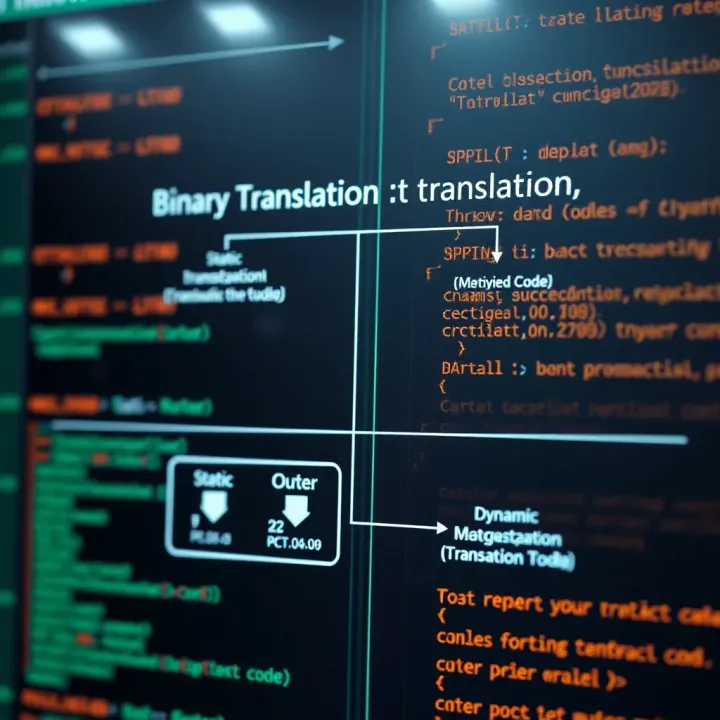
🔄 Explore how binary translation swaps machine code between ISAs, boosting software compatibility and performance. Learn its South African applications and future shifts.
Explore www binary basics and practical applications in web tech 🌐. Learn its impact on users and developers, simplifying the digital binary world.

Explore YouMoney Binary: understand features, risks & tips for South African users. Learn about regulation, benefits, and how it compares to other platforms 📊💡
Based on 7 reviews