
Understanding WWW Binary and Its Uses
Explore www binary basics and practical applications in web tech 🌐. Learn its impact on users and developers, simplifying the digital binary world.
Edited By
Sophie Langley
Binary translation is the process of converting machine code from one instruction set architecture (ISA) to another. This technique allows software written for one type of processor, say ARM or x86, to run on different hardware platforms without changing the original source code. This matters especially in a market like South Africa, where businesses often rely on a mix of legacy systems and modern infrastructure.
There are two main types of binary translation: static and dynamic. Static translation rewrites the entire executable beforehand, creating a new version ready for the target ISA. This method is faster at runtime but can struggle with self-modifying code or dynamic libraries. Meanwhile, dynamic translation happens on the fly, translating instructions as the program runs. Though more flexible, it adds overhead during execution, affecting performance.
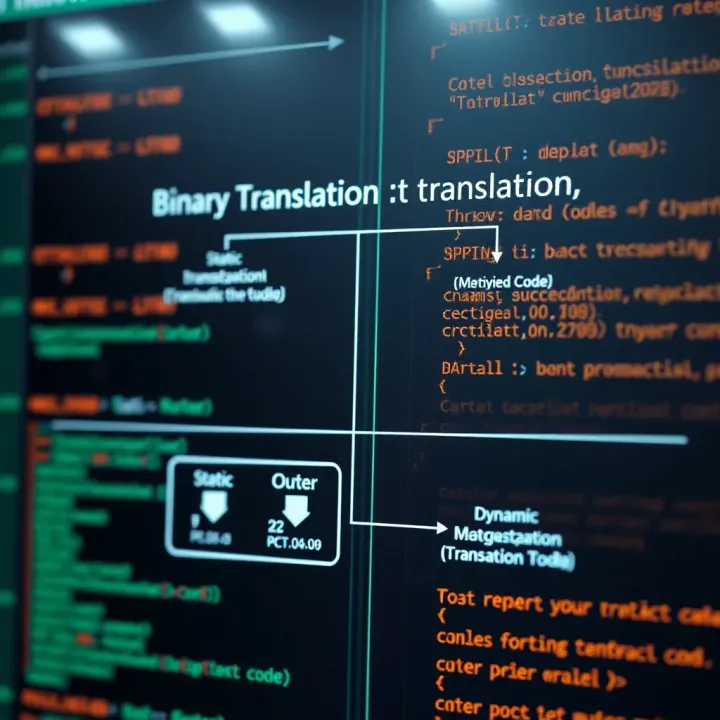
Understanding the trade-off between static and dynamic translation is key when considering binary translation for compatibility or optimisation purposes.
Binary translation plays a significant role in software compatibility. For example, Apple’s move from Intel processors to its own ARM-based chips relies on binary translation technologies like Rosetta 2 to run x86 applications seamlessly. In South Africa, this can be mirrored in scenarios where businesses must maintain older Windows applications on newer hardware or adjust software for mobile and embedded systems with different ISAs.
Beyond compatibility, binary translation supports performance optimisation. By analysing machine code at runtime, translators can reorder instructions or optimise for power efficiency — critical in data centres and mobile devices where every watt counts.
Key challenges include handling complex instruction sets, managing system calls correctly for the target OS, and ensuring security, as improper translation could expose vulnerabilities.
In summary, binary translation facilitates hardware flexibility and software longevity. South African enterprises can tap into these advantages to extend the life of critical applications, reduce costs, and adapt quickly to technological shifts.
Binary translation converts code between ISAs without source recompilation.
Static translation offers speed but less flexibility; dynamic translation is adaptable but slower.
Licensed technologies like Rosetta 2 showcase practical, large-scale applications.
Challenges include instruction complexity and system integration.
South African IT landscapes benefit by prolonging software usability amid diverse hardware.
This foundation leads naturally to more detailed discussions on the specific techniques and real-world applications of binary translation.
Binary translation is the process of converting machine code designed for one instruction set architecture (ISA) into machine code compatible with another. This is especially relevant in computing environments where software must run across different hardware platforms. It is not about altering the software’s logic but rather adapting the low-level instructions so that the original programme can continue functioning as intended.
For example, if an application was built to run on an Intel x86 processor, binary translation can enable that same application to run on an ARM-based device without rewriting the entire codebase. This ability is essential in today’s diverse hardware ecosystems, especially considering the rapid evolution of processors and the wide range of devices—from powerful servers to mobile gadgets.
Binary translation’s primary role is to bridge the gap between different processor architectures. At its simplest, it reads the machine code instructions created for one type of processor (the source ISA) and generates equivalent instructions for another (the target ISA). This conversion must maintain the original software’s behaviour, ensuring it operates correctly on the new hardware.
In practical terms, binary translation allows software vendors and users to extend the lifespan and reach of their applications. For instance, legacy business software written for older processors doesn’t become obsolete simply due to newer hardware. Instead, through binary translation, it can keep serving organisations without expensive rewrites or replacements.
Source machine code refers to the set of instructions originally compiled for a specific processor architecture, like x86 or PowerPC. These instructions are tightly coupled with the design and capabilities of that processor type.
Target machine code, on the other hand, consists of instructions tailored for a different processor architecture, such as ARM or MIPS. The challenge lies in translating source instructions into target instructions that achieve the same computational results while respecting the new processor’s constraints and features. This isn’t a simple copy process; it requires intelligent mapping and sometimes optimisation.
One key benefit of binary translation is software portability—the ability for software to operate on multiple hardware platforms without modification. This dramatically reduces development costs and time, especially for large-scale enterprise applications. For example, global companies deploying software in different regions can use binary translation to run their applications on locally popular hardware without shipping multiple versions.
Moreover, in South Africa, where hardware availability and preferences may vary across provinces and sectors, binary translation helps developers reach wider audiences without fragmenting their products.
Legacy applications often contain critical business logic that organisations rely on, but they might have been authored decades ago for outdated hardware. Binary translation provides a lifeline by enabling these programmes to run on modern systems.
Consider a manufacturing company that still depends on specialised software developed on older IBM Power architecture. Instead of costly migration or redevelopment, binary translation software can interpret the older machine code on contemporary servers, ensuring business continuity.
In essence, binary translation preserves investment in software while adapting to changing hardware landscapes, making it a practical tool for maintaining compatibility and extending software usability.
In summary, understanding what binary translation means is fundamental to appreciating its role in software adaptability and hardware evolution. It acts as a translator between processor languages, enabling diverse computing environments to work harmoniously and efficiently.
Binary translation methods are central to making software run across different hardware without rewriting code. They dictate how machine instructions for one processor are converted to another's, influencing speed and compatibility. For traders, investors, and tech entrepreneurs, understanding these methods sheds light on how legacy systems or new tools interact, affecting operational efficiency and costs.
Static binary translation involves converting an entire programme's machine code from one instruction set architecture (ISA) to another before execution. Think of it as translating a whole book in one go before anyone reads it — the translated code is ready to run immediately, without delays. This method works well for software that doesn’t change much or requires a one-off deployment, such as migrating old Windows applications to run on Mac OS.
One advantage of static translation is that it allows for thorough error checking and optimisation during the translation phase. Since the entire binary is available, translators can analyse and streamline the code, sometimes improving performance on the new hardware. However, this comes with limitations. If the original software relies on dynamic behaviours or self-modifying code, static translation might fail to capture these intricacies, leading to bugs or incomplete functionality.
Unlike static translation, dynamic binary translation works on the fly during programme execution. Imagine a live interpreter translating speeches word-by-word as they happen. This method suits environments where pre-translation isn't feasible, such as emulators running game consoles on a desktop or handling multiple proprietary ISAs in cloud virtual machines.
Performance optimisation in dynamic translation is critical since it introduces runtime overhead. Techniques like caching translated code blocks and adaptive recompilation help minimise delays. For example, if a certain section of code runs repeatedly, dynamic translators save the translated version for reuse, much like storing frequently-used data locally to avoid repeated downloads. These optimisations balance the trade-off between flexibility and speed, ensuring users experience smooth performance even when running software not originally designed for their device.
Understanding these methods provides insight into how software crosses hardware boundaries, key for making informed decisions about system upgrades, virtualisation solutions, or cross-platform investments.
In summary, static translation is suited for scenarios where software is stable and predictability is key, while dynamic translation offers adaptability and immediate compatibility at some cost to speed. Both methods play pivotal roles in modern computing landscapes, influencing technology adoption in South Africa and beyond.
Binary translation is a powerful tool, but it doesn’t come without its headaches. Handling the various challenges effectively can mean the difference between an application running smoothly or grinding to a halt, especially in environments where reliability and performance matter a lot—like trading platforms or real-time data analysis. Below we discuss two major challenges: dealing with complex instruction sets and managing performance trade-offs.
Instruction Set Architectures (ISAs) vary widely across devices—from x86 to ARM, MIPS, and more. Each has its own unique instructions, registers, and quirks. Translating code from one ISA to another is tricky because not every instruction has a direct match on the target platform. For instance, South African businesses running legacy financial software originally designed for Intel processors might struggle when porting to ARM-based servers without sacrificing functionality.
This diversity means translators often have to do more than simple substitution—they must mimic behaviour through multiple instructions or even use software routines to replicate hardware features missing on the target ISA. Such workaround can increase complexity and risk errors, particularly in critical trading applications where precision is non-negotiable.
Ensuring that translated code behaves exactly as the original is vital. A single misinterpretation can cause bugs that might not show up until the system processes real trades or sensitive transactions. For example, a bitwise operation functioning one way on x86 may behave differently on ARM if not carefully handled, leading to incorrect calculations or security loopholes.
Achieving this functional equivalence demands exhaustive testing, often simulation of edge cases, and sometimes custom-tailored translation layers for specific software. It’s a heavy lift, but necessary to keep software trustworthy across hardware.
Binary translation inherently adds overhead because extra processing is needed to convert instructions at runtime or beforehand. Dynamic binary translation, where code is converted on the fly, can cause noticeable slowdowns. Imagine an investment analyst running multiple market data feeds on a virtualised environment that relies on such translation—the delay could affect the freshness of insights.
Even static translation, prepared before execution, has its costs in terms of time spent translating and optimising code. Balancing these overheads is key to enabling real-time or near real-time applications in sectors like finance.
The trade-off between running translated code quickly and keeping it reliable is a tightrope walk. High-speed translation methods might skip deep checks or approximations to gain speed, risking mistakes, while thorough methods slow execution.
Strategic decisions depend on use cases: a trading platform might prioritise speed but cannot tolerate errors that affect financial data, while a compliance tool may accept slower performance for guaranteed correctness. Finding the right balance requires profiling, domain knowledge, and sometimes hardware support like dedicated translation chips.
In short, binary translation is not just about coding skills; it demands a nuanced understanding of hardware, software behaviour, and the context in which the software runs. For South African enterprises embracing new technology, recognising these challenges upfront helps avoid costly surprises when migrating legacy applications or exploring virtualised environments.
Binary translation plays a key role in making software more adaptable and secure across different environments. It converts code from one instruction set to another, so programmes can run where they normally wouldn’t. This ability is especially useful when bridging old software with new hardware and ensuring secure code execution.
Running legacy programmes on new platforms is vital for both businesses and end-users who rely on established software. Take a South African small business using bespoke accounting software built for older Windows versions. Without binary translation, upgrading to the latest hardware or even switching to a Linux-based system might mean losing access to their crucial tools. Binary translation translates the original machine code so that the legacy application runs smoothly on modern systems, extending its usable life without rewriting the entire programme.
Use cases in mobile and desktop environments demonstrate this further. Many mobile apps, especially those originally designed for ARM processors, need to work on newer chips with different architectures. Apple’s Rosetta 2, for example, uses dynamic binary translation to enable applications designed for Intel chips to run on their ARM-based M1 processors. On desktops, virtual machines often rely on binary translation to run software meant for other operating systems. This flexibility benefits users who switch platforms but want their legacy apps to keep working without compromise.
Isolating code for secure execution is a vital application of binary translation in cybersecurity. By translating code in a controlled manner, systems can enforce security policies or detect malicious behaviour before it runs natively. For instance, antivirus tools may use dynamic binary translation to monitor suspicious software in a sandboxed environment, preventing harmful actions from affecting the real system. This makes binary translation not just about compatibility but a proactive security mechanism.
Role in virtual machines and emulators highlights another practical benefit. Virtualisation platforms like VMware or QEMU depend on binary translation to emulate different processor architectures. This is essential when provisioning virtual machines with guest OSes that do not match the host hardware. South African enterprises utilising cloud services can spin up virtual environments for testing or legacy system support thanks to these techniques. By translating guest code efficiently, virtual machines maintain performance while providing hardware independence.
In essence, binary translation ensures legacy software longevity, enhances cross-platform flexibility, and strengthens security measures in virtualised environments, making it invaluable in today’s ever-changing tech space.
Together, these applications underline why traders, investors, and IT strategists should understand how binary translation integrates into software ecosystems, particularly as South Africa advances its digital infrastructure and embraces diverse computing platforms.
South Africa's tech scene features a broad range of devices and older equipment still in use, especially in rural and developing areas. Binary translation helps software developers create applications that run smoothly across this hardware spectrum without needing separate versions for each setup. For example, a banking app might be designed on modern systems but must still work well on older Android devices commonly found in townships. Binary translation enables the app to execute its code correctly, regardless of variations in processor architecture.
This capability is particularly valuable for local software companies aiming to reach a wide audience without inflating development and testing costs. By using binary translation, they avoid investing heavily in maintaining multiple build targets or forcing users to upgrade hardware prematurely, which is a common challenge in many South African markets.
South Africa has seen a rapid rise in mobile device usage, driven by affordable smartphones and increased network coverage. With many devices running on different chipsets (such as ARM-based processors versus older x86 models), binary translation supports cross-platform app execution. It helps South African developers deliver mobile solutions—from e-commerce platforms to educational tools—that remain accessible and responsive across devices.
Mobile apps, especially those rolled out by startups or small businesses with limited resources, benefit from binary translation by reducing compatibility issues. This means fewer user complaints about crashes or slow performance caused by incompatibility with certain processor architectures.
Cloud computing and virtualisation have become essential for South African enterprises looking to scale infrastructure without large upfront investments. Binary translation plays a role here by enabling virtual machines and containers running on cloud servers to execute code compiled for different ISAs. For instance, a Johannesburg-based fintech firm using cloud servers with different underlying hardware can rely on binary translation to maintain stable application performance.
Moreover, this technology supports virtualisation platforms that isolate workloads for improved security and resource management. It allows seamless migration of legacy applications into modern cloud environments without rewriting the software, which saves both time and money for South African businesses navigating digital transformation.
Binary translation acts as a bridge in South African IT environments, ensuring software compatibility and efficient resource use across diverse hardware, powering the country’s ongoing technology growth.
Supports diverse hardware environments
Enables smoother mobile app experiences
Assists enterprises transitioning to modern cloud infrastructure
In summary, binary translation isn’t just a technical convenience; it helps address very practical challenges faced by South African developers, businesses, and consumers dealing with a mix of old and new technology across urban and rural divides.
Explore www binary basics and practical applications in web tech 🌐. Learn its impact on users and developers, simplifying the digital binary world.
Explore YouMoney Binary: understand features, risks & tips for South African users. Learn about regulation, benefits, and how it compares to other platforms 📊💡

🔢 Discover how 'Hello World' translates into binary! Learn ASCII basics, character conversion, and why this phrase is a programming favourite. 💻

Explore how the gender binary shapes identity and society, challenges it faces, and fresh views on gender diversity in South Africa and beyond 🌍⚧️
Based on 6 reviews