

Understanding Candlestick Chart Patterns
📊 Master candlestick chart patterns for smarter trading! Discover key signals, practical tips, and handy PDF resources tailored for South African investors.
Edited By
Oliver Kensington
Understanding forex chart patterns is essential for anyone serious about trading currency pairs. These patterns act as visual signals on price charts that hint at possible market moves. For South African traders grappling with volatility in the forex market and Eskom’s loadshedding interruptions, recognising these patterns boosts confidence in decision-making and trade timing.
Forex charts reveal how prices move over time, and certain shapes regularly emerge. These shapes — or patterns — reflect the psychology and behaviour of market participants. Relying on them instead of gut feeling helps traders avoid costly mistakes. For example, a ‘head and shoulders’ pattern often marks a trend reversal, signalling traders to consider selling.
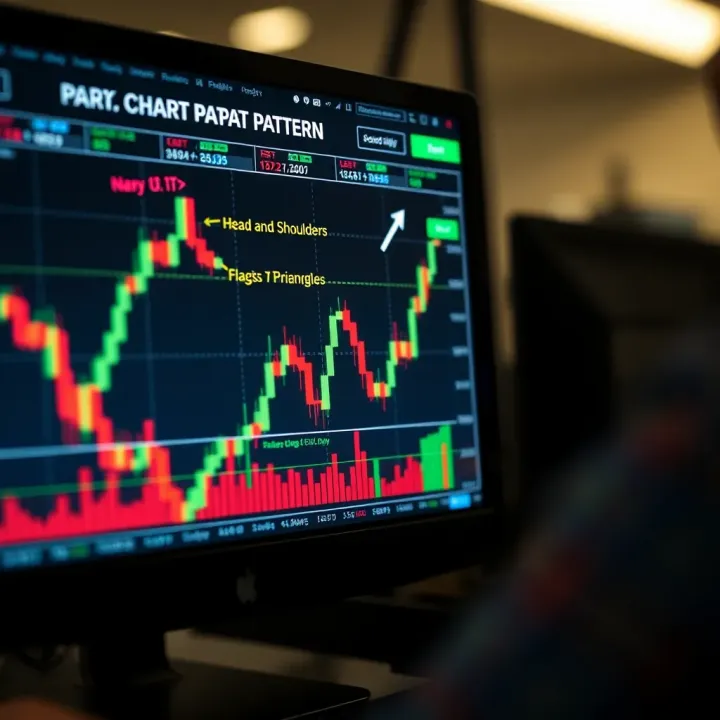
Getting familiar with patterns such as double tops and bottoms, triangles, and flags provides a groundwork. Each suggests different things; some warn the trend could stop, others that it will continue strong. Learning to spot them involves studying price highs, lows, and volume changes.
Mastering forex chart patterns gives traders a clearer lens on potential market moves, reducing guesswork and sharpening entry and exit strategies.
South African traders will find that local market conditions sometimes add their own twist to global forex behaviour. Factors like Rand liquidity, geopolitical shifts, and economic data releases can affect how patterns play out. Plus, the cost of data and connectivity can make quick decision-making a challenge, so having reliable PDF guides for offline review proves handy.
Practical steps for starting include:
Studying major patterns and their trading implications
Using demo accounts to test pattern recognition without risking cash
Downloading curated PDF guides from trusted platforms like MyBroadband or local brokerages
Combining patterns with technical indicators for confirmation
Remember, no pattern guarantees profit, and false signals happen often. The key is to use chart patterns as part of a broader trading plan that includes risk management and ongoing learning. That said, even recognising a couple of patterns can significantly improve how you navigate South Africa’s dynamic forex market.
This article will explain important forex chart patterns and show you how to find useful PDF guides. Whether you’re a new trader or looking to sharpen your skills, these tools will help you trade more confidently and without second-guessing as much.
Recognising common forex chart patterns is a solid starting point for anyone trading in the foreign exchange market. These patterns offer clues about where the price might head next, giving traders practical tools to make informed decisions. Instead of relying solely on hunches, understanding these shapes on a chart helps spot potential reversals or continuation movements. For instance, seeing a pattern like the head and shoulders could warn you that a currency pair is about to turn bearish, allowing you to adjust your strategy accordingly.
This pattern signals a potential trend change from bullish to bearish. It consists of three peaks: the middle one (the head) is the highest, flanked by two smaller peaks (shoulders). When the price dips below the ‘neckline’ connecting the shoulders' lows, it suggests sellers are taking control. For example, if the USD/ZAR pair forms this pattern, it could indicate weakening dollar strength against the rand, prompting traders to consider short positions.
Here, the price hits a high (double top) or a low (double bottom) twice before reversing direction. A double top usually marks a resistance level where sellers overpower buyers, often signalling a drop ahead. Conversely, a double bottom highlights strong support, hinting at an upcoming rise. Traders watching EUR/ZAR noticing a double bottom might see this as a chance to enter a long trade before prices move up.
Similar to double tops and bottoms but potentially stronger signals, these patterns show the price testing the same level three times. Each touch tests market patience and often precedes a notable reversal. For example, a triple top in GBP/USD might highlight stubborn resistance, prompting cautious traders to exit long positions.
Triangles pinpoint periods of consolidation where buyers and sellers struggle for control before the price breaks out. An ascending triangle suggests upward pressure, often breaking higher. Descending triangles hint at bearish bias, breaking lower. Symmetrical triangles show equal pressure and can break either way. In volatile markets like forex, spotting these formations on charts helps plan trades around expected breakout directions.
These short-term continuation patterns appear after strong price moves, resembling small rectangles (flags) or tiny symmetrical triangles (pennants). They indicate brief pauses before the trend resumes. For instance, after a sharp rally in USD/JPY, spotting a flag could mean the uptrend is simply taking a breather before advancing further.
Also called trading ranges, rectangles occur when price consolidates between parallel support and resistance levels. The price bounces sideways until a breakout happens. This pattern helps traders identify key levels for stop-loss and take-profit orders. Observing a rectangle during calm market phases in the AUD/ZAR pair might guide you to trade breakouts with defined risk.
Mastering these common chart patterns sharpens your ability to read the market’s signals. While no pattern guarantees success, they form the backbone of many reliable trading strategies used worldwide, including here in South Africa.
Chart patterns offer a visual snapshot of the battle between buyers and sellers in the forex market. They help traders anticipate possible price moves by interpreting the behaviour etched into price action. This insight lets you make smarter decisions, such as timing entries and exits more accurately or setting sensible stop-loss levels. For instance, recognising a head and shoulders pattern early might suggest a trend reversal, signalling a good moment to exit a long position before losses pile up.
More than just shapes on a chart, these patterns capture the collective psychology of market participants. Understanding these dynamics is particularly useful in a volatile market like forex, where sentiment can shift rapidly. A trader who reads these signs well can respond to shifting market moods instead of chasing after price movements blindly.
Chart patterns emerge because buyers and sellers act based on similar cues and emotions like fear, greed, or hesitation. When prices reach a certain level multiple times but can’t break through, it shows that either buyers or sellers are hesitant to push further. For example, a double top pattern forms when prices hit a resistance level twice but fail to close above it, indicating sellers are overpowering buyers at that price.
Understanding this push-and-pull helps traders predict potential reversals or continuations. If you spot a flag pattern forming after a sharp rise, it suggests buyers need a breather before the trend continues, rather than a total reversal.

Sentiment reflects the overall attitude of traders and investors, which drives price trends. During bullish periods, optimism pushes prices higher, often producing continuation patterns like ascending triangles. Conversely, fear or panic can lead to sharp drops and reversal patterns.
By interpreting these signals, you gauge how sentiment might turn in the near term. A sudden spike in volume accompanying a breakout from a triangle, for instance, signals increased conviction among traders. This understanding can help avoid whipsaws – false breakouts that trap traders – and identify when the market’s mood is really shifting.
Chart patterns offer logical places for setting stop-loss orders to manage risk. Using the previous example, if you enter a trade on a breakout of a rectangle pattern, placing your stop just below the breakout point or the rectangle’s support line helps protect against sudden reversals.
Similarly, take-profit levels can be calculated based on the pattern’s projected price move. For instance, a measured move from a flag pattern might suggest an expected rise equal to the length of the flagpole. This approach helps keep bets grounded in actual market action rather than guesswork.
Not every breakout leads to a sustained trend. Confirming breakouts with additional signals such as rising volume or a close beyond the pattern’s boundary on the daily chart reduces the chance of getting caught in a fakeout.
Say you spot an ascending triangle on the 4-hour chart. Waiting for a daily close above the resistance with increased volume increases confidence the breakout is genuine. This discipline is especially useful when trading forex pairs prone to sudden spikes, such as ZAR/USD, where ill-timed entries can lead to quick losses.
Mastering chart patterns means reading the market’s mood before it fully manifests in price moves. This knowledge helps sharpen your entry and exit points, improving your trading edge over time.
Understanding how to interpret forex charts accurately is a key skill that separates successful traders from the rest. The charts reflect market behaviour, but the trick lies in reading them correctly to spot genuine opportunities instead of false signals. This section breaks down practical tips to improve your analysis, focusing on selecting the right time frames and combining chart patterns with technical indicators.
Selecting the appropriate time frame depends on your trading style and objectives. Short-term patterns, often seen on 1-minute to 1-hour charts, suit active traders like scalpers or day traders who seek quick gains within the same day. For example, spotting a bullish flag pattern on a 15-minute chart might suggest a prompt up-move suitable for quick entry and exit.
Long-term patterns appear on daily, weekly, or monthly charts and are preferred by swing traders and investors aiming to hold positions for days, weeks, or even months. These patterns, such as a head and shoulders on a daily chart, can signal significant trend reversals and are less prone to market noise. Choosing the right time frame thus directly impacts the relevance of the patterns you trade.
Your strategy should align with the time frames you monitor. Short-term patterns require swift decision-making and tight risk controls, as price swings can be volatile and rapid. Conversely, long-term traders benefit from more relaxed timing but need patience and a tolerance for temporary pullbacks.
For example, a South African trader using a local broker platform might monitor hourly charts during market hours to catch intraday moves but switch to daily charts for bigger trend context. This combined approach helps in refining entry points and avoiding traps.
Moving averages smooth out price action and help confirm the direction of trends. When combined with chart patterns, such as a triangle breakout above the 50-day moving average, moving averages can validate strength or warn of potential reversals. For instance, a forex pair trading above a rising 200-day moving average often signals a robust uptrend.
RSI measures momentum and helps identify overbought or oversold conditions. If a double bottom pattern appears but RSI shows the market is still oversold (below 30), it strengthens the case for a potential price bounce. Conversely, an overbought RSI (above 70) near a resistance pattern might hint at a looming reversal.
Using RSI alongside patterns sharpens timing for entries and exits by highlighting whether price moves have room to run or risk exhaustion.
Volume provides clues about the conviction behind price movements. A breakout pattern accompanied by increased volume generally signals a stronger and more reliable move. For example, a flag pattern in the EUR/ZAR pair breaking on heavier volume than average suggests genuine buyer interest rather than a false breakout.
Monitoring volume alongside chart patterns helps avoid traps where prices rise or fall on thin trade, often followed by quick reversals.
Successful forex trading hinges on reading charts properly, balancing time frame choices, and using technical indicators for confirmation. Practise combining these tools to enhance your confidence and results.
These practical tips will serve you well in interpreting forex charts, making your analysis clearer, and your trading decisions sharper in South Africa's unique market environment.
Finding trustworthy PDF guides on forex chart patterns is essential for traders who want to deepen their understanding without wading through endless web pages. Having a well-structured document at hand speeds up learning and provides a handy reference when analysing charts or planning trades. Reliable PDFs offer clear, curated information that cuts through the noise, especially for South African traders who must also consider local factors like data limits and broker options.
Broker websites like those of EasyEquities, Standard Bank Online Trading, or local branches of global firms often provide educational materials tailored for their clients. These portals usually include downloadable PDFs on chart patterns, trading strategies, and risk management tips. Since these resources come straight from brokers, they tend to reflect practical realities such as spreads, commissions, and platform features relevant to South African traders. Accessing PDFs from broker education pages is a good way to get accurate, relevant content without the fluff.
Dedicated forex training platforms like BabyPips, Investopedia, or Forex Peace Army offer comprehensive guides in PDF format. These websites focus purely on education, often updating their content to keep up with market trends. Their charts and explanations break down complicated patterns into digestible parts, helping new and intermediate traders grasp technical analysis fundamentals. For South African traders, these sites also highlight how international forex trends can influence ZAR pairs — crucial for making timely decisions.
Forums such as Trade2Win or Forex Factory serve as gathering spots where traders share insights, experiences, and sometimes their own PDF packs. While these are less formal than broker or training sites, they provide practical perspectives sharpened by real-world trading. PDF guides sourced here can include unique setups or niche patterns not always found in standard tutorials. Exercise caution by verifying the credibility of contributors before fully trusting forum-shared documents.
A good forex chart pattern PDF doesn’t just describe patterns—it shows them vividly. Clear, well-labelled diagrams and real chart examples bring concepts to life, helping traders identify similar setups in live markets. For instance, a PDF illustrating a ‘Head and Shoulders’ pattern alongside a real price chart from a popular ZAR currency pair gives practical context that’s easier to apply.
Lengthy jargon-heavy texts can overwhelm learners. Quality guides get straight to the point, explaining concepts in simple language with no unnecessary fluff. Each pattern or strategy should be summarised clearly so traders can quickly absorb and implement key ideas. This fits well with busy South African traders who often juggle daytime jobs and evening study times.
Forex markets evolve, and so do the ways patterns play out. PDFs published or updated regularly reflect current market behaviour, technological tools, and economic factors. For example, a 2024 guide would likely mention how recent developments like changes in SARB policies or global risk sentiment affect pattern reliability. Keeping content fresh helps traders avoid applying outdated tactics that might leave them exposed.
Always vet PDFs by checking publication dates, source credibility, and user feedback to ensure you’re working with trustworthy, relevant information.
Locating quality forex chart pattern PDFs requires a balanced approach: use broker portals for practical local insights, training websites for structured learning, and forums for diverse trader perspectives. Look for guides with clear visuals, crisp language, and current data to sharpen your trading edge, especially when navigating South Africa’s unique forex environment.
South African forex traders face unique challenges that make it essential to customise trading strategies. Local market conditions, broker fees, and data costs all influence how you apply chart patterns practically. Understanding these factors helps traders avoid pitfalls and maximise potential profits while managing risks tailored to the South African context.
Spreads and commissions directly affect your trade profitability. South African brokers often have variable spreads depending on currency pairs and market volatility. For example, trading the USD/ZAR pair can sometimes incur wider spreads during off-peak hours due to lower liquidity, which means your entry and exit points might shift unfavourably if not considered carefully.
Additionally, commissions might apply on certain account types or currency pairs. When working with local brokers, you must factor these costs into your trading plan to ensure the gains from chart pattern setups exceed fees. A golden rule is to compare spreads during live market hours and test how your strategy fares after costs to avoid surprises.
Trading ZAR-based pairs comes with specific considerations. The South African rand is often more volatile than major currencies due to domestic economic events and commodity price fluctuations. Recognising this volatility is key when reading and acting on chart patterns.
For instance, a head and shoulders pattern on the USD/ZAR might reflect a strong local economic shift or global commodity trends influencing the rand. Adjust your stop-loss levels wider than usual to absorb sudden spikes triggered by rand volatility but stay mindful of risk. Successful management here involves blending pattern recognition with awareness of local economic calendars and events.
Data costs in South Africa can add up, especially if you trade on mobile networks. Forex platforms with heavy charting tools and live updates consume significant data. To keep expenses manageable, consider setting alerts to reduce constant monitoring or download offline resources like PDF guides for reference during low connectivity periods.
Compressing chart timeframes to focus on key patterns can also help limit data use. Some traders schedule trades and analysis to times when connected to Wi-Fi. These practical habits prevent data overuse while allowing you to stay informed and responsive.
Choosing the right app matters for both functionality and cost-efficiency. Apps like MT4 and MT5 are popular in South Africa for their reliable charting and support for local brokers. However, lighter apps such as IG’s mobile platform or FNB’s online trading app might prove more economical on data and easier to navigate on limited networks.
Look for apps offering customisable chart intervals and offline analysis options. User-friendly interfaces reduce errors and help you apply chart patterns quickly. Always test demo versions where possible to ensure the platform suits your trading style and budget constraints.
When trading forex from South Africa, balancing cost, data use, and local market understanding is as important as spotting patterns. Being savvy about these factors improves your chances of turning chart signals into real profit.
By adapting your approach to these local specifics, you’ll better align chart pattern insights with South Africa’s trading realities. This practical mindset shifts theory into successful trading action.
📊 Master candlestick chart patterns for smarter trading! Discover key signals, practical tips, and handy PDF resources tailored for South African investors.

📈 Learn key candlestick patterns and their formulas used in trading technical analysis. Access clear PDF guides tailored for South African traders and investors.
🧶 Learn how to read and use free crochet chart patterns with simple tips and local resources. Perfect for South African crocheters eager to craft with confidence!

📉 Discover key forex reversal candlestick patterns to spot market shifts. Boost your trading skills with practical tips tailored for South African forex traders.
Based on 10 reviews