

High Profit Candlestick Patterns with PDF Guide
Discover high profit candlestick patterns to boost your trading skills 📈. Get a handy PDF guide for quick, practical market insights and better decisions.
Edited By
Isabella Reed
Candlestick charts are a go-to tool for many traders and investors across the world, including South Africa. Their visual nature helps you quickly grasp market sentiment by showing price movements within specific time frames. Unlike simple line charts, candlesticks provide more detail—opening, closing, high, and low prices—making it easier to spot market trends and potential reversals.
Each candle consists of a body and wicks (also called shadows). The body shows the price range between open and close, while the wicks reveal the extremes of the trading session. For instance, a long green (or white) body signals strong buying momentum, whereas a long red (or black) body indicates selling pressure.
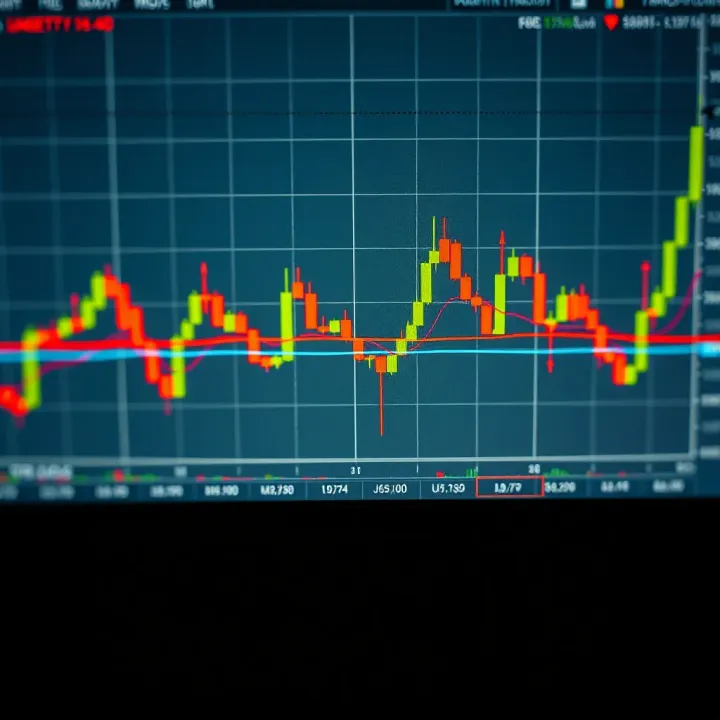
Understanding these patterns lets you make better-informed decisions rather than just guessing market direction. Recognising formations like 'hammer', 'shooting star', or 'engulfing' can hint at upcoming price shifts. Traders combine these patterns with other tools—volume data or moving averages, for example—to strengthen their analysis.
Practise spotting candlestick patterns regularly using charting platforms familiar in Mzansi, such as EasyEquities or ThinkMarkets. Consistency here beats complexity.
Pattern context matters. A bullish pattern appearing during a downtrend might suggest a reversal.
Look out for confirmation. Wait for the next candle or supporting indicators to avoid false signals.
Stay aware of news. Market-moving announcements can override technical signals at any time.
Alongside this guide, downloadable PDF resources provide quick-reference charts and pattern explanations, handy for both day trading and long-term investing. These help embed your learning and offer a solid cheat sheet while analysing live markets.
By getting familiar with candlestick basics, you'll add a vital skill set to your trading toolkit. Plus, using these visual signals can cut through market noise and sharpen your timing—helping you spot opportunities before others do.
Understanding the basics of candlestick charts is essential for anyone serious about trading or investing. These charts don’t just show price movements—they tell a story at a glance. By breaking down the structure of each candlestick, traders gain insights into market sentiment, helping to spot potential turning points or continuations.
Candlestick charts were first developed in Japan during the 18th century, long before Western-style charts came into use. A rice trader named Munehisa Homma is credited with creating this method to track market psychology, not just raw price data. This origin story is practical, as it shows candlesticks provide more nuance compared to simpler line or bar charts.
Unlike line charts that only connect closing prices, or bar charts which can be confusing for beginners, candlestick charts display four crucial price points per period: the open, high, low, and close. This makes it easier to assess both the range and direction of price movements within a single look.
Each candlestick encapsulates four key prices during a set timeframe. The open is the first traded price, while the close is the last price at interval’s end. The high and low mark the extreme prices reached. Understanding these helps you to quickly tell if buyers or sellers dominated that stretch.
For instance, if the close is notably higher than the open, the market showed strength, typically depicted by a green (or white) candlestick. If the close is below the open, a red (or black) candlestick shows selling pressure. The difference between the open and close is the body, while lines extending above and below—the wicks or shadows—illustrate the high and low extremes.
The length of the body and wicks tells its own story: a short body with long wicks suggests indecision, while a tall body with small wicks points to a strong, decisive move.
To give a real-world example, if a share in the JSE opens at R200, climbs to R210 during the day, drops to a low of R195 but closes at R208, the candle will be green with a body from R200 to R208, an upper wick reaching R210 and a lower wick down to R195. This pattern hints at an overall bullish day, despite some selling pressure.
Grasping these basics sets a solid foundation for reading more complex patterns and making better trading decisions tailored for South African markets influenced by local factors like rand volatility and economic news.
Understanding common candlestick patterns is vital for making informed trading decisions. These patterns reveal shifts in market sentiment and help predict potential price movements. Traders in South Africa, dealing with fluctuations in rand volatility and market sentiment affected by local news, find these signals especially useful.
A Doji forms when the opening and closing prices are nearly the same, resulting in a very thin or nonexistent body with longer wicks. This pattern signals indecision between buyers and sellers. For example, after a strong upward rally on the JSE, a Doji could imply the bulls are losing steam, and the market might reverse or consolidate. However, the Doji alone isn’t enough to predict direction—context with preceding trends matters considerably.
Both patterns feature a small body near the top of the trading range with a long lower wick. A Hammer at the bottom of a downtrend suggests a potential reversal as buyers defended the price after sellers pushed it lower. Conversely, the Hanging Man appearing after an uptrend warns of possible bearish reversal since buyers struggled to maintain higher prices. Traders must confirm these signals with volume or trend analysis to avoid false alarms.
The Shooting Star is a bearish reversal signal showing after an uptrend, marked by a small body near the low and a long upper wick, indicating sellers rejected higher prices. Meanwhile, the Inverted Hammer shows the opposite at a downtrend’s bottom, signalling buyers tried to push prices up but sellers pulled back. It can hint at a rebound if confirmed by subsequent candles.
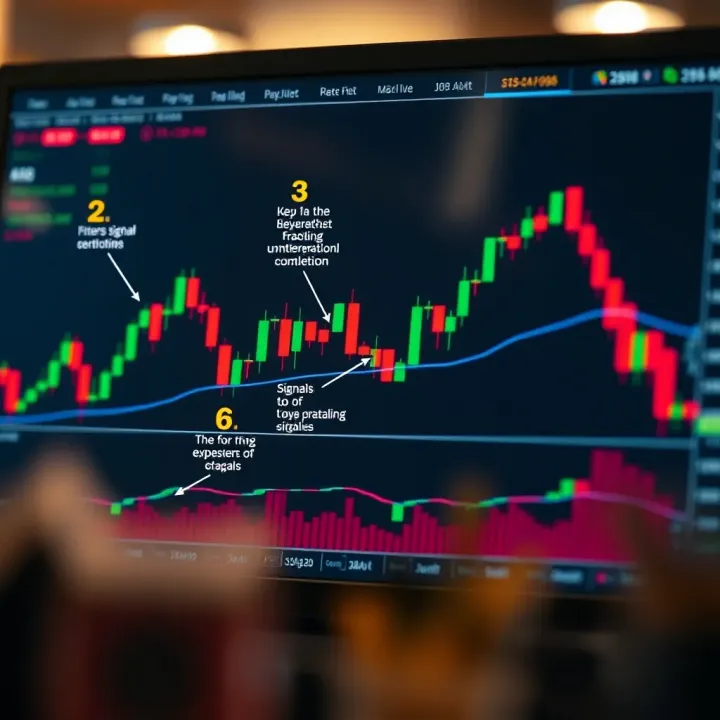
An Engulfing Pattern involves two candles where the second completely covers the body of the first, signalling strong shift in momentum. A bullish engulfing pattern at a support level means buyers took control, possibly signalling an upswing. A bearish engulfing after a rally suggests sellers are back in charge. In volatile markets like South Africa’s, catching these patterns can provide early heads-up.
These three-candle patterns indicate strong reversals. The Morning Star occurs at a downtrend’s end—first a big bearish candle, then a small indecisive candle, followed by a large bullish candle pushing prices higher. This suggests bulls are gaining force after a slump. The Evening Star is the inverse, signalling the top of an uptrend. These patterns are more reliable when combined with volume spikes.
These consist of three consecutive candles moving in the same direction. The Three White Soldiers indicate sustained bullish momentum with successive strong closes, suggesting buyer confidence. On the flip side, the Three Black Crows reflect steady bearish pressure and increasing selling interest. Both help traders identify continuation or exhaustion phases during trends.
Recognising these candlestick patterns equips you to read market psychology, helping you time entries and exits more confidently. But always use them alongside other tools like volume or trend indicators to build a clearer picture.
Understanding how to interpret candlestick patterns is fundamental for any trader aiming to make informed decisions in financial markets. These patterns offer visual clues about market sentiment, but context is everything. Without considering the bigger picture, it’s easy to jump to conclusions that lead to costly mistakes. For example, a hammer candlestick might suggest a bullish reversal, but if it appears in a strong downtrend without confirmation, the signal can be misleading.
Successful traders use candlestick patterns as one part of their toolbox, combining them with trend analysis, volume, and other indicators to build a more reliable forecast. This approach reduces the chance of false signals and improves timing when entering or exiting trades.
Candlestick patterns don’t operate in a vacuum. Spotting a bullish engulfing pattern is promising, but understanding whether the overall trend supports a potential reversal is key. For instance, a bullish reversal pattern forming during a clear uptrend might simply be a temporary pause, not a major shift. Conversely, the same pattern in a downtrend could hint at a genuine turnaround if supported by other factors.
Trendlines, moving averages, and support or resistance levels help place candlestick signals within the current market environment. South African traders should pay special attention to local market rhythms, such as how the rand’s volatility or Eskom-induced volatility impacts price action.
Volume acts like the voice behind a candlestick’s story. High volume during a pattern, like a morning star, shows strong conviction among traders. Low volume, meanwhile, can signal hesitation or a lack of follow-through. For example, if a doji appears with little volume, it might simply represent indecision rather than a meaningful signal.
Checking volume alongside price movement can help you avoid traps. In South Africa, where liquidity in some stocks or markets can be thin, volume cues become even more important. They give insight into whether big players back the move or if it's just noise.
One pitfall traders often fall into is treating every candlestick pattern as a standalone forecast. A single doji or hammer doesn’t guarantee a market move. It’s tempting to act quickly when you spot a pattern, but without supporting evidence — like trend confirmation or volume backing — chances of error rise.
For example, buying solely based on a hammer without considering the trend or recent news can lead to losses if the market’s broader sentiment remains bearish. Combine candlestick insights with other methods to strengthen your trade decisions.
Not all candlesticks tell the same story. Sometimes what looks like a bullish engulfing pattern might be too small to matter, or shadows and body sizes might not meet standard definitions. This is especially true on timeframes with limited data or volatile markets.
For instance, in fast-moving markets like South African small caps, a pattern forming over a few minutes might not carry enough weight. Recognising when a pattern is incomplete or lacks strength prevents jumping into trades on weak signals, saving both capital and stress.
Always treat candlestick patterns as clues, not commands. Context, volume, and trend will be your best guides to using them wisely in trading.
Candlestick pattern PDFs serve as handy tools for traders and investors who want to grasp charting techniques without needing constant internet access or bulky textbooks. These guides simplify complex concepts into digestible visuals and explanations, making it easier to recognise patterns and apply them wisely in the markets.
Having a PDF guide on candlestick patterns at your fingertips means you don’t have to search online every time you want a quick refresher. Whether you’re at your desk or out at a coffee shop, you can open up the document and review key patterns quickly. For example, if you spot a hammer or engulfing pattern forming in the JSE all-share index, you can immediately check the guide to confirm its significance and decide your next step without delay.
Moreover, PDFs are compatible across devices — mobiles, tablets, and laptops — making it extremely convenient for on-the-go traders to brush up on trading signals before placing orders through platforms like EasyEquities or Standard Bank Webtrader.
Many traders, especially those working in areas with unreliable data connections or dealing with Eskom loadshedding interruptions, benefit from having offline resources. Once downloaded, PDF guides are available anytime, ensuring you can continue your learning even when there’s a spotty signal or no internet.
This flexibility is crucial for those who want to build a solid foundation in chart reading. Instead of relying solely on online tutorials, which can be disrupted by data throttling or power cuts, a PDF allows uninterrupted study sessions, whether during travel or off hours.
A top-notch PDF will break down candlestick patterns with straightforward language and clear graphics. Since these patterns visually tell the market story, quality illustrations are essential. Look for guides that include colour-coded candles, marked highs and lows, and annotated examples that show exactly what to watch for.
Avoid resources crowded with jargon or cluttered diagrams. The best PDFs explain each pattern’s implication briefly but practically, helping traders grasp the context quickly and apply the information effectively without second-guessing.
Markets differ worldwide, and what works well on Wall Street might not translate perfectly to the JSE or local commodities trading. A good PDF resource will address this by spotlighting patterns frequently seen in South African indices, currency pairs like ZAR/USD, or even gold market moves influenced by global demand.
For instance, rand volatility and Eskom-related market shocks impact price behaviour uniquely, so a guide that explains how to interpret candlestick signals amid these factors can add real value. This local focus ensures your trading decisions are grounded in the realities of Mzansi’s financial markets rather than relying on generic global advice.
Having a dependable candlestick PDF tailored to South African conditions can make all the difference between guessing and trading smartly.
In sum, combining easy access, offline usability, clear visuals, and local market relevance, PDFs are practical companions for anyone serious about mastering candlestick charts in the South African trading scene.
Candlestick charts are a solid tool for any trader, but for those operating in South African markets, adapting your approach to local conditions can make all the difference. Understanding practical tips tailored to the South African context helps you navigate unique challenges, such as infrastructure constraints and currency fluctuations. This section offers clear guidance on how to get the most from candlestick patterns in your trading strategy by considering local realities and combining different analysis tools.
Loadshedding—the scheduled power cuts by Eskom—can disrupt trading sessions, cause unpredictable market behaviour, and affect data access, especially for retail traders relying on constant internet connections. A candlestick pattern that appears strong on chart might lose its reliability if a sudden power outage causes gaps or erratic price movements. Traders should be cautious around known loadshedding times and consider holding off on new trades during those periods. For example, if you spot a bullish engulfing pattern, but the local region is about to enter Stage 3 loadshedding, it might be wise to wait for confirmation once the market resets.
The rand (ZAR) is known for its volatility, often reacting sharply to global economic news, local political developments, or changes in commodity prices. This currency fluctuation adds an extra layer of complexity for traders using candlestick charts. Patterns that suggest a trend reversal or continuation may be influenced by sudden rand moves rather than fundamental shifts. It's valuable to cross-check patterns on rand-influenced stocks or Forex pairs against broader macroeconomic news to avoid being caught out by short-lived swings. For example, a hammer candlestick on a JSE-listed export stock may signal buying interest, but sudden rand weakness could shift sentiment abruptly.
Adding trend lines and moving averages to candlestick charts provides added clarity on price direction and strength of signals. A candlestick pattern near support or resistance lines drawn from trend analysis gains credibility. For instance, if a morning star pattern forms at a 50-day moving average in a bullish trend, it often indicates a stronger buying opportunity. Moving averages help filter noise, showing traders whether to trust a reversal or wait for trend confirmation, especially useful during volatile conditions.
South African traders often rely on indicators like the Relative Strength Index (RSI), Moving Average Convergence Divergence (MACD), and Bollinger Bands alongside candlestick patterns. RSI helps spot overbought or oversold conditions that confirm or challenge candlestick signals. MACD supports momentum analysis, which can back up patterns like three white soldiers or engulfing candles. Bollinger Bands give context to price volatility, highlighting when a breakout candle might have more significance. These tools combined increase confidence and reduce the chance of false signals, particularly in dynamic local markets.
Integrating local insights with traditional candlestick analysis gives South African traders a practical edge—combining patterns with loadshedding awareness, rand volatility, and additional indicators results in a smarter, more resilient trading approach.
Discover high profit candlestick patterns to boost your trading skills 📈. Get a handy PDF guide for quick, practical market insights and better decisions.
🔢 Learn how hexadecimal and binary number systems work and explore practical tools for easy conversion. Perfect for students and IT pros in South Africa.
💹 Explore how forex trading simulators help you practice and master the forex market risk-free. Learn to test strategies and boost your trading skills effectively.
Learn how to convert hexadecimal to binary easily 🔢. Understand key concepts, tips, and practical steps tailored for South African tech enthusiasts 🇿🇦.
Based on 13 reviews