

Free Forex Trading Courses: A Complete Guide
🌍 Explore free forex trading courses tailored for South African traders! Learn strategies, risk management & tools to grow skills without upfront costs. 📈
Edited By
Thomas Harrington
Crochet chart patterns offer a visual way to understand and follow crochet designs without relying solely on written instructions. For traders, investors, and entrepreneurs who enjoy crafting during downtime, these charts can simplify complex patterns, allowing for quicker, more accurate results.
Charts use symbols to represent different stitches, laid out in the order you'll work them. Unlike textual patterns, they show the design's shape and structure at a glance, which helps prevent mistakes, especially in intricate projects. This can be a huge time-saver if you're managing a busy schedule or juggling multiple ventures.
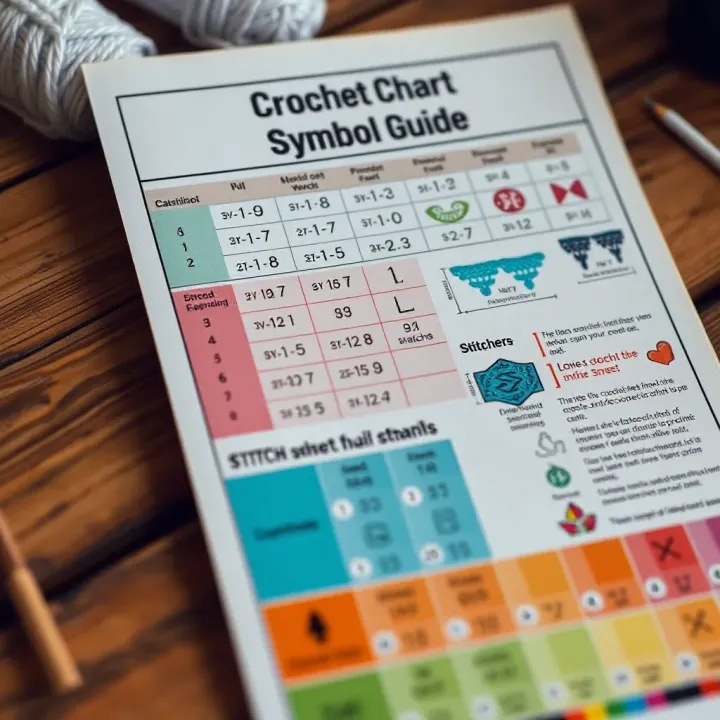
Many free crochet chart patterns are available online, through local craft groups or South African knitting and crochet forums. Accessing these patterns costs nothing, making it an excellent resource whether you're picking up crochet as a hobby or considering it for small-scale production.
Here’s why you might want to start using crochet charts:
Visual clarity: See exactly where each stitch fits in the bigger picture.
Efficiency: Follow the chart step-by-step without re-reading long paragraphs.
Adaptability: Easier to adjust and personalise patterns to suit your project.
To work effectively with charts, familiarize yourself with common symbols like a chain (an oval), single crochet (an X or +), and double crochet (a T with a line). Free guides are often included with patterns, helping beginners decode charts effortlessly.
Getting comfortable with crochet chart patterns is a skill that pays off, combining creativity with precision and opening doors to a world of designs that written patterns may struggle to convey.
If you’re keen to enhance your crafting skills, start exploring free crochet chart patterns today. They offer a practical edge for any crocheter aiming to master this craft while balancing a busy lifestyle or growing a creative business.
Crochet chart patterns offer a visual way to understand and create crochet designs. Instead of solely relying on written instructions, which can sometimes be dense or confusing, charts use symbols to map out each stitch. This visual layout helps you see how the pieces fit together at a glance, making it easier to tackle complex patterns or monitor your progress.
Written patterns tell you step-by-step what stitches to make, often in a long list. They might say "chain 5, skip 2 stitches, double crochet 3 times" and so forth. While clear to some, this way can become tricky for complex projects, especially when rows build on each other in intricate ways.
Charts, on the other hand, turn these steps into symbols arranged in a diagram that shows how the stitches relate spatially. For example, a row of treble crochets might appear as a sequence of "T"-shaped icons placed side by side, revealing exactly how many stitches fit across a row and where a stitch repeats or decreases. This can help you catch errors faster than wading through lines of text.
It’s key to know that crochet charts speak a language of symbols: a small circle typically means a chain stitch, a plus (+) or cross (x) for single crochet, a T with a slash for double crochet, and so on. Learning these lets you read various patterns without confusion.
South African crocheters will find these symbols consistent across many local and international patterns, making it easier to download free charts from community sites or global platforms. Once you’re familiar with the icons, you can trust the chart to guide your hands without needing to switch back and forth between text and visuals.
Charts provide an immediate picture of how your crochet piece forms. Instead of guessing how instructions translate into shape, you see the entire pattern’s layout. This helps if you want to plan how a triangle shawl grows or how motifs fit in a blanket.
For instance, spotting where clusters form or how repeats align becomes straightforward. This clarity allows faster edits if you wish to adjust size or stitch count before starting or mid-way through your project.
If you’re working on intricate motifs, written instructions sometimes miss explaining how stitches interact spatially, leading to confusion or mistakes. Charts offer a visual map, making it easier to identify where something went wrong.
Suppose you notice a gap or uneven edge while crocheting; cross-checking your work with the chart symbols can reveal if you skipped a stitch or misread the pattern. It’s like having the blueprint handy to double-check against your work, sparing time and frustration.
One big plus is that chart symbols are understood worldwide. Unlike written instructions bound by language, charts let you access patterns from any country without struggling over translation.
So, if you find a striking design by a Japanese or European designer, you can still follow it with confidence. South African communities often share charts sourced internationally, and knowing this visual language opens up a whole treasure trove of free patterns and inspiration.
Remember, learning to read crochet charts isn’t just about following a new format — it’s about giving yourself more options, improving accuracy, and connecting with a broader crafting community.
By understanding what crochet chart patterns are, why they matter, and how they differ from traditional patterns, you’re well-placed to embrace this practical skill for your next project.
Learning to read crochet chart patterns properly is a key step for anyone serious about taking their crafting to the next level. Unlike written instructions, charts give a visual map of stitches, making it easier to grasp complex arrangements at a glance. For example, when working on a detailed granny square or floral motif, a chart shows where and how stitches stack up rather than relying on dense paragraphs. This is especially handy if you're a South African crocheter following international patterns where language or terminology differences can make written patterns confusing.
Most crochet charts use standard symbols to represent different stitches, giving you a universal shorthand. A chain stitch is often a small oval, a double crochet appears as a T with a slash, and a slip stitch looks like a dot or a small filled circle. Knowing these symbols helps you visualise the structure without stopping to decode words constantly. For instance, spotting a cluster of double crochets quickly in a shell pattern is far easier with a chart.
However, symbol conventions can vary slightly between designers or regions. Some charts might use a cross (+) instead of a T for the single crochet, or change the way they show increases and decreases. It pays to check the symbol key provided with your chosen pattern, rather than assuming the chart uses the exact standard you know. This avoids frustration or mistakes when a similar-looking symbol means something different.
Charts can be laid out in rows or rounds, and understanding the direction is vital. Row patterns usually read from right to left on odd-numbered rows and left to right on even-numbered rows, mimicking your crochet work. Round charts spiral out from the centre, so you follow stitch symbols in a circular path. For example, a circular doily chart will start with a small ring in the middle expanding outward, which contrasts with a scarf pattern that stacks horizontal rows.
Marking repeats and special instructions in charts helps avoid missing crucial steps. Repeats are generally indicated with brackets or bold outlines, guiding you on which stitches to replicate multiple times. Special instructions like picots or cluster stitches might be noted with symbols combined with brief notes or colour highlights. Tracking these carefully ensures your project follows the pattern faithfully, avoiding having to frog back several rows later.
Getting confident with reading crochet chart patterns not only saves time but also cuts down on errors. It allows you to spot potential trouble spots in advance and adjust as needed, making your overall crafting more enjoyable and efficient.
Finding trustworthy and easy-to-follow free crochet chart patterns can make or break your crafting experience. With so many options online, knowing where to look saves time and prevents frustration. Good sources provide clear charts, accurate symbols, and often come with additional tips or photos to guide your work.
South African crafting communities have increasingly embraced online platforms offering free crochet chart patterns. Websites like GetsCapeCrafty and local Facebook crafting groups showcase patterns that are tailored to South African yarn brands and craft styles, which means you’re more likely to find charts compatible with local materials. These resources often encourage sharing and discussion, so you can ask for help or advice specific to our local conditions, such as how patterns hold up during loadshedding or using yarn from local suppliers.
On the international stage, sites like Ravelry and Lion Brand Yarn offer extensive libraries of free crochet chart patterns. These platforms feature printable charts that you can download and keep. Their advantage lies in the sheer volume and variety of patterns, from traditional designs to the latest trends. Many of these also come with user reviews and photo galleries, helping you decide if a pattern suits your skill level before you start.
Social media platforms have become invaluable for finding fresh crochet chart patterns. Facebook groups dedicated to crochet charts provide a space where members freely share patterns and tips. Pages such as ‘Crochet Chart South Africa’ gather local enthusiasts, making it easier to find region-relevant patterns and troubleshooting advice. Instagram also serves up plenty of creative inspiration; many crafters post chart snapshots or time-lapse videos of their projects, making it easier to visualise the finished product.
Effectively using hashtags on platforms like Instagram or Pinterest helps pinpoint the exact style or difficulty you want. Tags like #crochetcharts and #SouthAfricanCrochet narrow your search to patterns that other local crafters appreciate. Additionally, pattern-sharing websites and forums act as hubs where you can not only download free charts but also participate in discussions, helping to deepen your understanding and refine your technique.
Keeping your eyes on trusted local and international channels ensures you get quality, comprehensive crochet charts without paying a cent. This way, you can enjoy crafting with confidence and save your Rand for yarn and tools instead.
Starting with crochet charts can be overwhelming if you’re new to the symbols and layout. That’s why it’s smart to begin with simple charts designed for beginners. These patterns usually stick to basic stitches like chains, single crochet, and double crochet, making it easier to follow along without getting lost. For example, a simple granny square or a basic scarf pattern can provide a good introduction. Recognising beginner-friendly patterns saves time and frustration, giving you a solid foundation before attempting more complex designs.
Practising with plain stitches before jumping into complicated charts can build your confidence. It’s like getting your muscle memory ready; mastering a few stitches means you won’t have to pause constantly to check which stitch comes next. You might try repeating a simple chain or single crochet row several times until it feels natural. This way, when you see these stitches in a chart, you’ll recognise and execute them quickly, allowing you to enjoy the flow of crocheting rather than getting stuck on technical details.
Using stitch markers or coloured pens comes in handy when following crochet charts. For instance, placing a stitch marker at the beginning of a round or every repeat can help keep track of where you are, especially in tricky patterns with lots of repeats or rounds. Coloured pens allow you to mark different sections or stitch types directly on printed charts, which makes it easier to spot your progress or highlight tricky spots that need extra care.
Following along with video tutorials while working from crochet charts is another practical tip. Videos often clarify tricky stitch placements or pattern repeats that can be hard to grasp from a static chart alone. For a South African crocheter, combining these resources can make a big difference, especially when local crochet classes are hard to access or when you’re working at your own pace at home. Many South African crafters upload helpful content on platforms like YouTube and Instagram – pairing a visual guide with the chart improves understanding and significantly cuts down confusion.
Taking your time to get comfortable with sewing basics and using the right tools can turn what seems like a confusing chart into a straightforward, enjoyable project.
By starting simply and using practical aids, beginners can make steady progress in reading crochet charts and gain confidence to tackle more adventurous patterns over time.
Crochet charts offer more than just a replication of patterns; they provide a visual map that can be adapted and personalised to suit your unique projects. Making the most of these charts means not just following them blindly but knowing how to adjust and keep track throughout your crochet journey.
Adjusting size and yarn weight plays a big part in customising patterns to your needs. Yarn thickness and hook sizes can change the dimensions of your finished piece significantly. For instance, if a chart pattern is created with DK yarn but you prefer using a thicker acrylic yarn you bought at PnP, your outcome will likely be bigger and bulkier. To compensate, you might need to reduce the number of stitches or rounds or switch to a smaller hook to keep the intended size.
Sizing also matters if you’re making wearable items like beanies or scarves. Measuring your gauge properly with a swatch before starting helps you know how many repeat units to include or remove. This way, you avoid ending up with a shawl that fits your cat better than yourself.
Combining elements from different charts can add creativity and uniqueness to your projects. Let’s say you find a beautifully charted granny square and want to pair it with a lacy edging pattern from another chart. Understanding the basic stitch symbols and pattern repeats lets you mix and match without confusion. You just need to ensure compatible stitch counts and transitions.
This approach works well for upcycling older projects, using leftover yarn, or customising gifts. South African crocheters often blend traditional motifs with modern patterns to give a personal touch to boerie-roll cozies for friends or even crafting unique decorative cushions.
Methods to mark progress on charts can save you from redoing sections or losing track of intricate details. Using coloured pencils or highlighters to mark completed rows or rounds on printed charts is common. Some prefer transparent sticky notes or washi tape strips to cover portions as they go. Digital tools like PDF annotation apps can do this too if you work from a screen.
Establishing a clear system helps prevent mistakes, especially with complex patterns where missed stitches spoil the design. For South African crafters juggling busy schedules, this makes picking up work after a break less stressful.
Keeping your progress visible on the chart is like leaving breadcrumbs in the veld – you’ll always find your way back without the hassle.
Troubleshooting errors using the visual map of crochet charts is more straightforward than with written patterns. If a stitch looks out of place in your work, you can refer directly to the corresponding symbol on the chart. This way, you spot if you skipped a stitch, misread a symbol, or misunderstood a repeat.
For example, if a lace panel looks uneven, checking the chart’s stitch placement pattern often reveals a missed or extra chain or treble. By recognising these visual clues, you can fix errors early instead of ripping out several centimetres.
In sum, adapting crochet charts and tracking work visually enriches your crafting experience with more control and creative freedom. These steps help you craft distinctive pieces while saving time and avoiding frustration along the way.
🌍 Explore free forex trading courses tailored for South African traders! Learn strategies, risk management & tools to grow skills without upfront costs. 📈

📈 Discover how free forex trading signals work, their pros and cons, and tips to spot reliable ones in South Africa's forex market. Trade smarter!

Discover high profit candlestick patterns to boost your trading skills 📈. Get a handy PDF guide for quick, practical market insights and better decisions.

🔍 Learn how to spot, use, and trust free live binary signals in South Africa. Tips on avoiding risks and finding reliable sources for smarter trading decisions.
Based on 9 reviews