

Understanding Forex Trading Seminars
📈 Learn what to expect from Forex trading seminars, who should join, and how to make the most of these sessions for better trading results in South Africa.
Edited By
Sophia Thompson
Forex trading indicators play a vital role in shaping successful trading strategies. They provide traders with practical insights into market movements, helping to identify trends, pinpoint entry and exit points, and manage risks smartly. However, not all indicators suit every trading style or market condition, so choosing the right ones is key to effective decision-making.
Traders in South Africa, facing unique market volatility and global currency influences, benefit greatly from understanding the strengths and limits of different indicators. It’s not about flooding your chart with every tool available but selecting a few reliable ones that complement each other and your trading goals.
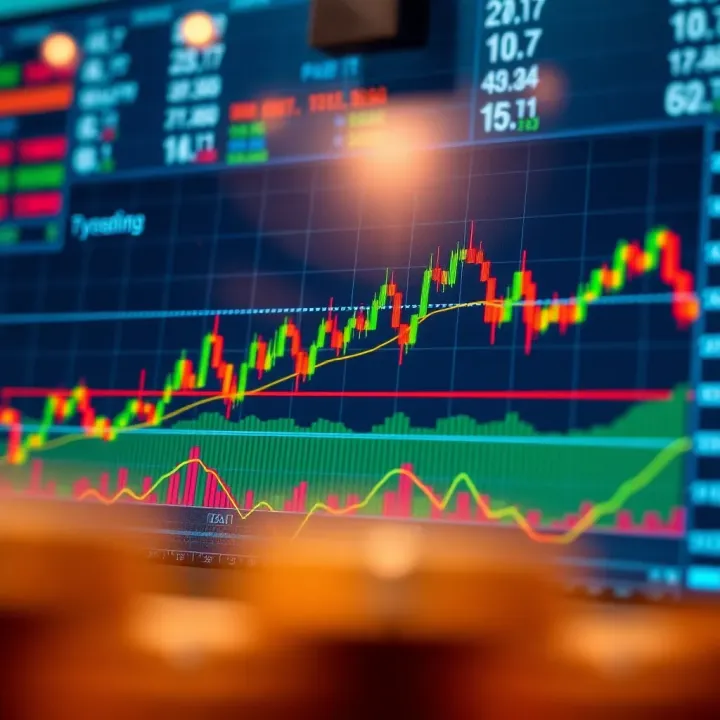
Commonly used forex indicators fall into several categories:
Trend indicators, like Moving Averages and the Average Directional Index (ADX), help determine the market’s general direction.
Momentum indicators, such as the Relative Strength Index (RSI) or Stochastic Oscillator, measure the speed of price changes to spot potential reversals.
Volatility indicators, including Bollinger Bands and the ATR (Average True Range), reveal how much price fluctuates, aiding risk management.
Volume indicators gauge the strength behind price moves but are less common in forex due to decentralised markets.
Selecting forex indicators should align with your trading timeframe, risk tolerance, and strategy complexity. For instance, a day trader might rely more on momentum indicators, while a swing trader leans towards trend and volatility tools.
Effective use of indicators involves understanding their signals — knowing when an RSI reading shows overbought conditions or a moving average crossover signals a trend change. Combining indicators can reduce false signals; for example, confirming an RSI signal with a moving average filter.
In the South African context, traders must also consider local economic events and the rand’s sensitivity to commodities, political shifts, and global dollar trends. Indicators can offer timely alerts but should be paired with fundamental awareness.
Through this article, you’ll gain a clearer view of how specific forex indicators work, their pros and cons, and practical tips on combining them. This will empower you to make smarter decisions rather than relying on guesswork or overcrowded charts.
Forex trading indicators serve as tools that help you read the market’s mood and make sense of price movements. Think of them like instruments in a pilot’s cockpit — no single gauge tells the full story, but together they offer important clues. Knowing what these indicators do and why they matter can keep you from wandering blindly into trades that carry more risk than reward.
Indicators provide insights into price trends, strength, momentum, and volatility, helping to reveal whether a currency pair is likely to continue its current direction or turn around. For example, if the Moving Average (MA) shows prices steadily climbing above past averages, it signals a possible uptrend — but if the Relative Strength Index (RSI) reads as overbought, it could warn you to expect a pullback soon. Indicators basically translate raw price and volume data into meaningful signals to help you decide when to enter or exit trades.
Most tools fall into three broad groups:
Trend-following indicators track the overall direction, like Simple Moving Averages (SMA), Exponential Moving Averages (EMA), and the Average Directional Index (ADX).
Momentum indicators measure the speed or velocity of price changes, with the RSI and Moving Average Convergence Divergence (MACD) being good examples.
Volatility indicators focus on the price’s fluctuations and risk levels, such as Bollinger Bands and Average True Range (ATR).
Each type tells a different story — trends show "where" the market moves, momentum hints at "how fast," and volatility signals "how wild" things might get.
While useful, indicators can sometimes mislead, especially in choppy or sideways markets. They rely on historical price data, so sudden economic news or political changes can make them obsolete in minutes. For instance, a strong uptrend flagged by indicators might suddenly reverse after an unexpected interest rate announcement. Also, many traders fall into the trap of using too many indicators, which causes conflicting signals and slows decision-making.
Relying on indicators without understanding their limits risks false confidence. Combine them with sound risk management and market awareness for better outcomes.
In summary, knowing the purpose and types of forex trading indicators helps you interpret their messages properly and avoid common pitfalls. Use them as guides — not gospel — and match them carefully with your trading style and market conditions. That approach gives you clearer insights and better chances of making informed, effective decisions.
Trend indicators are vital tools that help traders see the bigger market picture. Instead of getting lost in daily price fluctuations, these indicators smooth out the noise to highlight the main direction of a currency pair. Knowing whether the market is trending up, down, or sideways is often the first step in making informed trading decisions. This clarity helps prevent premature trades during uncertain or choppy market phases.
Among the most commonly used trend indicators are moving averages and the Average Directional Index (ADX). Both serve to quantify the trend’s direction and strength but in slightly different ways. Let’s unpack how these work and why they matter for your trading strategy.
Moving averages (MAs) work by averaging price data over a set period to create a smooth line on your chart. This approach reduces the erratic spikes and dips you’d usually see with raw price action. For example, a 20-day simple moving average (SMA) sums the closing prices for 20 days and divides by twenty. The result is a smoother representation that reveals the underlying trend better.
Exponential moving averages (EMAs) add more weight to recent prices, making them more sensitive to new information. This means the EMA responds faster to price changes than the SMA, which can be handy during quick market moves. For instance, in the South African rand–US dollar (ZAR/USD) forex pair, traders might prefer a 10-day EMA for a faster reaction when the rand suddenly strengthens or weakens due to economic announcements.
Crossovers are a simple yet effective way to spot possible trend shifts. When a short-term moving average, like a 10-day EMA, crosses above a longer-term average, say the 50-day SMA, it can signal the start of an upward trend. Conversely, if the short-term average dips below the longer-term one, this might indicate a downward trend kicking in.
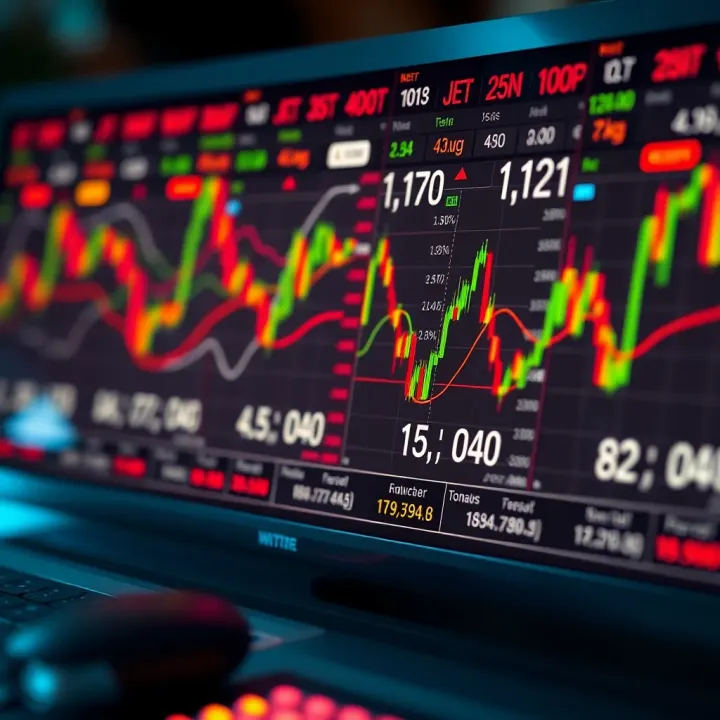
For example, if the 10-day EMA crosses above the 50-day SMA for the EUR/ZAR pair, it often points to buyers gaining momentum. Traders can use this crossover as a prompt to consider long positions or tighten stop losses on shorts. That said, crossovers work best in trending markets — in sideways ranges, they tend to give false signals.
The ADX measures the strength of a trend without indicating its direction. It generates a value between 0 and 100, where values above 25 typically show a strong trending market, and anything below 20 suggests weak or no trend. This helps traders decide whether to trade a trend-following strategy or adopt a range-bound approach.
For instance, on the GBP/ZAR exchange rate, an ADX reading climbing past 30 signals a robust trend that traders might want to follow closely. On the other hand, a reading lingering below 15 usually means price is moving sideways, so trend-based trades become riskier.
Using ADX along with moving averages can improve timing. While moving averages show direction, ADX confirms if the trend has enough strength to trade confidently.
The ADX tends to lose relevance during sideways or choppy market phases. Since it only measures trend strength, it doesn’t help much when price swings lack clear direction. This can lead to confusion as low ADX values might lag behind sudden breakouts or reversals.
In South African markets, where periods of consolidation are common due to economic or political uncertainty, relying solely on ADX can cause missed opportunities or false patience. That’s why it’s best used in combination with other indicators or price action analysis to gauge when a trend is starting or fading.
By understanding these key trend indicators, traders can sharpen their sense of market direction and feel more confident in their entry and exit timing. This helps strip away much of the guesswork and supports smarter trading choices overall.
Momentum indicators are vital tools that help traders gauge the strength and speed of price movements in forex markets. They provide clues about whether a currency pair is gaining or losing momentum, which ultimately aids in spotting timely entry and exit points. Using momentum indicators can be especially helpful in South African markets, where volatility may fluctuate significantly due to global and local economic factors.
The Relative Strength Index (RSI) measures the speed and change of price movements on a scale from 0 to 100. Generally, an RSI above 70 suggests the currency might be overbought — meaning buyers have pushed the price too high, too quickly. Conversely, an RSI below 30 indicates oversold conditions, signalling that sellers might have driven the price down too far. Traders use these signals to anticipate potential reversals or pauses.
For instance, if the USD/ZAR pair’s RSI hits 75, a trader might expect some profit-taking or a pullback shortly after. However, it’s important to remember that trending markets can keep an RSI in overbought or oversold territories for some time, so combining RSI with other tools improves decision-making.
Divergence happens when price action moves in one direction while the RSI moves opposite. This mismatch can warn of a weakening trend ahead. For example, if the rand is making higher highs against the dollar but the RSI shows lower highs, it hints at slowing momentum and a possible reversal.
Such divergences give traders a practical edge in spotting turning points before they become obvious in price charts. Spotting this kind of signal allows you to prepare for a trade exit or entry nearby, enhancing risk management.
MACD uses two moving averages of different lengths to capture momentum shifts. The difference between these averages creates the MACD line. A signal line, which is a moving average of the MACD line itself, helps identify potential turns. The histogram visualises the gap between the MACD line and the signal line, effectively showing momentum strength.
In practice, rising histogram bars reflect strengthening momentum, while shrinking bars suggest momentum loss. Traders watching the EUR/USD might use the histogram to detect whether a trend is gaining steam or slowing down after a bounce or pullback.
A classic MACD trading tactic is to look for crossovers between the MACD line and the signal line. When the MACD line crosses above the signal line, it can indicate a buying opportunity; crossing below hints at a sell signal.
For example, if the MACD line on GBP/USD crosses above the signal line and the histogram shifts from negative to positive, this double confirmation increases confidence to enter a long trade. Still, relying solely on crossovers can generate false signals in choppy markets, so many traders combine MACD with trend or volatility indicators to filter noise.
Momentum indicators like RSI and MACD don’t just tell you if a market is moving—they help you decide the best spot to jump in or out. Their signals become more reliable when used alongside other tools, improving your chances of smarter trading decisions in South Africa’s dynamic forex environment.
Understanding and applying these momentum indicators carefully can give traders a sharper edge when navigating forex markets. They distil complex price action into actionable signals that help balance timing and risk effectively.
Volatility indicators play a key role in forex trading by showing how much price swings during a particular period. These tools don’t tell you the direction of the market but help gauge the intensity of price movements. That kind of insight is valuable when managing your risk and deciding where to place stop-loss orders or set realistic profit targets.
Without accounting for volatility, you risk setting stops too tight, which can get triggered by normal price noise, or too loose, which may expose you to unnecessary losses. South African traders, for example dealing with volatile pairs like USD/ZAR, need volatility measures to avoid being shaken out by random spikes caused by local news or Rand fluctuations.
Bollinger Bands consist of a moving average line with upper and lower bands set a certain distance away, typically two standard deviations. These bands expand when volatility rises and contract when the market calms down. Traders watch for price touching or breaking the bands as a sign of strong momentum—this often precedes breakouts or reversal points.
For instance, if the price pushes above the upper band during a USD/ZAR session, it suggests the market is overbought and may soon reverse lower. On the other hand, a squeeze (bands narrowing tightly) often signals an upcoming volatility explosion, which could lead to a strong move in either direction.
Standard Bollinger settings may not always suit every currency pair or market environment. Some pairs experience more volatility than others, and trading times differ across zones. South African traders might adjust the band’s period length or deviation settings to better fit local session behaviours or the USD/ZAR's typical daily moves.
Shortening the moving average period makes bands more sensitive to recent price changes, useful for quicker markets but prone to false signals. Increasing deviation makes bands wider, helping filter out noise but possibly missing early breakouts. Tailoring these settings to your preferred forex pairs and trading style can help you spot genuine opportunities and avoid false alarms.
The Average True Range (ATR) measures average price movement over a defined period without considering direction. It’s a straightforward way to quantify daily or hourly volatility and can be applied to any pair or timeframe. For example, if the USD/ZAR ATR is 100 pips on the daily chart, that tells you the pair tends to move around that amount within a day.
Using ATR helps prepare for the typical size of swings, rather than guessing. If ATR drops, the market is quieter, while rising ATR signals more volatile conditions.
Using ATR prevents traders from setting stops too close, avoiding premature exits caused by regular price fluctuations.
Setting your stop-loss based on ATR involves multiplying the ATR value by a factor depending on your risk tolerance. A common approach is to place stops at 1.5 or 2 times the ATR away from your entry point. This respects the current volatility and gives the trade room to breathe without being too exposed.
For example, if ATR indicates a 80-pip volatility for USD/ZAR, placing a stop-loss at about 120 to 160 pips away from entry accommodates normal swings. This method avoids the typical trap of using fixed pip stops that don’t consider the market’s pulse, improving your chances of staying in winning trades longer.
Employing volatility indicators like Bollinger Bands and ATR boosts your risk management by aligning your trading decisions with real market conditions. The right settings for these indicators, matched to your trading style and local market behaviour, help protect your capital while aiming for sensible profit targets.
Choosing the right combo of forex indicators can make a big difference in your trading outcomes. No single indicator tells the full story — combining a few helps you confirm signals and spot better entry or exit points. It also tempers the weaknesses of one indicator with the strengths of another, giving you a more balanced and realistic view of the market.
Using too many indicators at once can be tempting but often backfires. It’s easy to get mixed messages when indicators clash, leading to analysis paralysis. For example, if the RSI says the market is overbought, but the moving averages suggest an ongoing uptrend, you might hesitate to pull the trigger. Keep your setup lean — focus on two or three key indicators that complement each other. This way, your charts stay clean, and decisions come faster and clearer.
Trend-following traders often pair moving averages with trend strength indicators. A simple combo is a 50-day and 200-day moving average crossover alongside the Average Directional Index (ADX). When the shorter MA crosses above the longer one, it signals a potential uptrend. If the ADX is above 25, it confirms the trend is strong enough to trade, reducing false positives.
Another useful pair is the Exponential Moving Average (EMA) combined with the Parabolic SAR. The EMA picks out emerging trends quickly, while the Parabolic SAR provides exit signals. This blend helps keep losses small if the trend reverses suddenly.
Pairing momentum and volatility indicators makes sense for managing both timing and risk. For example, pairing the Relative Strength Index (RSI) with Bollinger Bands can highlight when the price is stretched and due for a pullback. If the RSI hits overbought territory right as the price touches the upper Bollinger Band, it’s often a good cue to take profits or tighten stops.
Average True Range (ATR) pairs well with momentum indicators too. Imagine the RSI suggests a buy signal while ATR shows upcoming high volatility. You could set a wider stop-loss to avoid getting stopped out during the swings, helping you stay in the trade longer.
Combining indicators isn't about stacking every tool you can find but about choosing a handful that work well together. The aim is to build a balanced trading strategy that’s easier to follow and more reliable in spotting real opportunities.
Overall, being selective yet strategic with indicator combinations improves clarity, manages risk better, and boosts confidence in your trades. Keep it balanced and practical, especially in a market as dynamic as forex.
📈 Learn what to expect from Forex trading seminars, who should join, and how to make the most of these sessions for better trading results in South Africa.
💹 Explore how forex trading simulators help you practice and master the forex market risk-free. Learn to test strategies and boost your trading skills effectively.

🌍 Explore global forex trading basics and strategies, risks, and rules with insights for South African traders. Start mastering currency markets today! 💱📈
📈 Learn how forex trading signals work and how South African traders can use them wisely. Discover different types, benefits, risks, and trusted tips.
Based on 10 reviews