

High Profit Candlestick Patterns with PDF Guide
Discover high profit candlestick patterns to boost your trading skills 📈. Get a handy PDF guide for quick, practical market insights and better decisions.
Edited By
Sophie Bennett
Advanced candlestick patterns offer traders and investors deeper insights into market behaviour beyond the basics. While most beginners learn simple formations like hammers or doji, these complex patterns help identify turning points and potential momentum shifts with greater accuracy.
Understanding these patterns is especially valuable in South African markets, where liquidity and volatility can differ from global counterparts. Recognising formations such as the Three Black Crows, Abandoned Baby, or Tasuki Gap enables more informed decisions that can boost your trading strategy.

Advanced candlestick analysis isn’t about guessing but observing clear signals that the market often repeats. Patterns act as visual clues revealing the tug-of-war between bulls and bears.
These patterns typically involve multiple candles whose formation requires careful reading. Unlike single-bar signals, they represent more complex trader psychology and can validate trend strength or signal reversals. For instance, the Three Inside Up/Down pattern can confirm whether a downtrend is losing steam before a reversal.
Traders often combine advanced candlesticks with volume analysis or moving averages to improve reliability. For example, seeing a Morning Star pattern near significant support and increasing volume lends weight to a bullish reversal.
In South Africa, where local economic news or Eskom-related uncertainties can impact markets abruptly, these patterns provide structured ways to read price action rather than relying solely on fundamentals.
Look beyond candles alone; context from previous trend and volume matters.
Confirm patterns by checking adjacent candle shadows and bodies for consistency.
Use pattern recognition in conjunction with risk management tools like stop-loss orders.
Learning to spot and interpret these advanced candlestick signals can add nuance and edge to your market timing. Practical guides and PDF resources offer valuable visual examples and exercises that solidify these skills effectively.
In next sections, we’ll explore key advanced patterns with South African market examples and where to find solid PDF material for deeper study.
Candlestick patterns provide a visual shorthand for traders and investors to interpret price movements quickly. Originating centuries ago in Japan, they remain highly relevant today due to their ability to reveal market sentiment and potential turning points. For South African traders, understanding candlestick patterns helps make sense of the daily gyrations on the JSE or other local exchanges, particularly during volatile periods influenced by economic data releases or Eskom loadshedding.
Definition and origin of candlestick charts: Candlestick charts first appeared in 18th-century Japan to track rice prices, developed by a rice trader named Munehisa Homma. Unlike simple line or bar charts, candlesticks show price action within a specific time frame through a ‘candle’ shape, which displays both the open and close prices, alongside highs and lows. This evolved visual format aids traders in quickly spotting bullish or bearish tendencies without needing to analyse numbers alone.
Basic candlestick elements: body, wick, open, close: Each candlestick consists of a body and wicks (also called shadows). The body represents the price range between the open and close within a certain period—if the close is higher than the open, the body is typically hollow or lighter, indicating bullish pressure. Conversely, a filled or darker body shows bearish pressure where price closed lower. The wicks mark the extremes – the highest and lowest prices traded. For example, a long upper wick with a small body might suggest sellers pushed prices down after a high peak, hinting at a potential reversal.
Difference between basic and advanced patterns: Basic patterns, like hammers or shooting stars, identify straightforward signals such as short-term reversals or indecision. Advanced patterns combine multiple candlesticks to depict complex market psychology and stronger potential signals. Patterns like the Morning Star or Three Black Crows convey shifts in momentum more clearly by considering the sequence of price action. These advanced formations can help South African traders avoid false alarms common in basic setups, especially in choppier markets.
Advantages over simple patterns: Advanced candlestick patterns incorporate context by analysing multiple candles, offering a deeper read on market moves. This layered approach reduces the likelihood of entering trades on weak or misleading signals. For instance, the Evening Star pattern combines a bullish candle followed by an indecision candle and then a bearish candle, suggesting a turning point stronger than a single candle might show.
Better signal reliability and timing: Timing is everything in markets. Advanced patterns improve entry and exit timing by illustrating how the market momentum is building or fading over several sessions. This is useful during highly reactive periods like SARB interest rate announcements or political events affecting South African equities. Traders relying solely on basic patterns could be caught out by fleeting moves, but advanced patterns help filter these, making signals more reliable.
Use in different market conditions: Markets don't stay still. Sometimes they trend, other times they stall or reverse quickly. Advanced candlestick patterns are versatile, identifying reversals in trending markets and continuation signals during pauses. For example, the Rising Three Methods pattern spotlights brief pullbacks in an uptrend, which lets traders hold on rather than exit too early. This flexibility is practical in South African markets known for sudden swings and news-driven volatility.
Candlestick patterns aren't crystal balls but pragmatic tools. Understanding their nuances, especially advanced ones, equips you better to read the market pulse, make timely decisions, and manage risk effectively.
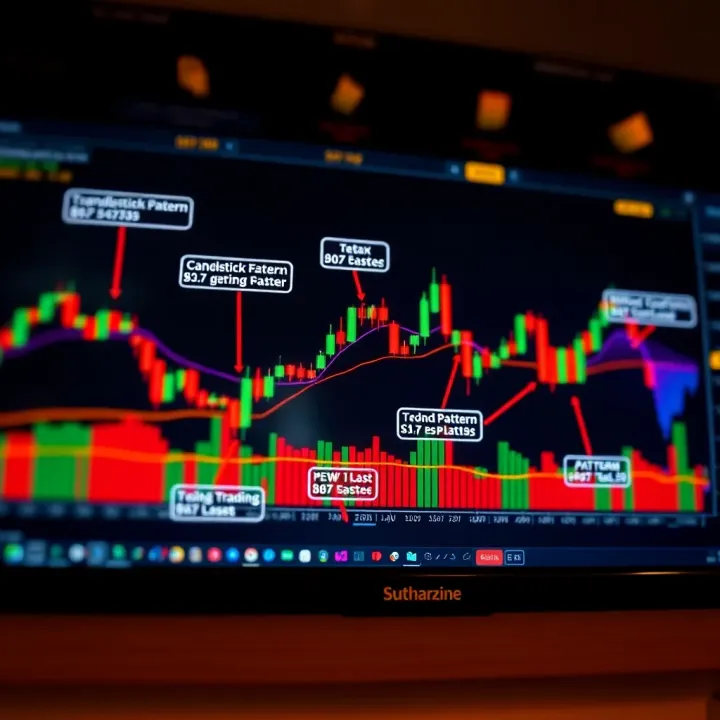
In summary, mastering candlestick patterns—from basic to advanced—gives traders a straightforward yet powerful way to grasp market sentiment visually and act with more confidence across different trading conditions.
Advanced candlestick patterns provide a sharper edge to traders and investors who want to move beyond basics. These patterns combine multiple candles to reveal shifts in market sentiment, signalling potential turning points or continuation of trends. Mastering them can lead to better timing, helping you enter or exit trades more confidently.
Evening Star and Morning Star formations are well-regarded for pinpointing market reversals. The Evening Star indicates a likely downturn after a bullish run; it consists of a large green candle, a small-bodied candle (often a Doji or spinning top), and a large red candle. For instance, when spotting this on a JSE share like Sasol after a rally, it warns traders to brace for a pullback. The Morning Star is the bullish counterpart—signalling a potential rebound after a downtrend, which can be useful when analysing dips in retail stocks like Woolworths.
Three Black Crows and Three White Soldiers represent strong, persistent moves in bearish or bullish directions respectively. Three Black Crows consist of three consecutive long red candles with lower closes, indicating sellers are firmly in control. Conversely, Three White Soldiers show three solid green candles with higher closes, suggesting robust buying interest. These patterns tend to be more reliable on higher timeframes such as daily charts and can help confirm shifts in momentum.
The Abandoned Baby pattern is less common but powerful. It appears as a Doji candle that gaps away from the previous and following candles, signalling an abrupt change in sentiment. This gap on either side suggests uncertainty followed by a reversal, making it a clear alert. In practice, spotting an Abandoned Baby during volatile sessions on the JSE can prompt timely risk management decisions.
The Rising and Falling Three Methods indicate pauses before trends continue. A Rising Three Methods pattern shows a long green candle followed by three small red or green candles within its range, then another green candle breaking higher. This suggests brief consolidation before bullish momentum resumes. The Falling Three Methods is its bearish mirror. These setups offer traders an opportunity to ride trends confidently without jumping prematurely.
Doji variants signal market indecision, with open and close prices nearly the same. Examples like the Long-legged Doji, Dragonfly Doji, and Gravestone Doji vary in appearance but share the trait of signalling possible turning points. Their significance increases when found near support or resistance levels or alongside volume spikes, helping analysts judge the strength of a stalled rally or decline.
Spinning tops are small-bodied candles with long wicks on both sides. They suggest uncertainty and hesitation among traders, as neither buyers nor sellers hold control. These often appear during pauses in trending markets or ahead of breakouts. For instance, seeing spinning tops on a retail stock affected by local events like loadshedding can signal calm before fresh moves.
Advanced candlestick patterns deliver nuanced clues that simple ones might miss. They demand practice to identify accurately but equip traders with a more precise toolkit to read market psychology and improve decision-making.
Candlestick patterns offer valuable clues about market movements, but applying them smartly in South Africa’s unique context calls for an understanding of local market dynamics. Traders and investors on the Johannesburg Stock Exchange (JSE) and other local venues can benefit from recognising how these patterns perform with South African equities and indices, while factoring in influences like loadshedding and economic updates.
Advanced candlestick patterns are well suited to the variety of instruments found on the JSE, including blue-chip shares like Sasol and Naspers, as well as popular indices such as the Top 40. These patterns typically retain their relevance, signalling likely reversals or trend continuation, but it’s important to tailor expectations. For instance, the JSE can experience bouts of low liquidity compared to global markets, which sometimes affects the clarity of patterns. Despite this, careful analysis of solid patterns like the Morning Star or Three White Soldiers on daily charts can reveal valuable entry or exit points.
Local factors, such as Eskom’s loadshedding, can cause sudden price drops or gaps that might distort candlestick signals temporarily. An unexpected Stage 4 load-shedding announcement often spooks markets and leads to sharp swings not fully explained by other fundamentals. Similarly, monthly updates on inflation, employment, or interest rates tend to move markets strongly, sometimes shadowing typical candlestick behaviour. Traders should overlay their analysis with awareness of these events to avoid getting caught in false signals.
During volatile sessions, spotting reliable candlestick patterns demands extra caution. Price swings triggered by economic news or unexpected developments can produce wick-heavy candles, which indicate indecision. In such times, focusing on patterns with confirmation on subsequent candles, or those that appear near established support or resistance zones, helps reduce chances of misreading volatile moves. Patience to wait for clear formation completion is key.
Volume confirmation alongside candlestick patterns adds much-needed weight to trading decisions. A reversal pattern paired with increased volume confirms stronger conviction from market participants. For example, if a Hammer pattern emerges on a share like Shoprite Holdings accompanied by a volume spike, it’s a more convincing signal that a price rebound may be underway. Adding trend lines further enhances clarity by visually mapping the prevailing direction and spotting breakout points.
Moving averages and oscillators such as the Relative Strength Index (RSI) complement candlestick insights. If an advanced pattern appears near a key 50-day moving average, or if RSI readings signal oversold conditions, the chances of a successful trade increase. These tools help filter out noise and align candlestick signals with broader momentum or trend strength.
Risk management remains critical when acting on candlestick patterns. Using stop-loss orders just beyond pattern boundaries limits downside exposure if the market fails to follow through. Position sizing should reflect both the volatility of the specific security and the pattern’s historical success rate. By combining clear entry points from patterns with sensible risk controls, traders avoid being caught off-guard by sudden volatility common to South African markets.
Successful trading in the JSE demands blending traditional chart patterns with the realities of local market quirks — loadshedding shocks, economic data spikes, and liquidity shifts. With practiced care, advanced candlestick patterns remain a practical tool.
This approach turns chart reading from guesswork into a disciplined skill that can enhance your trading strategy here in South Africa.
Accessing reliable PDF resources can significantly deepen your understanding of advanced candlestick patterns. PDFs offer a handy way to study detailed explanations, charts, and examples at your own pace without the distractions of web browsing. Especially for South African traders juggling work, family, and market hours influenced by loadshedding, having offline materials is a practical advantage.
Reputable online trading education platforms often provide comprehensive PDF guides crafted by experienced analysts. Platforms like Investopedia or TradingView sometimes offer downloadable materials that break down complex candlestick formations with real-world examples. They not only cover definitions but also illustrate how patterns have played out on different instruments, making them particularly valuable. For South African users, some local brokers also offer PDFs tailored to our market context.
Local financial websites and broker resources are another solid source of trustworthy PDFs. Brokers operating in South Africa, such as FNB Securities or EasyEquities, often publish guides to help their clients spot advanced patterns on the JSE or ETFs. These PDFs frequently include insights specific to local market nuances, like how economic announcements or loadshedding risks affect price action, giving you an edge beyond generic international guides.
Download considerations and safety tips matter when sourcing PDFs online. Always download from official and credible websites to avoid malware or outdated info. Check file sizes, scan files with antivirus software, and prefer PDFs that indicate their update dates—older guides might not reflect recent market behaviour or new tools. Avoid free-for-all sites offering suspicious files; your trading strategy warrants well-vetted study materials.
Structuring study for practical application means you shouldn’t just read passively. Set goals like focusing on one pattern at a time, then test your grasp by spotting examples on live or historical charts. Allocate short daily sessions rather than cramming, which improves retention. For instance, spend a few days on complex reversal patterns, then move to continuation formations.
Combining reading with chart practice is where the real learning happens. Use chart platforms such as TradingView or EasyEquities to follow along with the PDF examples. Pause your reading to scan relevant candlestick sequences on current JSE charts; this active observing helps link theory to practice. Over time, you’ll build instinct for timing entry and exit points using these patterns.
Tracking progress and revisiting complex patterns ensures you don’t forget what’s tricky at first. Keep a simple log noting which patterns you understand well and which cause hesitation. Revisit difficult sections every few weeks and compare them with how those patterns are unfolding in current markets. This habit not only strengthens recall but sharpens your ability to adapt as patterns evolve with market conditions.
Consistent study combined with hands-on practice using quality PDFs will equip you to spot and act on advanced candlestick patterns with confidence in South Africa’s unique trading environment.
By thoughtfully sourcing PDFs and applying them alongside chart work, you’ll get the most out of your learning and better position your trading strategies for success.
Candlestick patterns offer valuable clues about market sentiment, but relying on them alone can lead traders astray. In volatile markets like South Africa's JSE, where factors such as loadshedding and economic data releases affect price action, it's crucial to understand these limits. Recognising common traps helps to avoid costly mistakes and improve decision-making.
False signals and fake-outs happen often when a candlestick pattern looks promising but fails to deliver the expected move. For example, a hammer pattern suggesting a bullish reversal might quickly reverse back down in a choppy session, tricking traders into entering prematurely. These fake-outs are especially common during low-volume periods or when external news disrupts usual trends.
Context importance and avoiding overreliance means patterns shouldn't be interpreted in isolation. A bullish engulfing pattern during a strong downtrend might not indicate a lasting reversal without supportive volume or other technical confirmations. Understanding the broader market environment helps filter out noise and avoid jumping on every signal.
Psychological biases in pattern recognition can cloud judgement. Traders often see what they want to see, interpreting ambiguous charts to confirm their biases. This 'confirmation bias' can cause overlooking warning signs or forcing a pattern where none exists. Keeping an objective view and double-checking patterns against data prevents such errors.
Importance of confirmation from other indicators is key. Candlestick patterns gain strength when confirmed by oscillators like RSI, moving averages, or volume spikes. For instance, spotting a Morning Star pattern alongside an RSI moving out of oversold territory boosts confidence in a buy signal. This layered approach reduces chances of false entries.
Adjusting strategy for different instruments is vital. Patterns may behave differently on JSE shares compared to forex pairs or commodities due to distinct liquidity and volatility profiles. For example, platinum futures might show sharper price swings, requiring tighter stops. Tailoring pattern use to each market improves accuracy and risk control.
Adapting to changing market environments means updating your use of candlestick analysis as conditions shift. During Eskom-induced market jitters or political events, price action may become erratic. In such times, relying on patterns alone without extra filters can be misleading. Staying flexible and combining candlestick signals with fundamental insights ensures smarter trades.
Candlestick patterns tell a story—but the story isn’t complete without considering the full market picture.
By recognising these limitations and using advanced candlestick patterns as part of a broader toolkit, traders can make better-informed decisions and manage risks more effectively.
Discover high profit candlestick patterns to boost your trading skills 📈. Get a handy PDF guide for quick, practical market insights and better decisions.

📈 Master forex trading with practical strategies, key tips, risk management, and South Africa-specific PDF resources for smarter decisions in the forex market.

Explore forex trading in Yokohama 🇯🇵 with insights on local brokers, market strategies, regulations, and handy tips to start trading effectively today 💹.

Discover practical insights on forex trading system software in South Africa 📊. Learn features, benefits, risk management & how to pick the right platform.
Based on 13 reviews