

Understanding WWW Binary and Its Uses
Explore www binary basics and practical applications in web tech 🌐. Learn its impact on users and developers, simplifying the digital binary world.
Edited By
Oliver Bennett
Binary masks are essential tools in image processing and computer vision. Simply put, a binary mask is a matrix of zeros and ones that helps isolate or filter certain parts of an image. These masks work like digital stencils — the ones mark areas of interest, while zeros block out the rest.
For instance, imagine you’re analysing satellite images to monitor deforestation in Gauteng. A binary mask can highlight all green vegetation areas, filtering out roads, buildings, or water bodies. This makes subsequent analysis, like calculating forest coverage, much quicker and more accurate.
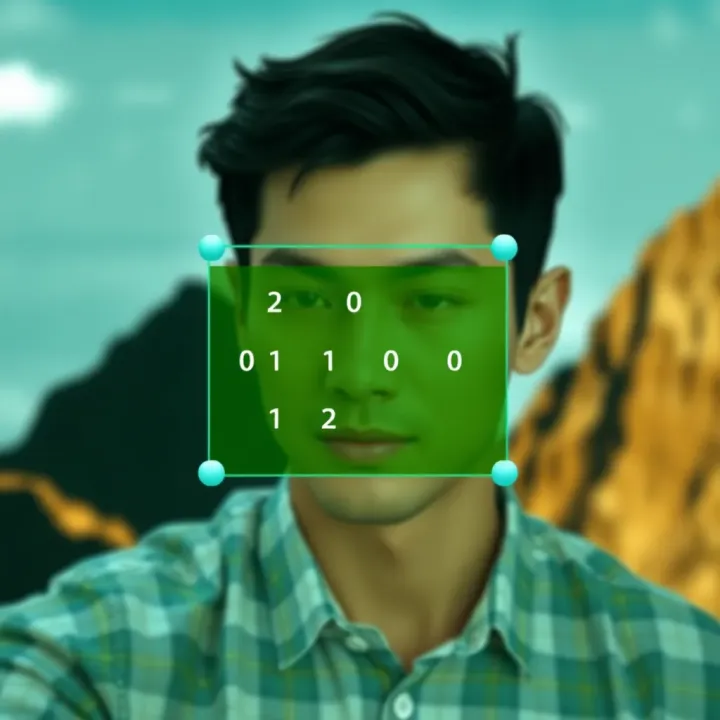
In practical terms, binary masks are built by applying thresholding techniques. A common method, for example, involves setting all pixel values above a certain brightness to one and the rest to zero. This approach can identify bright objects against a darker background — useful when spotting ship lights in harbour surveillance.
Key takeaway: Binary masks simplify complex images by focusing on specific features, making data analysis more efficient and reliable.
Thresholding: Converts grayscale images into binary form by setting a cut-off value.
Colour segmentation: Masks based on colour ranges, handy for separating objects like traffic signs or vegetation.
Edge detection: Masks outline edges using algorithms like Canny, helping isolate shapes and boundaries.
In financial markets or economic research, traders and analysts might use binary masks when dealing with data visualisations to focus on certain chart patterns or anomalies, such as highlighting trading volumes only above a specific threshold.
By mastering these basic construction methods, you can tailor binary masks for diverse applications from medical imaging to urban planning.
Image filtering: Quickly remove irrelevant background noise in photos or videos.
Object recognition: Help algorithms detect vehicles in aerial drone footage for traffic monitoring.
Feature extraction: Isolate tumour regions in MRI scans to assist radiologists.
In a South African fintech context, binary masks might assist in fraud detection systems by filtering data points that meet specific criteria, ensuring suspicious transactions are flagged promptly.
Understanding the fundamentals of binary masks equips you with a simple yet powerful means to refine visual data. Whether it's for analysing satellite images, improving security systems, or enhancing data representation, these masks form the backbone of many digital image processing tasks.
A binary mask is essentially a simple image filter made up of only two values: typically 0 and 1, or black and white. Each pixel in the mask indicates whether the corresponding pixel in the original image is to be included or excluded in a particular operation. Think of it like a stencil—areas covered by the mask remain visible or active, while the rest are blocked out. This straightforward concept underpins many image processing tasks.
To break it down, a binary mask functions by marking regions of interest against a background. For example, in a satellite image of a city, a mask can highlight built-up areas while filtering out vegetation or water bodies. This binary discrimination simplifies subsequent analysis and manipulation.
Binary masks play a vital role in image processing, especially when isolating specific features within complex datasets. Traders or analysts working with visual data—for instance, satellite images tracking urban expansion—rely on these masks to filter out irrelevant information and focus their assessments.
In computer vision, binary masks assist in object detection, segmentation, and measurement. A practical example is in medical imaging, where masks can isolate tumours from healthy tissue, helping radiologists to pinpoint areas requiring attention. Similarly, in agriculture, drones equipped with imaging sensors use binary masks to monitor crop health by separating land from weeds or bare soil.
In short, binary masks simplify the overwhelming complexity of raw images, allowing users to concentrate on what truly matters without distractions.
Operating with binary masks also improves computational efficiency. By limiting calculations to masked areas, systems process data faster, which matters in real-time applications like autonomous vehicles or surveillance in busy urban environments.
Overall, understanding what a binary mask is and why it’s important sets the stage to explore how they’re created and applied across sectors. Whether your interest lies in finance, healthcare, or technology, the ability to use binary masks unlocks clearer, more actionable insights from visual information.
Creating a binary mask involves translating the visual elements of an image into a clear distinction between areas of interest and the background. This step is key for any computer vision task where precision matters—say, isolating a company logo on packaging or tracking a moving object in surveillance footage. Understanding how masks come to life helps you decide the best approach based on your project needs and resources.

Manual mask generation involves a person selecting the pixels or regions to include, often with graphic tools or annotation software. This approach is highly accurate for small or complex images but becomes impractical when dealing with hundreds or thousands of frames or images. For instance, a broker manually marking specific chart areas for analysis might be fine, but an entrepreneur analysing large datasets from drone footage will want automation.
Automated mask generation uses algorithms to identify relevant features without human input. This method can quickly handle sizeable volumes but sometimes struggles with nuances or noisy images, making refinement necessary. Automated methods are common in satellite image processing, where human input is minimal but precision still counts.
Thresholding works by setting a cutoff value to classify pixels. For example, in a black-and-white image, all pixels darker than a set brightness become part of the mask, while the rest are dropped. It’s a straightforward technique that’s efficient and works well when the object and background differ clearly in intensity or colour.
Practical uses include isolating text from a scanned document or identifying water bodies in aerial photos based on reflectance. However, thresholding can struggle under uneven lighting or when colours overlap, leading to either missing parts of the object or grabbing the wrong background.
This technique focuses on finding boundaries between objects and their surroundings by identifying sharp changes in pixel values. Algorithms like the Canny or Sobel edge detectors mark these transitions, which helps outline objects accurately.
Edge detection is crucial in industrial quality control for spotting defects along product edges or in medical imaging to highlight organ contours. Still, it depends heavily on image quality; noisy images may produce false edges, so it’s often paired with smoothing steps.
Region growing begins at a seed point and adds neighbouring pixels that meet criteria such as similar colour or texture, gradually building the mask. It's like colouring within the lines based on local likeness.
This method suits images where the object is connected and homogenous, such as segmenting a tumour in an MRI scan or identifying a single tree in a park from drone images. The challenge lies in choosing proper seed points and similarity thresholds to avoid spilling into unwanted areas.
Whether manual or automated, the method you pick must balance accuracy, speed, and the specific demands of your task. For traders or analysts handling visual data, knowing these basics helps in selecting tools that turn complex images into actionable insights effectively.
Binary masks play a vital role in various image processing tasks by selectively isolating and manipulating key parts of an image. For traders, analysts, and entrepreneurs interested in computer vision or data analysis, knowing how to apply these masks can make the difference between messy, noisy data and clear, actionable insights.
One of the primary uses of a binary mask is to isolate objects within an image. This process involves creating a mask that highlights a region of interest while ignoring the rest. For example, in retail surveillance footage, a mask can isolate customers’ movements to analyse foot traffic patterns without distraction from the background. This targeted isolation helps reduce computational overhead by focusing resources only on the relevant parts of the image.
Another practical example is in e-commerce platforms where product photos are cleaned up by masking the product from the background automatically. This saves time and effort required for manual editing and maintains focus on the item for potential buyers.
Binary masks are equally useful for filtering and enhancing specific features within images. By applying a mask to emphasise certain image areas, analysts can improve feature detection or remove irrelevant noise. Consider a drone inspecting powerlines: a mask could highlight corrosion spots on cables, enabling rapid decision-making for maintenance teams.
Image filters applied over masked regions also aid in sharpening edges or adjusting contrast. This selective enhancement is crucial in environments where overall image quality is limited by lighting or other conditions — common in outdoor or industrial settings.
Medical imaging heavily depends on binary masks to improve diagnosis accuracy. Masks isolate tumours or organs in MRI or CT scans, helping radiologists zero in on abnormalities without distraction. These masks reduce processing time for automated tumour detection software while improving precision.
Similarly, satellite imagery analysis employs binary masks to separate land from water, urban from rural areas, or to highlight vegetation cover, thereby aiding in environmental monitoring, urban planning, and disaster management. For instance, after a veld fire, satellite data combined with binary masks can quickly estimate affected areas, guiding emergency response and resource allocation.
Applying binary masks effectively streamlines complex image data, making it manageable and actionable in various practical scenarios, from retail behaviour analysis to critical medical support.
Understanding these real-world applications helps investors and analysts appreciate the potential impact and workflow improvements that precise image processing techniques can offer across industries.
Binary masks are an invaluable tool in image processing, yet they come with several challenges that can affect their effectiveness. Understanding these limitations helps professionals—whether in finance, tech, or research—to choose and apply masking techniques wisely. The accuracy and quality of a mask directly impact the outcome of any analysis or computational task relying on it.
One of the main hurdles with binary masks is maintaining accuracy amid noise and imperfections in the source image. For example, in satellite imagery used for monitoring urban growth or environmental changes, small specks of noise or atmospheric distortions can cause a mask to wrongly flag areas as part of an object or background. This misclassification distorts results, possibly leading to costly mistakes if the data informs strategic decisions.
Noise often stems from poor lighting, sensor limitations, or compression artefacts. Even minor background flickers in CCTV footage can cause a mask to detect moving objects erroneously, creating false positives. To mitigate these issues, filtering techniques like median filtering or morphological operations (erosion and dilation) are applied before or after mask creation. However, each additional step increases computational costs and complexity, which traders or analysts working with time-sensitive data may find problematic.
Noise and inaccurate masking can lead to misleading insights, especially in fields demanding high precision, like medical imaging or satellite analysis.
The level of detail (or resolution) in a binary mask directly influences its usefulness. High-resolution masks capture fine details, vital for tasks such as identifying small structural defects in manufacturing parts or detecting minute changes in medical scans. Conversely, low-resolution masks might blur these details, leading to missed features or inaccurate boundaries.
An example from the financial sector could be the use of image-based data for automated document processing. Low-resolution masks might blend signatures with background noise, causing verification errors or slowing down approval processes. On the other hand, extremely high-resolution masks require more storage and processing power, which is not always practical for real-time applications or organisations with limited infrastructure.
Balancing resolution and performance remains a key consideration. Adaptive masking techniques that adjust resolution based on image regions of interest can help alleviate this but are not yet commonplace in all software tools, especially those designed for general use.
Overall, knowing these challenges enables users to set realistic expectations and employ strategies that compensate for binary mask limitations, ensuring better outcomes in various practical environments.
Binary masking has already carved out its place in image processing, but the road ahead is packed with promising developments that could make it far more powerful. For traders, investors, brokers, analysts, and entrepreneurs relying on visual data analysis, understanding these future directions is quite helpful. New methods aimed at improving accuracy, speed, and adaptability of masks are changing how data gets processed and interpreted.
The fusion of binary masks with machine learning models offers significant advantages for automating and refining image analysis. Instead of hardcoded rules, machine learning can learn from vast datasets to generate masks that hone in on areas of interest more precisely. For example, in satellite imagery analysis, machine learning-powered binary masks can automatically identify and isolate changes in urban development or agricultural growth, reducing the need for manual intervention.
Deep learning models such as convolutional neural networks (CNNs) are particularly effective here. They improve mask creation by recognising patterns and textures that traditional thresholding methods might miss. This adaptability is vital when dealing with noisy or complex images, like medical scans or financial charts where details can impact decision-making. In practice, financial analysts using heat maps or technical analysis can apply ML-generated masks to focus on critical chart areas, spotting trends more confidently.
Another exciting development is adaptive and real-time masking that adjusts masks dynamically as data evolves. In volatile markets, where traders monitor price movements or sentiment changes minute-by-minute, such rapid responsiveness is invaluable. Traditional static binary masks fall short when data shifts quickly, but adaptive techniques update masks on the fly using feedback loops and real-time data processing.
Imagine an application monitoring news sentiment or social media chatter affecting stock prices. An adaptive binary mask could filter out irrelevant noise to emphasise relevant spikes or dips as they happen, empowering quicker, more informed trade decisions. This technology often involves integrating streaming data analytics with computer vision tools, creating a layer of instant context-sensitive filtering.
These advances also improve performance in live video feeds, such as security monitoring or factory automation, by maintaining focus on moving objects or potential anomalies without lag. For entrepreneurs running online platforms or financial services, real-time masking enhances user experience by efficiently handling vast, dynamic data.
Future innovations in binary masking, especially when paired with machine learning and adaptive methods, open doors to smarter, faster, and more tailored image analysis. These improvements are key to staying ahead in data-driven fields like trading or investing.
Machine learning integration brings precision and automation to mask creation.
CNNs help detect features in complex or noisy images better than basic methods.
Adaptive masking handles rapidly changing data for real-time decision support.
Real-time masks filter relevant information quickly, boosting responsiveness.
As binary masking evolves, its practical benefits will extend across industries, making it a valuable tool for anyone relying on visual or data-based insights to navigate complex environments.
Explore www binary basics and practical applications in web tech 🌐. Learn its impact on users and developers, simplifying the digital binary world.
Explore YouMoney Binary: understand features, risks & tips for South African users. Learn about regulation, benefits, and how it compares to other platforms 📊💡

🔢 Discover how 'Hello World' translates into binary! Learn ASCII basics, character conversion, and why this phrase is a programming favourite. 💻

Explore how the gender binary shapes identity and society, challenges it faces, and fresh views on gender diversity in South Africa and beyond 🌍⚧️
Based on 9 reviews