
Forex Trading Guide for South Africans
Discover how to trade forex confidently in South Africa 🇿🇦. Learn market basics, strategies, risk tips, legal rules & practical steps to start trading today. 📈💡
Edited By
Sophie Harrison
Forex trading in South Africa has grown steadily over the past decade, attracting individuals keen to capitalise on currency price movements. Unlike other investments with longer-term horizons, forex offers the chance to buy and sell currency pairs quickly, aiming to profit from short-term changes. However, trading forex locally comes with unique rules and considerations.
Understanding how the forex market operates within South African borders is essential for those keen to participate effectively. The market runs 24 hours on weekdays, aligning with global trading hubs from London to New York, but South African traders must also keep Eskom's loadshedding schedules in mind. Reliable internet and power supply are critical since price changes can come fast and without warning.
Legal and regulatory frameworks influence forex trading here. The Financial Sector Conduct Authority (FSCA) regulates brokers, ensuring they comply with guidelines designed to protect traders. Choosing FSCA-approved brokers safeguards your funds, and many local brokers also offer support tailored to South African clients, including payment methods in Rand.
Strategies in forex trading vary, but traders typically combine technical analysis—studying price charts and indicators—with fundamental analysis, such as monitoring South African Reserve Bank (SARB) interest rate decisions or political developments. Risk management is equally crucial; using stop-loss orders and controlling trade sizes helps protect your capital.
For both new and seasoned traders, having access to practical resources is key. PDFs from reputable providers can offer step-by-step guides, risk assessment tools, and market outlooks tailored to South African conditions. These resources complement hands-on experience and market observation.
To succeed in South African forex trading, you must balance a firm grasp of the market’s local specifics with solid strategy and sound risk control.
Key points to consider:
Verify broker licences with the FSCA
Understand how global events affect the Rand
Factor local market hours and working infrastructure into your trading plan
Use educational PDFs and community forums to sharpen your skills
With this groundwork, you’ll be well-prepared to explore forex trading confidently and responsibly in South Africa.
Grasping the basics of forex trading is the foundation every trader in South Africa needs before diving in. Without understanding core concepts, a trader risks making costly mistakes. This section covers what forex trading really means, how it functions locally, and why it’s relevant to South African traders.
Forex trading, short for foreign exchange trading, involves buying and selling currencies on the global market. Essentially, you exchange one currency for another, hoping to profit from changes in exchange rates. For instance, you might buy US dollars (USD) with South African Rand (ZAR), then sell those dollars later if the USD strengthens against the Rand.
At its simplest, forex trading operates like a marketplace where currencies are the goods. Traders speculate on whether one currency will rise or fall compared to another. It's not just for banks or financial institutions anymore — retail traders in South Africa can access the market through brokers online, often with relatively small starting amounts.
A large chunk of forex trading activity in South Africa revolves around the Rand and major global currencies. The pairs most followed include USD/ZAR, EUR/ZAR, GBP/ZAR, and JPY/ZAR. These pairs matter because South Africa's economy and trade relations link closely with the US, Europe, and Asia.
For example, if global demand for minerals drops, the Rand may weaken against the dollar, which traders watch carefully. Knowing these pairs helps you spot trends and set realistic trading strategies suitable for local economic factors.
The Rand plays a dual role: as a local currency and as a speculative asset. Its value often fluctuates sharply due to domestic political events, commodity price changes, and global risk sentiment. This volatility means ZAR pairs can offer good trading opportunities but also carry risk.
For South African traders, using ZAR-denominated trading accounts can save costs on currency conversion and make managing profits or losses easier. Many brokers now support ZAR accounts, reflecting local client needs.
Unlike the stock market, forex trades 24 hours a day during weekdays, flowing through major financial centres worldwide. For South African traders, the most active trading hours coincide with overlaps between the London and New York sessions (around 3 pm to 11 pm SAST).
Choosing the right trading platform is key. Popular global platforms like MetaTrader 4 and 5, plus broker-specific apps tailored to local users, offer access to ZAR accounts and real-time market data. Mobile trading has also gained traction in South Africa due to widespread smartphone use, allowing traders to respond quickly to market moves.
Understanding the basics of forex trading shapes smarter, more confident trading decisions. Knowing how currency pairs work, the Rand’s role, and when markets are active gives you a practical edge in the South African context.
This solid base prepares you for exploring regulatory aspects, strategies, and risk management covered in later sections.
Understanding the legal and regulatory framework is a must before stepping into forex trading in South Africa. This framework protects traders by ensuring that brokers operate fairly and transparently. It also offers you a pathway to report any malpractice or suspicious activity. Without it, the forex market would be a bit like the Wild West—risky and unregulated.
The Financial Sector Conduct Authority (FSCA) is South Africa’s main watchdog for financial markets, including forex trading. It ensures that all financial service providers, including forex brokers, follow strict rules designed to protect consumers. For instance, the FSCA oversees that brokers hold client funds separately from their own business accounts—a safeguard against misuse.
Additionally, the FSCA regularly updates its rules to respond to new risks and market trends. When a forex provider is listed as licensed by the FSCA, it signals a certain standard of reliability and adherence to South African laws. Thus, dealing with FSCA-registered brokers significantly lowers your chances of falling foul of scams or unethical practices.
To verify if a forex broker is authorised, visit the FSCA’s official website, where they publish a register of licensed financial service providers (FSPs). This public list includes all brokers that comply with licensing requirements. It's wise to search the broker's name and FSP number here before committing funds. Some brokers might also display their licence details on their website, but always cross-check with FSCA records.
Using only licensed brokers is not just about legality—it means your investments enjoy some level of protection, such as dispute resolution services and adherence to client fund segregation rules. Unlicensed brokers operate outside the law and might disappear overnight with your money.
While the FSCA focuses mainly on brokers, traders themselves need to understand certain obligations. For example, forex profits are subject to South African Revenue Service (SARS) tax rules, so keeping accurate records of trades and profits is essential come tax season. Traders may also need to register certain accounts under the Financial Intelligence Centre Act (FICA), which aims to combat money laundering, especially for larger transactions.
Moreover, brokers often require traders to submit proof of identity and residence as part of their client-onboarding to meet these regulations. This protects both parties against fraud and ensures a clear audit trail.
The forex market unfortunately attracts shady operators. To avoid scams, always Verify the broker’s FSCA licence first. Watch out for too-good-to-be-true promises like guaranteed returns or unrealistic leverage offers. A common trick is cold calls or unsolicited emails urging you to invest immediately.
Beware of brokers that push you to deposit large sums upfront or restrict your ability to withdraw funds. And if the platform’s customer support is hard to reach or unprofessional, that's a red flag. Legitimate brokers maintain proper communication lines and comply with South African laws.
Remember: if it feels off or you can’t find the broker on the FSCA register, it’s best to steer clear. Safety comes first when trading forex in Mzansi.
For South African forex traders, applying effective strategies and the right tools can make a big difference. The local market has its quirks, from the influence of the Rand (ZAR) to the unique regulatory environment overseen by the Financial Sector Conduct Authority (FSCA). Having a clear strategy suited to your goals and access to platforms designed for South African users ensures you’re not just trading blindly but making informed decisions.
Technical analysis looks at price charts, patterns, and indicators to forecast future price movements. Many local traders lean on this method because it allows quick reactions to market changes, especially during volatile periods like Eskom load-shedding announcements or unexpected political developments. For example, using moving averages or RSI (Relative Strength Index) helps traders spot trends or potential reversals in currency pairs involving ZAR.
Fundamental analysis, on the other hand, involves evaluating economic indicators, government policies, and geopolitical events. In South Africa, this means tracking data like GDP growth, mining output, or monetary policy decisions by the South African Reserve Bank (SARB). A trader might take note of SARB’s repo rate announcements to predict Rand movements. Combining both approaches gives a fuller picture but requires more time and effort.
Leverage allows you to control a larger position with a smaller amount of capital. While tempting due to the potential for higher profits, it also increases risk. South African traders should be particularly cautious since currency fluctuations can be sharp, especially with the Rand affected by global commodity prices or political shifts.
A practical tip is to use low to moderate leverage levels and set tight stop-loss orders to protect your capital. For instance, instead of maxing out at 1:100 leverage, opting for 1:10 or 1:20 keeps risks manageable. Remember, it’s about surviving the market ups and downs, not hitting it big overnight.
Choosing a broker that supports Rand (ZAR) accounts can save on conversion fees and simplify deposits and withdrawals. Platforms like IG South Africa and Plus500 offer ZAR-denominated accounts, making it easier to manage your funds directly in the local currency.
This local currency support reduces the hassle and uncertainty of fluctuating exchange rates when moving money between your trading account and South African bank accounts. It’s also helpful for tax and reporting purposes.
Mobile trading has become essential, given South Africans’ reliance on mobile data and the demand for flexibility. Apps like MetaTrader 4 (MT4), MetaTrader 5 (MT5), and the IG app are popular because they offer user-friendly interfaces, real-time price updates, and support for ZAR accounts.
Having a reliable mobile app allows traders to monitor the market during the day—even while commuting or attending an indaba—and execute orders promptly. Look for apps that offer good security, low latency, and additional features like economic calendars or push notifications relevant to the South African market.
Effective strategies paired with the right tools and platforms tailored for South African traders help navigate the market's ups and downs more confidently and with better control.
Before diving into forex trading, it’s vital to understand the risks involved and weigh them carefully. Forex markets can offer exciting opportunities, but they come with uncertainties that can lead to significant financial losses if not managed well. For South African traders, rising currency fluctuations and market quirks make it even more important to approach trading with clear strategies and solid risk management in place.
Market volatility refers to how drastically prices can change within short periods. In forex, volatility can spike without much warning due to factors like political announcements, economic data releases, or global events. For instance, during loadshedding announcements or unexpected SARB communications, the rand can swing wildly. Such movements can wipe out gains or worsen losses very quickly if you’re not prepared.
Leverage risks come into play when traders borrow money to increase their trading positions. While leverage can amplify profits, it also magnifies losses. Using high leverage without discipline can lead to losing more than your initial investment. Say you trade with 100:1 leverage and the market moves against you by just 1%; that could mean a total loss of your stake. Many South African brokers offer leverage up to 1:200 or even more, so it’s crucial to use it cautiously.
Currency fluctuations affecting ZAR add another layer of complexity. The rand tends to be more volatile compared to major currencies like the US dollar or euro, especially with rand-sensitive domestic factors such as mining sector reports or trade balance changes. Traders who focus on pairs involving ZAR need to be especially mindful of local economic news releases, or they might find their positions swinging unpredictably.
Setting stop-loss orders is a practical way to limit potential losses. A stop-loss automatically sells your position once it hits a certain price, helping you avoid catastrophic losses if the market turns suddenly. For example, if you buy EUR/ZAR at R18.00 and set a stop-loss at R17.50, the system will close your trade there to safeguard your funds. It keeps emotions in check, stopping rash decisions during volatile phases.
Position sizing and diversification involve deciding how much of your trading capital to risk on any single trade and spreading investments to reduce exposure. Instead of putting all your eggs in one basket, you might allocate smaller amounts across different currency pairs. For instance, rather than trading only USD/ZAR, mixing in EUR/USD or GBP/USD can balance out specific risks tied to the rand. Position sizing might mean risking no more than 1-2% of your capital on each trade — a simple rule that helps preserve your bankroll over time.
Managing risks well doesn’t eliminate losses but helps you survive and grow as a trader. Being mindful of volatility, using leverage wisely, and applying solid risk controls will set you up for a more stable trading journey in South Africa’s forex scene.
Accessing trustworthy forex trading resources is a must for South African traders aiming to improve their skills and make informed decisions. PDFs offer a convenient way to study at your own pace, whether you’re new to the forex scene or sharpening advanced tactics. Having solid materials means you avoid guesswork and cut through the noise of misleading info.
Starting with PDFs that cover basic terminology and concepts lays a strong foundation. These guides explain key terms like pips, lots, leverage, and margin in plain language, which is crucial because forex jargon can easily confuse you when you're just starting out. For instance, understanding what "spread" means can help you see why some brokers cost more to trade with than others.
Next, PDFs that outline step-by-step trading setups are valuable because they walk you through practical processes. These often include how to open an account with a broker, place your first trade, and manage positions. Such stepwise instructions help reduce mistakes and encourage disciplined trading habits, which can be the difference between a learning curve and cash losses.
When you’re ready to move beyond basics, technical analysis manuals offer detailed explanations of charts, indicators, and patterns — like moving averages and Fibonacci retracements — which many South African traders rely on to time their entries and exits better. These manuals often come with real examples and charts relevant to the Rand and major currencies.
Risk and money management PDFs provide essential guidance on protecting your capital. Risk management is not just setting stop-loss orders; it covers deciding how much of your trading pot to risk per trade and how to diversify your portfolio. PDF guides tailored for South African traders account for the volatility of the Rand and give tips on managing leveraged positions safely.
The Financial Sector Conduct Authority (FSCA) website is a solid starting point. It sometimes offers downloadable materials and broker lists that help you spot licensed and compliant trading platforms — critical for avoiding scams. Many regulated brokers also provide educational PDFs on their sites, giving you up-to-date info alongside access to live trading accounts.
Aside from official sources, educational portals with a South African focus can be gold mines for forex PDFs. These platforms often combine local market insights with practical advice, considering factors like Eskom’s loadshedding impact on trading schedules or how local economic news affects the Rand. Some websites bundle PDFs with webinars and tutorials to help learners consolidate their knowledge.
Before downloading any forex PDF, check the publication date and source credibility. The forex market evolves fast, and staying current is key to surviving and thriving.
Finding and using the right PDF resources can give you a real advantage in the forex world. It’s about learning smart, practising consistently, and avoiding common pitfalls. With the right guides, you’ll be better equipped to navigate forex trading in South Africa’s unique environment.
Discover how to trade forex confidently in South Africa 🇿🇦. Learn market basics, strategies, risk tips, legal rules & practical steps to start trading today. 📈💡
📊 Discover how forex trading signals guide South African traders on when to buy or sell currency pairs. Learn types, risks, benefits, and how to pick trustworthy signals.
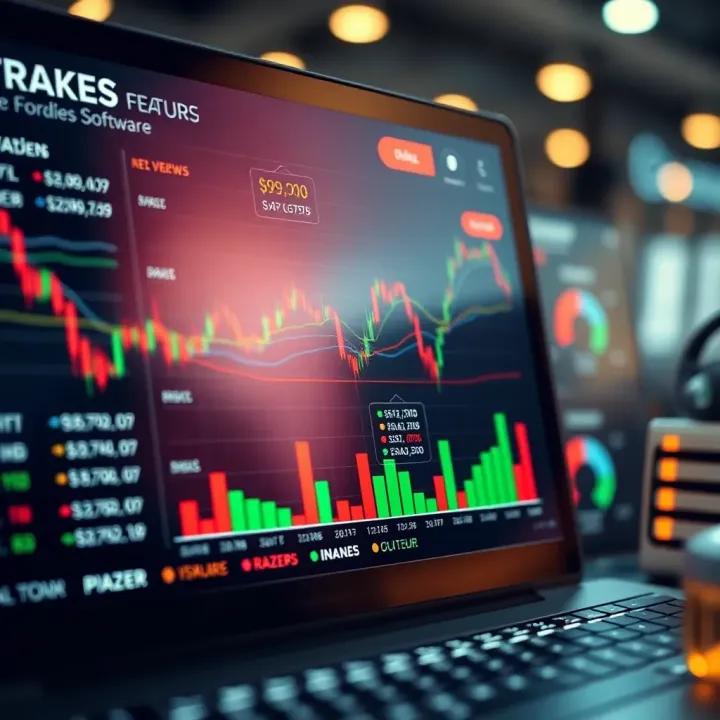
Discover the best forex trading software for South African traders 🇿🇦. Learn types, features, risks, and tips to choose and use platforms effectively 📊💻.

📊 Discover top Forex trading seminars in South Africa! Learn how to pick quality events, boost your skills, and navigate local market insights with ease.
Based on 14 reviews