

Learning Forex Trading with Videos: A Practical Guide
📈 Learn forex trading with videos tailored for all levels! Discover types, key topics, tips to spot quality content, plus pros and cons. 🎥
Edited By
Emily Carter
Forex trading stands as one of the most accessible ways to enter the financial markets, but mastering it demands more than chance or luck. To trade forex successfully, you need solid knowledge of market dynamics, strategies that fit your style, and strong risk management skills.These skills don't come overnight; experience and learning from reliable sources matter.
Books remain a trusted resource for both beginners and experienced traders. They offer structured insight, real-world examples, and tested techniques that can be revisited whenever needed. While the internet is flooded with forex tips, dipping into well-regarded books provides depth and a more coherent learning path.

For South African traders, understanding the local economic environment, the influence of the rand (ZAR), and the impact of global events on emerging markets are key. Good forex books often include these elements or can be supplemented with local market updates and news.
Picking the right forex book is crucial. Look for authors with proven trading experience, clear explanations, and practical advice that you can apply immediately. Books that include risk management tactics will help you protect your capital from market swings and unexpected shocks.
Here are some points to consider when choosing forex reading material:
Focus on books covering both technical and fundamental analysis, as both are important in spotting opportunities.
Seek out titles with practical exercises or case studies that allow you to apply what you're reading.
Pick books that explain how to manage risk, such as setting stop-loss orders or determining position size.
Look for resources that address trading psychology, since emotional discipline influences success.
Whether you're a trader, investor, or analyst, building your forex knowledge through selected books can turn confusion into clarity. This foundation helps you make informed decisions and adapt strategies, especially in a volatile economy like South Africa's.
The following sections will guide you through top forex books suited for different skill levels and trading objectives, with an eye on lessons relevant to our local trading environment.
Grasping the basics of forex trading sets the foundation for any trader aiming to enter this fast-moving market. It’s not just about knowing what forex is, but understanding the mechanisms at play and the factors influencing price movements. This helps traders make better decisions and manage their risks effectively, avoiding common pitfalls.
Forex trading, short for foreign exchange trading, involves buying and selling currencies against one another. It's the largest financial market globally, with over $6 trillion changing hands daily. Unlike stock markets, forex operates 24 hours a day during weekdays, allowing traders to react to events as they unfold around the world. For example, a trader in Johannesburg might open a position on the US dollar versus the South African rand (USD/ZAR) while the New York or London markets are active. This flexibility is a big draw, but it also demands understanding how global news and economic events affect currency values.
Currencies are traded in pairs; one currency is bought while the other is sold. The pair's value reflects how much of the second currency you need to buy one unit of the first. Take EUR/USD for example — if the price is 1.1000, it means one euro costs 1.10 US dollars. Understanding the dynamics between major, minor, and exotic pairs is crucial. For South African traders, pairs like USD/ZAR or EUR/ZAR are popular due to local currency exposure. These pairs tend to show more volatility during certain sessions, influenced by local or international events.
Leverage allows traders to control a larger position than their initial capital by borrowing funds from the broker. For instance, a leverage of 1:100 means you can trade R100,000 with just R1,000 of your own money. While this magnifies profits, it also increases potential losses. Margin is the minimum capital you need to open a leveraged position, and it’s important to monitor it closely to avoid margin calls, which happen when your account falls below required funds. South African regulators keep a close eye on leverage limits to protect traders from excessive risk, so knowing your broker’s rules and South African Financial Sector Conduct Authority (FSCA) regulations helps manage this.
Forex markets run around the clock, segmented into sessions reflecting major financial hubs: Sydney, Tokyo, London, and New York. Each session has different levels of volatility and liquidity. For example, the London session generally offers high trading volume and tends to overlap with New York’s session, often resulting in bigger price swings. For local traders on SAST (South African Standard Time), the London session starts in the afternoon, making it practical to trade alongside European market openings. Knowing these hours helps traders plan their strategies, avoid times of low liquidity, and reduce exposure to sudden price gaps.
A solid grasp of these basics not only helps new traders familiarise themselves with forex mechanics but also supports more advanced learning from trading books and practical experience.
By starting here, you set yourself up for success as you move further into selecting the right resources and strategies tailored to your trading style and goals.
Choosing the right forex trading book can make a huge difference in your learning curve, especially when you consider the vast number of options available. The key is to find a book that suits your current level of understanding and your specific trading goals. Jumping into an overly complex book with heavy jargon before grasping the basics will only leave you scratching your head. Conversely, a book that’s too basic can become a drag and slow down your progress.
When picking a forex book, the author’s background matters. Look for writers who have credible experience in forex trading, not just academics or journalists. For example, someone who has traded professionally or runs a respected trading education platform tends to offer insights grounded in real market conditions. In South Africa, authors who also understand the local market dynamics, such as volatility tied to the rand or unique broker regulations by the FSCA (Financial Sector Conduct Authority), add value for local readers. Don’t overlook testimonials or endorsements from fellow traders either; these can signal practical credibility.
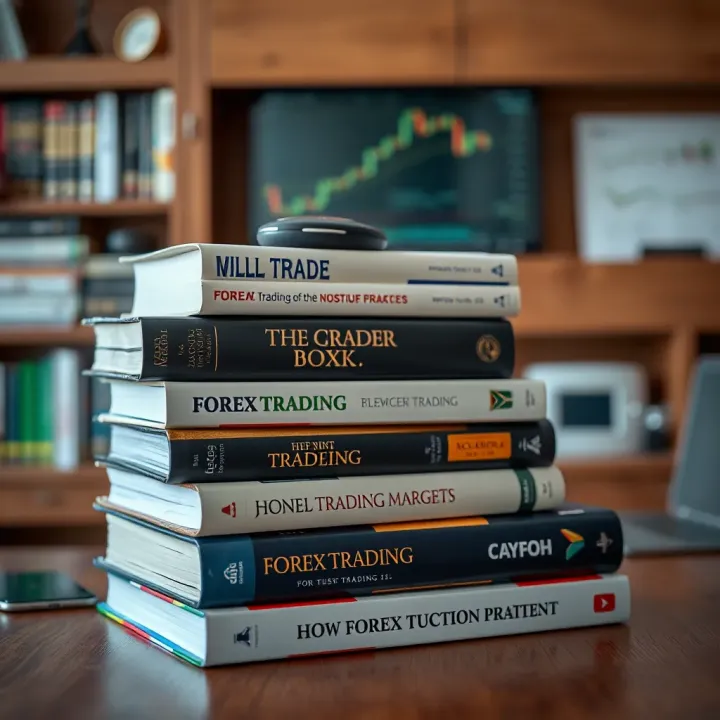
Forex trading has multiple facets, but most books focus on one or two core areas: technical analysis, fundamental analysis, or trading psychology. Decide which area you need to strengthen first. Technical books cover chart patterns, indicators, and price action strategies—great if you want to read the market’s movements. Fundamental texts dive into economic reports, central bank policies, and geopolitical events that affect currencies. Meanwhile, psychology books deal with mindset challenges, discipline, and managing emotions like fear and greed. For a well-rounded approach, consider books that stitch these perspectives together or pick separate titles for each.
Some forex books explain concepts mainly in theory, while others focus on practical application, including step-by-step strategies and real trade examples. Practical books might offer exercises or case studies that help you test your learning on demo accounts. For instance, a book showing how to apply stop-loss orders in a volatile market or guiding position sizing could help you avoid costly mistakes. Theoretical books are useful for building a solid foundation, but they risk leaving readers overwhelmed if not balanced with hands-on tips. Aim for books where the practical advice can be adapted to your trading platform, especially those popular in South Africa like MetaTrader or cTrader.
Choosing wisely means you get more bang for your buck and hard work in learning forex trading. Always check if the book matches your style and current knowledge, and if it offers something you can actually practise rather than just theory to skim through.
By considering author expertise, subject focus, and practical usability, you ensure your chosen forex trading book genuinely supports your trading journey — whether you’re in Cape Town or Johannesburg, dealing with rand pairs or global majors.
For those stepping into forex trading, picking the right books can shape your entire learning experience. Beginners benefit most from materials that spell out the basics clearly and provide actionable strategies without drowning in jargon. This foundation is crucial, especially in a field where a shaky start can lead to costly mistakes.
Getting a firm grip on the language and basic mechanics of forex is the first step. Books that clearly explain how currency pairs work, what pips and lots mean, and the role of brokers can make a huge difference in avoiding confusion later. For instance, "Forex Made Simple" by Kel Butcher is an easy read that sheds light on key terms and market functioning, making it a good starting point.
Understanding these building blocks helps traders better follow market movements and grasp the rationale behind trades. Without this solid groundwork, one might jump into advanced methods too soon and lose track of essential risk and trade management rules.
Besides theory, beginners need straightforward and proven strategies to put knowledge into practice. Books offering step-by-step guides on entry and exit points, stop losses, and basic chart reading serve this purpose well.
One example is "Currency Trading for Dummies" by Brian Dolan which lays out simple trend-following techniques and risk controls. It helps even those with no prior experience to open trades with confidence, rather than relying on guesswork. The hands-on approach reduces anxiety and builds discipline from the outset.
Some learners grasp concepts better through doing rather than just reading. Workbooks that include questions, scenarios, or charts for analysis can improve retention and develop practical skills.
For example, "The 10 Essentials of Forex Trading" by Jared Martinez contains exercises that prompt traders to test their understanding of key concepts. This interaction boosts critical thinking and speeds up the learning curve, helping you to spot real opportunities and risks.
Engaging with forex material actively — not just passively reading — prepares beginners to face live markets more confidently.
Having a mix of clear explanations, simple strategies, and interactive content creates a balanced learning journey. Such books build the foundation, sharpen thinking, and offer practical tools that South African traders can adapt to local market quirks and broker options.
Delving deeper into forex trading means sharpening your strategies and understanding how to analyse the market effectively. Books focusing on improving trading strategies and analysis skills build on foundational knowledge, giving you tools to read the market sharper and respond to price moves smarter. These texts often cover more advanced techniques, practical frameworks, and examples that reflect real trading conditions, which you won’t find in beginner-level reads. For South African traders, mastering these skills can help navigate local market nuances and global economic shifts more confidently.
Technical analysis relies on charts and past price behaviour to forecast likely future moves. Popular methods include candlestick patterns, moving averages, RSI (Relative Strength Index), and Fibonacci retracements. Books covering these topics explain how each tool highlights different market sentiments—for example, moving averages smooth out fluctuations to show trends, while RSI flags overbought or oversold conditions. By learning these tools in detail, traders gain a structured way to identify entry and exit points instead of trading on gut feel alone.
Charts are the trader’s window into market psychology, showing what others are doing and thinking. Effective books guide readers on combining indicators—like using MACD to confirm a trend flagged by moving averages. They clarify how not every signal should be taken at face value; instead, context matters. For instance, a breakout above resistance on high volume could mean a strong trend start, but the same breakout on low volume might fail. This nuanced understanding is vital to avoid common pitfalls and enhance timing decisions in your trades.
Central banks and economic data impact forex price movements more than many realise. Books that explain how interest rate decisions by the South African Reserve Bank (SARB) or US Federal Reserve affect the rand and major currencies give vital context. Economic reports on GDP growth, employment, inflation, and trade balances also sway sentiment. A well-timed labour market report or SARB press statement can cause sharp price shifts. Getting to grips with these factors helps traders anticipate volatility spikes or potential market reversals.
Fundamental analysis is about seeing beyond charts to discover why prices move. Effective books detail how to assess economic strength or weakness and relate that to currency strength. For example, a weakening rand may coincide with rising national debt or political disruptions. By applying fundamentals alongside technical tools, traders can build more holistic strategies. This reduces the chance of being blindsided by news events, enabling better risk controls and longer-term decision-making.
Learning to blend technical and fundamental analysis equips you with more robust frameworks, helping you trade with better judgement and less guesswork. For South African traders, understanding global and local economic dynamics proves especially useful in navigating forex markets influenced by both.
Managing risk and mastering trading psychology are two pillars that every forex trader must take seriously. Many traders jump into the market focusing only on strategies and signals, overlooking the critical importance of how they handle losses and control their emotions. Books dedicated to these topics offer practical techniques to protect capital, boost confidence, and maintain discipline — all vital for long-term survival in a market as volatile as forex.
Risk management involves defining how much you stand to lose on each trade and ensuring it stays within limits you can afford. Setting stop losses is a key tool here. A stop loss order automatically closes your position at a preset price to prevent further losses if the market moves against you. This is crucial because it enforces discipline, helping you avoid disastrous trades prompted by panic or hope. For instance, if you buy the USD/ZAR at R18.00 anticipating a climb, placing a stop loss at R17.80 limits your loss to 20 cents per unit. This way, a sudden swing won’t wipe out your trading account.
Position sizing goes hand in hand with stop losses. It determines how large your trade should be relative to your account size and risk tolerance. Imagine risking 2% of a R10,000 trading account on a trade. If the stop loss distance equals R0.20, your position size should be calculated so that a 20 cent move against you won't lose more than R200. By combining stop losses with smart position sizing, traders keep their exposure manageable and avoid the trap of chasing losses.
Emotions often trip up even the smartest traders. Greed, fear, and impatience can cloud judgment and lead to impulsive decisions. Reading about trading psychology uncovers why these emotions arise and how to handle them effectively. Books on this topic explore techniques like mindfulness, journaling trades, and setting realistic goals to maintain a calm mind and steady focus.
Maintaining discipline separates lucky traders from consistent winners. It's one thing to plan a trade, but sticking to that plan even when your gut screams otherwise is another challenge altogether. For example, walking away after a losing trade instead of immediately trying to recover losses helps prevent a spiral of bad decisions. Resources focusing on psychology help you understand these mental patterns and develop routines that foster patience and resilience.
Successful trading isn’t just about picking the right currency pair; it’s equally about managing risks and mastering your own mind under pressure.
By understanding both risk management and the psychology behind trading, you’re better equipped to navigate forex markets confidently and improve your chances of making consistent profits over time.
Books provide solid theory and strategies for forex trading, but applying that knowledge locally is key for success in South Africa. Traders here deal with unique factors like the rand's volatility, loadshedding interruptions, and the choice of brokers tailored to this market. Adjusting generic trading concepts to local realities makes the learning from books far more practical and relevant.
Adapting strategies to local market conditions
South African traders should rethink popular forex techniques to fit their environment. For instance, the rand often behaves differently compared to majors like the US dollar or euro because of political developments or commodity price shifts. Book strategies that assume steady liquidity might struggle during times of rand weakness or high volatility. So, it pays to monitor local news and economic reports closely before placing trades.
Moreover, the impact of Eskom's loadshedding can't be ignored. Power outages can disrupt internet connections or trading platforms, especially for those relying on home setups. Traders might consider strategies that don't require constant screen attention or use mobile data backups. This makes certain candle patterns or scalp trades less practical, shifting the focus towards longer-term setups that books describe.
Choosing brokers and platforms catering to South African traders
Not all brokers cater well to South Africans. Factors like local deposit and withdrawal options, regulatory compliance with the Financial Sector Conduct Authority (FSCA), and platform stability during high-volatility moments are critical. Look for brokers offering rand-denominated accounts or easy R deposits and withdrawals through familiar methods like EFT or SnapScan.
Also, some platforms integrate well with local mobile networks, which can be useful during unstable internet conditions. A few South African traders prefer brokers based in FCA- or CySEC-regulated jurisdictions because they offer better security on client funds. Picking a broker that understands South Africa’s tax reporting requirements can also make compliance easier with SARS.
Local trading communities and online courses
Reading books is just the start. Joining South African trading communities can help translate theory into practice. Forums, WhatsApp groups, and platforms like TradingView have local users who share live trade ideas, market insights, and warnings about scams or platform downtime.
Plus, online courses tailored to South African traders help fill gaps books sometimes miss, like explaining SARB policies or rand-specific price actions. Institutions like the Johannesburg Stock Exchange (JSE) or platforms like Udemy often offer courses focusing on local economic factors. This blend of community interaction and tailored learning makes the knowledge from forex books truly actionable.
Applying global forex knowledge within South Africa’s unique trading environment equips you not just to understand markets better, but also to navigate everyday challenges more confidently.
📈 Learn forex trading with videos tailored for all levels! Discover types, key topics, tips to spot quality content, plus pros and cons. 🎥

📈 Learn what to expect from Forex trading seminars, who should join, and how to make the most of these sessions for better trading results in South Africa.
💹 Explore how forex trading simulators help you practice and master the forex market risk-free. Learn to test strategies and boost your trading skills effectively.

🌍 Explore global forex trading basics and strategies, risks, and rules with insights for South African traders. Start mastering currency markets today! 💱📈
Based on 9 reviews