
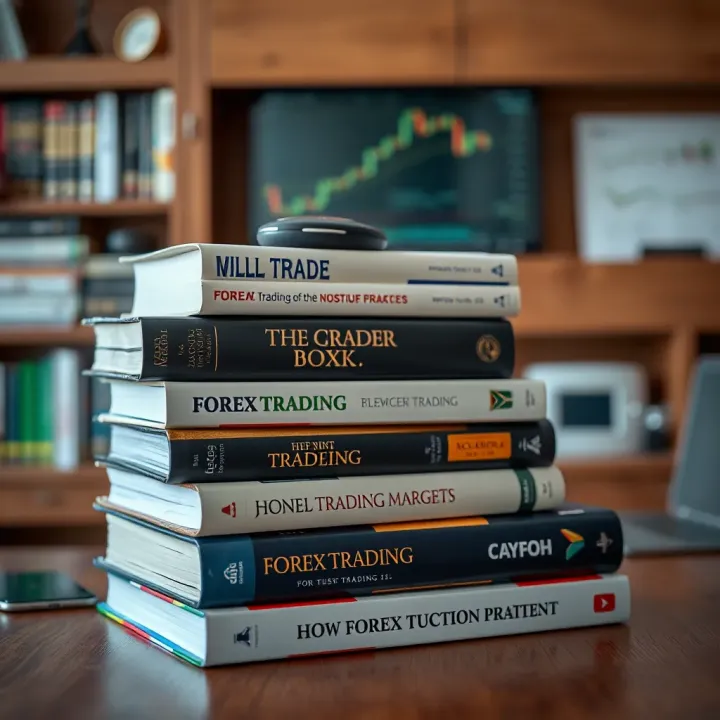
Best Books to Learn Forex Trading in South Africa
📚 Explore top books to master forex trading with practical tips, risk handling, and strategies tailored for South African traders keen on growing their Rands.
Edited By
Natalie Rivers
Learning forex trading can feel like trying to crack a tough code. The currency markets move fast, and without a solid foundation, you’re likely to lose more than you gain. That’s why starting with the right books makes a huge difference — they offer structure, proven strategies, and insights from traders who've been in the trenches.
Whether you’re based in Johannesburg or anywhere else in Mzansi, forex trading shares universal fundamentals but also unique challenges. Local factors like the rand’s volatility, trading hours aligned with international markets, and costs such as spreads and commissions all influence your success. A good forex book doesn’t just teach theory but helps you apply it to your specific trading style and environment.

Look for books that cover the nuts and bolts first: how the forex market works, types of currency pairs, technical and fundamental analysis, and risk management basics. Once you’ve got that sorted, delve into more advanced topics like price action, automated trading systems, or the psychology behind winning trades. Understanding the mental game is especially important because, frankly, emotions can tank even a well-planned trade faster than an unexpected loadshedding stage 4.
Successful forex trading requires a blend of knowledge, practical skills, and emotional discipline — books that bring these elements together will serve you best.
Expect to find both local and international authors. While global perspectives provide broad market views, South African traders benefit from insights that factor in local regulations, the SARB’s monetary policy shifts, and how geopolitical events in Africa can ripple through currency values.
In this article, we’ll guide you through a selection of highly recommended titles tailored to both beginners and experienced traders. These reads will arm you with practical tools, strategies tested by real markets, and tips for keeping your cool under pressure. Whether you trade from your flat in Cape Town or a shared workspace in Durban, the lessons inside these books can help grow your confidence and competence.
Start smart, learn with purpose, and trade with your eyes wide open—this way, you’re closer to navigating the forex market successfully.
Grasping the basics of forex trading forms the foundation for success in this fast-moving market. When you understand how currency pairs work, the times to trade, and who moves the market, you gain practical insights that help avoid common pitfalls and spot genuine opportunities. South African traders especially need this grounding to navigate unique local conditions like the rand’s volatility and market access.
Forex trading always involves buying one currency while simultaneously selling another. Currencies are quoted in pairs like USD/ZAR or EUR/USD, showing how much of the second currency you need to buy one unit of the first. For example, if the USD/ZAR quote is 19.50, it means R19.50 are needed to buy 1 US dollar. Understanding these pairs helps you quickly evaluate value and risk relative to your base currency.
Currency pairs split into majors (commonly traded pairs involving USD), minors (popular but without USD), and exotics (pairs with emerging market currencies like ZAR). Knowing these distinctions shapes your strategy — majors often offer better liquidity and tighter spreads, which is ideal when starting out.
Forex operates 24 hours a day but is divided into three main sessions: Asian, European, and North American. Each session overlaps at points, creating times of increased volume and volatility. For South Africans trading Rand pairs, the European session can be particularly active, reflecting London’s financial centre hours.
Trading during peak times often means better prices and faster trade execution. Beginners should familiarise themselves with these sessions to plan trades effectively, avoiding low liquidity periods that inflate costs or delay orders.
The forex market includes central banks, commercial banks, hedge funds, retail brokers, and individual traders like yourself. Central banks, such as the South African Reserve Bank, influence currency values by adjusting interest rates or intervening for economic stability.
Recognising the roles of these participants helps traders interpret market movements. For example, a sudden rand sell-off might follow news from SARB or changed global risk appetite affecting emerging markets.

Starting with books that break down forex basics — how markets function, what drives currency prices, and trade mechanics — is paramount. Titles like "Currency Trading for Dummies" offer clear introductions covering essentials without jargon. These guidebooks provide structured learning that builds confidence before moving to complex strategies.
Practical learning improves significantly when examples mirror real scenarios. Books with step-by-step explanations and relatable case studies make abstract ideas concrete. For instance, "Forex Made Easy" walks readers through sample trades with explanations of entry, stop-loss, and take-profit points, making it accessible for those without financial backgrounds.
Given South Africa’s unique forex landscape, books addressing local context help bridge global concepts and local realities. Titles that discuss Rand trading, consider Eskom-related risk factors, or introduce brokers accessible locally are highly valuable. Such resources provide beginner-friendly tips on managing currency risk amid economic cycles familiar to South African investors.
Knowing the basics equips you to trade informed, adapt to market shifts, and avoid costly mistakes early on. It's the stepping stone to becoming a confident forex trader.
For traders looking to improve beyond beginner basics, books on advanced forex strategies are indispensable. They offer deep insights into the complex technical and fundamental factors that drive currency markets. Such books sharpen your ability to read charts, understand economic indicators, and manage risks effectively. For South African traders, this knowledge is even more vital due to the rand’s volatility influenced by local and global events.
Chart patterns and indicators form the backbone of technical analysis. Learning to recognise patterns like head and shoulders, triangles, or double tops can help predict potential market reversals or continuations. Indicators such as the Relative Strength Index (RSI) or Bollinger Bands add quantitative support to these patterns, offering confirmation before entering or exiting trades. Books covering these topics teach practical methods to combine visual cues and indicators, increasing trade accuracy.
Using moving averages and oscillators helps smooth out price data and identify trend directions. A common approach is the crossover of short-term and long-term moving averages to signal entry or exit points. Oscillators like the MACD or Stochastic Oscillator indicate overbought or oversold conditions, guiding traders on when a price correction might occur. Understanding these tools enables traders to adapt to changing market momentum, which is critical in the often unpredictable forex environment.
Risk management techniques are crucial yet sometimes overlooked in trading advice. Books focusing on this teach you how to control losses and protect profits through stop-loss orders, position sizing, and risk-reward ratios. For instance, risking only 1–2% of your trading capital per trade protects your bankroll during inevitable losing streaks. Solid risk management underpins all successful trading strategies and helps maintain consistency.
Macroeconomic indicators to watch include interest rates, inflation figures, unemployment data, and GDP growth. These reflect the economic health of a country and influence currency strength. For example, South African Reserve Bank interest rate decisions impact the rand’s value sharply. Books that detail how to interpret these indicators provide traders with an edge to anticipate currency moves before the market fully reacts.
Impact of geopolitical events on forex markets cannot be overstated. Political instability, elections, trade disputes, or international sanctions can cause sudden price swings. South African traders should stay alert to local events like ANC leadership changes or global shifts such as US-China trade tensions. Advanced forex books explain how to factor these events into your trading decisions rather than be caught off guard.
How to assess currency valuation involves understanding purchasing power parity, interest rate differentials, and capital flows. Books on this topic teach you to evaluate whether a currency is over- or undervalued relative to its fundamentals. This skill can assist in longer-term trading or investment decisions, especially in emerging markets like South Africa where fundamentals often diverge from price action.
Mastering advanced strategies through well-chosen books lets traders approach the forex market with discipline, depth, and confidence—qualities necessary for consistent success.
By studying technical signals, economic data, and the broader geopolitical landscape, traders build a well-rounded toolkit tailored to the fast-paced and ever-shifting forex market, locally and worldwide.
Trading psychology plays a major role in the success or failure of forex traders. Understanding your own emotions, managing stress, and cultivating discipline can often be the difference between consistent gains and costly mistakes. Books on trading psychology provide valuable insights into these mental elements, helping traders hone their mindset alongside technical skills.
Common psychological pitfalls often trip up new and even experienced traders alike. Emotional reactions such as fear and greed can lead to impulsive decisions or holding onto losing trades for too long. For example, a trader might panic and sell off their currency pair after a sudden dip, only to miss out on a recovery. These pitfalls highlight why recognising emotional biases is essential to keep strategies on track.
How traders manage stress is crucial for maintaining focus during volatile market phases. Stress from potential financial losses or missing trading opportunities can cloud judgment. Techniques like setting clear stop-loss orders, practising mindfulness, or even taking short breaks help mitigate these pressures. South African traders, often dealing with afterhours news from different time zones, benefit particularly from stress management to avoid burnout.
Developing mental resilience means building the capacity to bounce back from losses and setbacks. Forex trading is rarely smooth sailing, with losses being part and parcel of the process. A resilient mindset allows traders to view losses as lessons rather than failures. Consistently sticking to a trading plan, reviewing mistakes objectively, and learning from them are practical ways to strengthen resilience.
Books addressing discipline and patience focus on cultivating habits that support long-term trading success. Titles like "Trading for a Living" by Dr Alexander Elder emphasise the necessity of controlling impulsive behaviour and waiting for high-probability setups instead of forcing trades. This discipline helps traders avoid chasing the market, a common trap in volatile forex sessions.
Case studies and real trader experiences provide relatable examples and demonstrate how psychological principles apply in real-life scenarios. Books featuring stories from South African traders or international pros using structured strategies can help readers connect theoretical concepts with practical outcomes. These narratives often reflect the emotional rollercoaster of trading and how consistent mental habits prevail.
Improving decision-making skills is a key benefit covered in many trading psychology books. They teach readers how to avoid overtrading, reduce analysis paralysis, and make timely, informed decisions under pressure. Practical exercises within these books encourage active reflection on daily trades, promoting continuous improvement in judgement and strategic thinking.
Good trading books don't just teach you charts and indicators—they show you how to master your own mind, which is vital when the rand swings or global markets react unexpectedly.
Understanding trading psychology through dedicated books equips South African traders with tools to handle the emotional and mental challenges of forex markets. This mental edge complements technical know-how, helping you stay steady and sharp whether the market surges or dips.
Practical guides and trade execution books form the backbone of any serious forex trader's library. They focus on actionable techniques, helping traders put theory to work in real-world markets. Unlike purely academic texts, these books walk you through actual trading systems, showing how to set up plans, choose the right tools, and test strategies effectively. This hands-on approach can save you costly mistakes and accelerate your learning curve.
Setting up a trading plan is your first step to consistent forex trading. A solid plan outlines when and why you enter or exit trades, what your risk limits are, and how you manage your portfolio. This reduces guesswork and emotional decisions that often lead to losses. For example, a trader might decide to risk only 1% of their capital per trade and use stop-loss orders to protect against unexpected volatility. Such details keep discipline intact and safeguard hard-earned capital.
Choosing the right brokers and platforms is equally vital. Not all brokers operate with the same reliability or fee structure. South African traders should consider brokers regulated by the Financial Sector Conduct Authority (FSCA) for protection against shady practices. You’ll want a platform that offers fast execution, a user-friendly interface, and useful tools like charting and alerts. MT4 and MT5 remain popular for their wide acceptance and customisability, but local platforms like IG South Africa also cater well to local requirements.
Understanding backtesting strategies lets you see how your trading plan would have performed in past market conditions. This process involves applying your rules to historical data without risking real money, thereby highlighting strengths and exposing weaknesses. For instance, testing a moving average crossover rule over the past two years of Rand-dollar data can reveal how often it generates profitable signals. That said, backtesting is no crystal ball but a useful step to refine and build confidence in your approach.
When trading Rand-based pairs, considerations for Rand-based trading come into play. The Rand’s volatility, often influenced by local events like loadshedding or political instability, differs from major currencies. Localised books explain these dynamics in ways global texts rarely do, helping you understand how to adjust your strategies accordingly. This insight is crucial when managing risk or deciding which pairs to focus on, whether ZAR/USD or ZAR/EUR.
Taking local economic factors into account also matters. South Africa’s economic indicators, such as SARB interest rate decisions, mining output, and trade balances, directly impact currency movement. Books tailored for South African traders unpack these indicators and teach you how to anticipate the market reaction. This knowledge gives you an edge, especially when global news overshadows local realities that still affect pricing.
Finally, accessing forex markets from South Africa comes with its own challenges and rules. Due to exchange control regulations, investors must use authorised dealers or brokers registered with the South African Reserve Bank (SARB). Dedicated books cover how to legally and efficiently enter forex markets from here, including how to handle RICA and FICA compliance on your trading accounts. Understanding this landscape helps avoid pitfalls and ensures smooth operations.
Practical guides rooted in South African realities empower traders to approach the forex market with clarity and confidence, making these books essential for anyone serious about trading here.
📚 Explore top books to master forex trading with practical tips, risk handling, and strategies tailored for South African traders keen on growing their Rands.

📚Explore the best forex trading books for South Africans! Learn key strategies, risk management, and market insight to trade confidently and grow your skills.
📚 Discover top forex trading books tailored for South African traders 🇿🇦. Learn how to pick resources that match your skills and navigate local market factors with ease.

📚 Learn how to access free forex trading books in PDF, find trusted sources, understand key strategies, and apply insights to boost your skills safely in South Africa.
Based on 7 reviews