

Forex Trading in Australia: Guide for South African Investors
🌍 Discover how to trade forex from South Africa using Australian platforms, navigate local regulations, and manage risks for smart and safe investing in R and global currencies.
Edited By
Charlotte Webb
Forex trading, or foreign exchange trading, involves buying and selling currencies in a global market. For South African investors, this presents opportunities beyond the traditional shares or property market. With a daily turnover exceeding $6 trillion globally, forex stands as one of the most liquid and accessible markets out there.
One significant advantage of forex trading is its availability. Unlike the JSE, which operates during defined hours, the forex market runs 24 hours a day, five days a week. This flexibility allows investors in South Africa to trade whenever it suits them—be it before the morning robot trips or after the day’s braai.
Liquidity in forex means that currencies can be bought or sold quickly without impacting the price much. This is crucial for investors aiming to enter or exit positions swiftly. For example, major currency pairs like USD/ZAR often experience tight spreads, making trading more cost-effective.
Forex trading also offers a chance to diversify your investment portfolio. When local equities or bonds are under pressure—perhaps due to loadshedding or economic shifts—currency trading can provide alternative routes for income. It’s not just about rand pairs; trading crosses like EUR/USD or GBP/USD exposes you to global economic trends beyond South Africa’s borders.
Leverage is another feature forex platforms offer. This means you can control a larger trade value with a smaller amount of capital. While this can amplify gains, it also increases risk, so proper risk management and understanding market moves are essential.
Flexibility and liquidity are core reasons forex trading appeals to South African investors seeking active market engagement without rigid time constraints.
To get started, traders can use platforms like IG, Plus500, or local brokers regulated by the Financial Sector Conduct Authority (FSCA). Pricing is transparent, and many offer demo accounts to practise before putting real rand on the line.
In sum, forex trading opens doors for South African investors wanting flexible access to global markets, higher liquidity than some traditional assets, and opportunities to manage risk through diversification. The following sections will unpack these benefits in more detail, helping you consider if forex fits your investment goals.
Getting a grip on forex trading basics is the first step for any South African investor looking to navigate this dynamic market. Forex, short for foreign exchange, involves exchanging one currency for another. It’s the largest financial market worldwide, letting investors react to global economic shifts, political news, and currency fluctuations almost instantly.
At its core, forex trading means buying one currency while simultaneously selling another. For example, if you think the US dollar will strengthen against the South African rand, you might buy USD/ZAR. This speculation can bring profits, but also risks, depending on how the market moves. Unlike buying shares or bonds, forex trading operates on currency pairs, with each trade reflecting your view on relative currency strength.
Certain currency pairs attract most of the attention because they involve big economies and offer tight spreads and liquidity. These include pairs like EUR/USD, GBP/USD, USD/JPY, and USD/ZAR — the last one crucial for South Africans due to rand volatility. Forex markets never really shut down; they follow the world’s time zones, opening on Sunday evening and closing on Friday evening South African time. This 24-hour cycle, split into major sessions based in London, New York, Tokyo, and Sydney, offers plenty of flexibility for those juggling daytime jobs or other commitments.
South African traders typically access forex through regulated brokers, many offering platforms that run on popular software like MetaTrader or web-based alternatives. It’s critical to pick brokers authorised by the Financial Sector Conduct Authority (FSCA), ensuring your funds and trading practices meet local legal standards. Payments into trading accounts can be made via local methods like EFT, credit card, or even digital wallets, making it straightforward to start. Plus, forex brokers today offer educational tools tailored for new traders, which is handy if you’re still building your know-how.
Understanding how forex operates and the specifics around currency pairs and trading hours equips South African investors with practical knowledge to make smarter decisions and better time their trades.
Knowing these fundamentals sets the stage for exploring forex’s benefits in depth, especially how it can fit neatly into local investment strategies.
Forex trading holds several key advantages that make it appealing to South African investors seeking to diversify their portfolios and engage with a dynamic market. Understanding these benefits helps traders grasp why forex remains one of the most actively traded markets globally.
One of the standout features of forex markets is their high liquidity. This means you can buy or sell major currency pairs, like USD/ZAR or EUR/USD, without struggling to find a counterparty. High liquidity reduces the risk of price gaps and slippage, providing smoother trade execution. For South African traders, this liquidity is crucial as it allows the exchange to happen at transparent prices anytime the market is open.
Unlike the Johannesburg Stock Exchange (JSE), the forex market operates 24 hours a day, five days a week, thanks to overlapping sessions in global financial centres such as London, New York, and Tokyo. This continuous trading means you can react immediately to global events, whether it's a sudden change in US interest rates or Eskom announcing a stage 4 loadshedding update. You’re not stuck waiting for a market to open.
Forex trading is accessible to almost anyone with an internet connection, making it attractive for South African individual investors. You don’t need vast capital to start; many brokers offer accounts from as little as R500, with low minimum trade sizes, allowing you to begin cautiously.
Platforms like IG, Plus500, and local brokers compliant with the Financial Sector Conduct Authority (FSCA) provide user-friendly tools and mobile apps, so you can trade from your smartphone while commuting or from the comfort of your stoep. Plus, many brokers offer demo accounts, allowing beginners to practise without risking real money.
Unlike traditional buy-and-hold investing, forex trading lets you potentially profit whether currencies rise or fall. Say you expect the rand to weaken against the dollar due to inflationary pressure or political uncertainty; you can open a sell position (known as 'going short') and profit if that prediction plays out.
This flexibility enables traders to capitalise on different market conditions without waiting for long-term trends to materialise. Of course, this comes with increased risk, so it’s wise to have a clear strategy and risk-management plan.
For South African traders, combining forex trading's liquidity, accessibility, and market direction flexibility offers a compelling opportunity to enhance their investment toolkit, especially in a market influenced by both local and global factors.
Forex trading stands out for the level of flexibility and control it offers, both highly valued by individual investors navigating South Africa's unique economic landscape. Unlike other investment vehicles that may lock you into rigid timeframes or fixed trade sizes, forex trading lets you adapt your involvement to match your schedule, capital, and appetite for risk.
One of the strongest draws for local traders is the ability to operate from any location with an internet connection. Whether you’re trading from your Johannesburg stoep or while on the move in Durban, online forex platforms give you round-the-clock access to global currency markets. This continuous access means you won’t miss opportunities due to traditional market hours. For example, you could catch early-morning trades during the Asian session before heading off to work, then revisit positions later in the day when the London session kicks in.
Forex brokers typically allow traders to open positions as small as micro or nano lots, meaning you don’t need a mountain of cash to get started. This flexibility is particularly useful in South Africa, where many investors want to manage exposure carefully against rand fluctuations or preserve capital during uncertain times. Plus, leverage lets you control larger sums than your actual investment, albeit with increased risk. A trader might use a 10:1 leverage to open a position worth R10,000 while only putting down R1,000. However, it’s essential to understand that while leverage multiplies gains, it also magnifies losses — so knowing when and how much to use is key.
Every trader has their own comfort level when it comes to risk. Forex trading accommodates this by supporting diverse strategies, from conservative carry trades to more aggressive scalping techniques. Suppose you’re cautious about volatility; you might focus on major currency pairs like USD/ZAR or EUR/USD that tend to have steadier movements. Alternatively, more adventurous traders may try emerging market pairs but limit trade sizes accordingly. Platforms often provide risk management tools — like stop-loss and take-profit orders — which help you control how much you’re willing to lose or gain on each trade, reinforcing personal control over your investments.
The ability to customise your trading style and schedule around your life adds a level of personal empowerment that suits many South African investors balancing work, family, and other commitments.
Flexibility and control aren’t just buzzwords here — they’re practical benefits helping you take charge of your forex trading journey, adapt to market swings, and align trading activity with your financial goals and lifestyle.
Diversification is a well-known strategy investors use to spread risk across multiple assets. Forex trading can add an important layer to this approach because it offers exposure to global currencies, which often behave differently from stocks, bonds, or property. For South African investors, including forex in a portfolio can help balance shifting economic and political tides locally and internationally.
Holding different currencies in a portfolio reduces reliance on the South African Rand (ZAR) alone. For example, if the Rand weakens due to economic uncertainties or electoral instability, assets denominated in currencies like the US dollar (USD) or Euro (EUR) might hold or even gain value. This spread softens potential losses from a declining Rand. It’s similar to not putting all your chickens in one basket, especially with the Rand often vulnerable to external shocks.
Forex trading isn't just about following currency pairs; it complements traditional investments by providing distinct market cycles and risk profiles. Stocks and bonds often move on local business performances or interest rates, whereas currencies react swiftly to geopolitical news or monetary policy changes. For instance, a sharp hike in US interest rates could strengthen the USD while leaving certain South African stocks under pressure. Including forex can smooth out volatility, offering a buffer when traditional markets falter.
Many South African businesses and individual investors face Rand volatility regularly. Forex trading allows for hedging strategies, where holding or trading foreign currencies offsets potential losses in Rand-based assets. Imagine a small business importing goods priced in Euros; it can use forex swaps or forward contracts to lock in exchange rates and avoid nasty surprises during loadshedding or political events. Hedging like this isn’t just for big corporations—it’s a practical tool available even to retail traders via online brokers.
Including forex in your investment mix can make your portfolio more resilient. It’s not about chasing quick gains but managing risk with smart, measured exposures.
In summary, forex trading offers unique benefits for diversification. By reducing dependency on any single currency, complementing traditional assets, and providing tools for hedging, it strengthens a portfolio’s overall stability. For South African investors contending with the Rand’s ups and downs, forex is a sensible addition worth considering.
Forex trading offers several concrete advantages that particularly matter for South African investors. Beyond the well-known aspects like liquidity and flexibility, there are practical benefits such as cost-effectiveness, quick execution, transparency, and access to quality educational resources. These factors play a key role in making forex trading not only viable but also attractive alongside traditional investment routes.
One major upside for local traders is how cost-effective forex trading can be. Unlike many other markets, forex brokers typically offer low spreads—the difference between a currency pair’s buying and selling price. This means traders pay less for each transaction. For example, popular brokers like IG or EasyEquities in South Africa often advertise spreads as low as 0.1 pips on major pairs like USD/ZAR or EUR/USD.
Low commissions and minimal fees help preserve profits, especially for frequent traders. This matters because South African investors often have to be mindful of rand volatility and fees draining returns. Lower trading costs translate directly into better net returns and make smaller trading accounts more feasible.
The forex market operates 24/5 with highly competitive participants worldwide. That results in fast trade execution speeds and excellent market transparency. When you place an order through reputable South African brokers, trades typically execute in milliseconds, not leaving you hanging in uncertain limbo. This speed is crucial during volatile sessions when rand-related news hits or Eskom load shedding pushes currencies around.
Transparency is another asset. The forex market’s sheer size and constant price updates ensure traders see real-time prices without excessive slippage or hidden markups, common pitfalls in smaller or less regulated markets. This helps South African investors make decisions based on accurate, timely information rather than guesses.
South African traders can access a wealth of educational materials tailored to beginners through advanced forex enthusiasts. Brokers and trading platforms provide webinars, tutorials, and demo accounts that allow users to practise without risking real money. For instance, many platforms offer educational tools in English and sometimes Afrikaans, making the learning curve less steep.
Technology also plays an enabling role. Trading platforms like MetaTrader 4 and 5, Plus500, or proprietary apps from local brokers come with user-friendly interfaces and real-time charting features. They allow traders to monitor the market closely, backtest strategies, and even automate trades using programmed rules. For someone dealing with occasional power cuts or variable internet access—as is common in parts of South Africa—the mobile-friendly and offline-support features of these platforms are practical lifesavers.
For South African investors, these practical benefits combine to make forex trading accessible, affordable, and manageable, even amid local market complexities like rand fluctuations and infrastructure challenges. Keeping costs low, ensuring transparency, and supporting education helps traders grow their skills and confidence, ultimately improving their chances of success.
Together, cost-efficiency, speedy execution, and solid educational tools ensure forex trading fits well as part of an investment strategy tailored for South African realities.
🌍 Discover how to trade forex from South Africa using Australian platforms, navigate local regulations, and manage risks for smart and safe investing in R and global currencies.
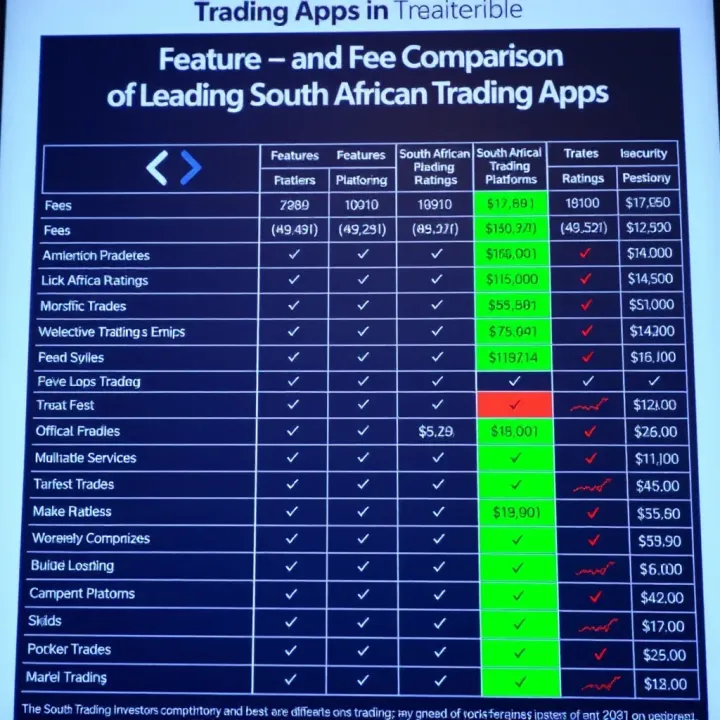
📱Thinking of investing? Discover how to choose the best trading app for South African investors. Compare local platforms, understand fees, security & ease of use.
📚 Discover top forex trading books tailored for South African traders 🇿🇦. Learn how to pick resources that match your skills and navigate local market factors with ease.
📈 Explore binary trading basics, risks, and strategies tailored for South African investors. Get to know local platforms and regulations before you start trading.
Based on 7 reviews