

Understanding Gray Code and Binary Conversion
🔍 Explore Gray code basics, its key uses, and step-by-step ways to convert it into binary. Learn benefits and challenges in digital coding methods.
Edited By
Chloe Mitchell
Binary code forms the backbone of modern computing, representing data using just two digits: 0 and 1. But why would the number 17 be particularly interesting in this system? This article starts with exploring the decimal number 17 and how it fits into binary coding.
In decimal, 17 is a modest, familiar figure — just one more than 16, which is 2 to the power of 4. However, when converted into binary, 17 takes on a fresh meaning. Its binary equivalent is 10001, a five-bit number that’s more than a simple count.

Understanding 17 in binary is not just a curiosity; it connects to how digital devices process information, how addresses or codes are assigned, and even how encryption algorithms operate. This insight is valuable for anyone dealing with technology, from investors analysing tech stocks to entrepreneurs launching digital platforms.
To convert decimal 17 to binary, we break it down into powers of two:
16 (2^4)
0 (2^3)
0 (2^2)
0 (2^1)
1 (2^0)
When you write this out, it’s 10001. This bit pattern is unique in that it starts and ends with a 1, which can have specific meanings in data encoding.
In computing, each binary digit (bit) represents a state, typically on or off. The number 17 (10001) might be used in:
Memory addressing: Specifying a particular location in storage.
Instruction sets: A command code that a processor understands.
Data encoding: Representing characters, colours, or instructions.
In South Africa’s growing tech industry, understanding such number representations can help entrepreneurs and analysts make better sense of how hardware and software interact. For traders and investors, knowing these fundamentals can clarify discussions around semiconductor stocks or software companies.
Next, we will explore practical @examples showing how the number 17’s binary form plays out in everyday technology and why this matters for the broader digital economy.
Understanding the basics of binary code is essential for grasping how the number 17, or any number, is expressed and used in digital systems. Binary code is the foundation of computing, where every value is ultimately represented using just two digits: 0 and 1. This simplicity is what allows computers – including those processing stock trades, bank transactions, or everyday mobile apps – to operate reliably and efficiently.
Binary is a numbering system that uses only two symbols: 0 and 1. Each digit in binary is called a bit, short for binary digit. Practical computing devices depend on this system because it maps naturally to electronic states—on and off, high voltage and low voltage, or true and false. For example, when your MTN data runs low, the system is tracking numbers internally in binary to control data allocation precisely.
Unlike the decimal system, which uses ten digits from 0 to 9, binary relies on powers of two. Each position in a binary number represents an increasing power of two, starting from the rightmost bit. This contrasts with decimal, which considers powers of ten. This difference means that while humans naturally use decimal for everyday counting, computers find binary far more effective and less error-prone due to its simplicity in representing physical on/off states.
A bit is the smallest unit of data in computing. Eight bits make up a byte, and bytes are the building blocks for representing characters, numbers, and more complex data. For instance, the letter ‘A’ in ASCII code converts to the binary byte 01000001. Knowing this helps traders trust that their trade confirmation numbers or financial data are accurately stored and processed without loss.
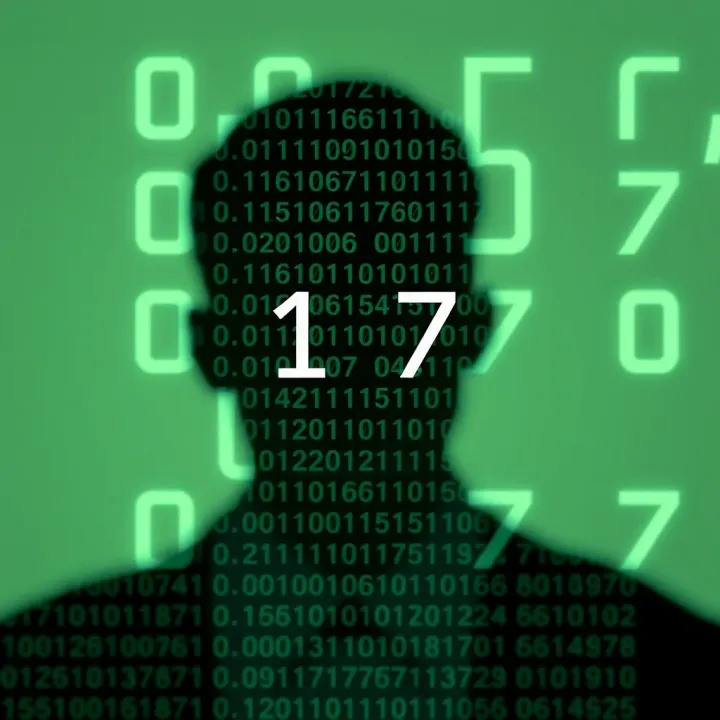
Converting numbers between decimal and binary involves dividing by two repeatedly, tracking remainders for binary digits, or summing powers of two when converting back. For example, the decimal number 17 breaks down into powers of two as 16 + 1, so its binary form is 10001. This process is crucial in coding and debugging, where understanding the binary layout can help troubleshoot errors or optimise performance in trading algorithms or financial models.
Getting comfortable with binary isn’t just a techy exercise; it underpins much of our high-speed financial infrastructure and everyday digital tools. Knowing how numbers like 17 translate into binary offers insight into the workings of software, algorithms, and data handling methods used across South Africa’s fast-evolving tech landscape.
Converting the number seventeen into binary lays the groundwork for understanding how computers process and store data. Since digital systems operate on binary code, breaking down decimal numbers into binary form translates abstract figures into a language that machines comprehend. For traders, investors, and business analysts using technological tools, appreciating this conversion can illuminate the inner workings of algorithms and software crucial to decision-making.
To convert 17 into binary, you start by expressing it as a sum of powers of two. These powers—1, 2, 4, 8, 16, and so on—are the building blocks of binary numbers. For example, 17 equals 16 + 1, where 16 is 2 to the power of 4, and 1 is 2 to the power of 0. This method shows which bits should be set to 1 and which to 0.
This breakdown isn't just academic; it helps optimise computing processes. For instance, when managing investments through trading platforms, understanding power-of-two logic helps in grasping how financial data gets processed or how portfolio simulations might execute rapidly behind the scenes.
Once broken down, each power of two corresponds to a binary digit or 'bit'. Writing 17 in binary involves placing a '1' in positions representing 16 and 1, and '0's elsewhere. Thus, 17 becomes 10001 in binary (from left to right: 16, 8, 4, 2, 1).
Knowing this binary notation assists in recognising how data is stored in computer memory and how operations like bitwise calculations work. Entrepreneurs developing apps with low-level data handling benefit from this clarity since errors in binary representation can cause miscalculations or glitches.
Binary numbers can be presented in various standard formats depending on context. For example, computers often use fixed bit lengths—such as 8-bit or 16-bit—to represent numbers. The number 17, represented as 00010001 in an 8-bit system, fits neatly into one byte. This uniformity simplifies data exchange across systems and programming environments.
For financial analysts working with data feeds, knowing standard binary lengths aids in interpreting raw data streams correctly. For example, stock exchange systems transmit encoded price data often in fixed-size binary packets.
Precision in binary notation is critical. A single misplaced bit can transform 17 into a very different number (for instance, 18 or 16), causing errors in calculations or system malfunctions. Consider automated trading algorithms where binary data feeds dictate buy or sell decisions—any error risks financial loss.
Moreover, accuracy supports debugging. Some South African tech startups dealing with fintech or mobile payments rely on binary accuracy for encryption keys or transaction records. A clear grasp of correct notation reduces risks linked to system failures and security breaches.
Precision in binary conversion isn’t theoretical – it underpins reliable financial and technological operations across sectors.
By mastering how 17 converts into and behaves within binary systems, you get practical insight into the digital lifeblood of modern business and trading environments.
In digital computing, the number 17 takes on more than just a simple numeric value. It often features in processor instruction sets, where specific operations correspond to particular binary codes. For example, some CPUs use a 5-bit field to represent instructions, and the binary equivalent of 17 (10001) fits neatly as a unique code within this set. This allows processors to quickly differentiate instructions, ensuring efficient execution without confusion between commands. Such clarity in instruction sets streamlines the processing pipeline and reduces errors.
Memory addressing also leverages numbers like 17 due to its position within binary ranges. When dealing with memory blocks, binary values represent specific addresses. Using 17 can signify the 18th addressable unit (counting from zero), often used in examples or testing scenarios when validating address decoding logic. In practice, addressing schemes in computers frequently rely on clear binary markers like this to split memory efficiently, especially in embedded systems and small-scale processors common in industrial applications.
Binary code forms the backbone of telecommunications. In protocols where data packets are encoded and decoded, the number 17 can serve as a flag or identifier within the binary stream. For example, a communication protocol might designate 17 as a start-of-packet marker or a control message. This use exploits the fact that 17's binary form is distinct enough to avoid accidental matches with data payload bits, reducing the risk of signal error during transmission.
Error checking and control mechanisms also make use of decimal 17 in various ways. In cyclic redundancy checks (CRC) or parity bits, including a value related to 17 in the calculation helps detect errors in binary data transmitted over networks. One practical example is when 17 is part of polynomial representations used to generate check bits. Its prime nature makes it useful in designing maths-based error detection algorithms that can spot common transmission faults, especially in mobile data networks reliant on reliable binary communication.
The role of 17 in binary systems is a subtle yet practical part of ensuring smooth computing and communication, from processor efficiency to trustworthy data exchange over networks.
Binary code underpins every layer of modern technology, making it critical for South African tech development. Companies across the country rely on binary systems to power hardware and software solutions that cater to unique local challenges, from connectivity issues to power reliability. Understanding this allows businesses and investors to appreciate the technological groundwork driving innovation in the region.
South African tech firms like Xina Solar One and Aerobotics illustrate how binary code is central to local innovation. Xina Solar One uses binary systems within its controllers to manage solar power distribution, especially vital given South Africa’s loadshedding struggles. Meanwhile, Aerobotics blends AI algorithms encoded in binary to provide farmers with drone-based pest and disease detection, optimising crop management through data analysis.
On the software side, companies such as Entry Point and Blank Space develop applications based on binary code logic to streamline financial services and mobile solutions tailored for South African consumers. These applications rely heavily on manipulating binary data for encryption, transactions, and user-interface operations, ensuring security and efficiency in environments with varied internet access and device types.
South African schools increasingly include binary number systems in their curricula, particularly within the Information Technology and Computer Applications Technology subjects. Teaching binary not only prepares learners for careers in coding and engineering but also strengthens logical thinking—a skill valuable across many fields.
Resources for learners are also improving. Platforms like Siyavula and the Department of Basic Education offer free content and workbooks explaining binary concepts with relatable examples. Also, tech hubs such as Bandwidth Barn provide coding workshops that focus on binary fundamentals, helping bridge gaps between theory and practical application.
Binary literacy opens doors to many technology-driven opportunities. For South Africans, it’s a stepping stone to participation in the digital economy and innovation landscape.
In summary, binary code remains at the heart of South Africa’s technological advance—feeding into local hardware and software innovation while becoming an essential element in educational pathways. Understanding this binary backbone offers traders, investors, and entrepreneurs a clearer picture of the tech ecosystem's potential and challenges within the country.
In the world of binary numbers, the number 17 often pops up in examples and coding not just randomly but because it holds some neat mathematical and practical features. This section tackles common questions that come up about 17 in binary code, giving you a clearer understanding of why it is chosen and the typical stumbling blocks people face when dealing with binary numbers.
17 is a prime number, which means it can only be divided by 1 and itself without remainder. This property makes it interesting in mathematics and computing, especially in cryptography and hashing algorithms where primes are valuable for creating unique keys or codes. Its binary representation (10001) is simple yet distinctive, making it easy to recognise and use as a teaching example or in practical programming tasks.
Beyond its mathematical charm, 17 appears in various computing scenarios. For instance, some microcontrollers use instruction sets or register sizes that align with 17-bit operations for specific functions. In error detection, 17 can be a divisor in cyclic redundancy checks (CRC), helping catch miscalculations or data corruption. Also, in digital encoding, 17 sometimes serves as a threshold or marker value.
A common error in binary conversion happens when people forget to carry over values properly when dividing or multiplying by two. For example, converting 17 from decimal to binary involves repeatedly subtracting powers of two or dividing by two and noting remainders. Missing a step or mixing orders can lead to incorrect binary numbers, causing bugs in software or faulty data representation.
Another widespread confusion is assuming binary is more complicated than it really is. Many think binary code is just a jumble of zeros and ones with no rhyme or reason. However, understanding the positional values tied to each bit clears that up quickly. Each position represents a power of two, and adding those powers gives the decimal equivalent. Misinterpreting this structure often leads to errors in reading or writing binary digits.
Getting comfortable with binary and numbers like 17 in binary is more about practise and understanding the logic behind the positions. Mistakes usually stem from unfamiliarity rather than the system itself.
By clearing these doubts, you can approach binary coding with more confidence and avoid common traps. Whether you're a trader analysing data algorithms, an investor assessing tech stocks, or an entrepreneur working with digital products, knowing why 17 matters in binary and how to handle it correctly adds value to your toolkit.
🔍 Explore Gray code basics, its key uses, and step-by-step ways to convert it into binary. Learn benefits and challenges in digital coding methods.

Explore what binary deposit means in trading and finance 🇿🇦. Learn how it works, legal points, risks, and local insights for South African users 💡.

🔢 Discover how 'Hello World' translates into binary! Learn ASCII basics, character conversion, and why this phrase is a programming favourite. 💻
Decode how binary code works on white backgrounds 📄. Explore contrast, clarity, and tips for digital design in South Africa and beyond for better visuals 💻.
Based on 11 reviews